Climate Science and Control Engineering: Insights, Parallels, and Connections
作者: Salma M. Elsherif, Ahmad F. Taha
分类: eess.SY
发布日期: 2025-04-29 (更新: 2025-10-30)
💡 一句话要点
将控制工程视角引入气候科学,为气候建模、控制与估计提供新框架。
🎯 匹配领域: 支柱八:物理动画 (Physics-based Animation)
关键词: 气候科学 控制工程 气候建模 动态系统 网络控制
📋 核心要点
- 气候模型是气候科学的核心,但现有方法在动态系统分析方面存在不足,控制工程的视角未被充分利用。
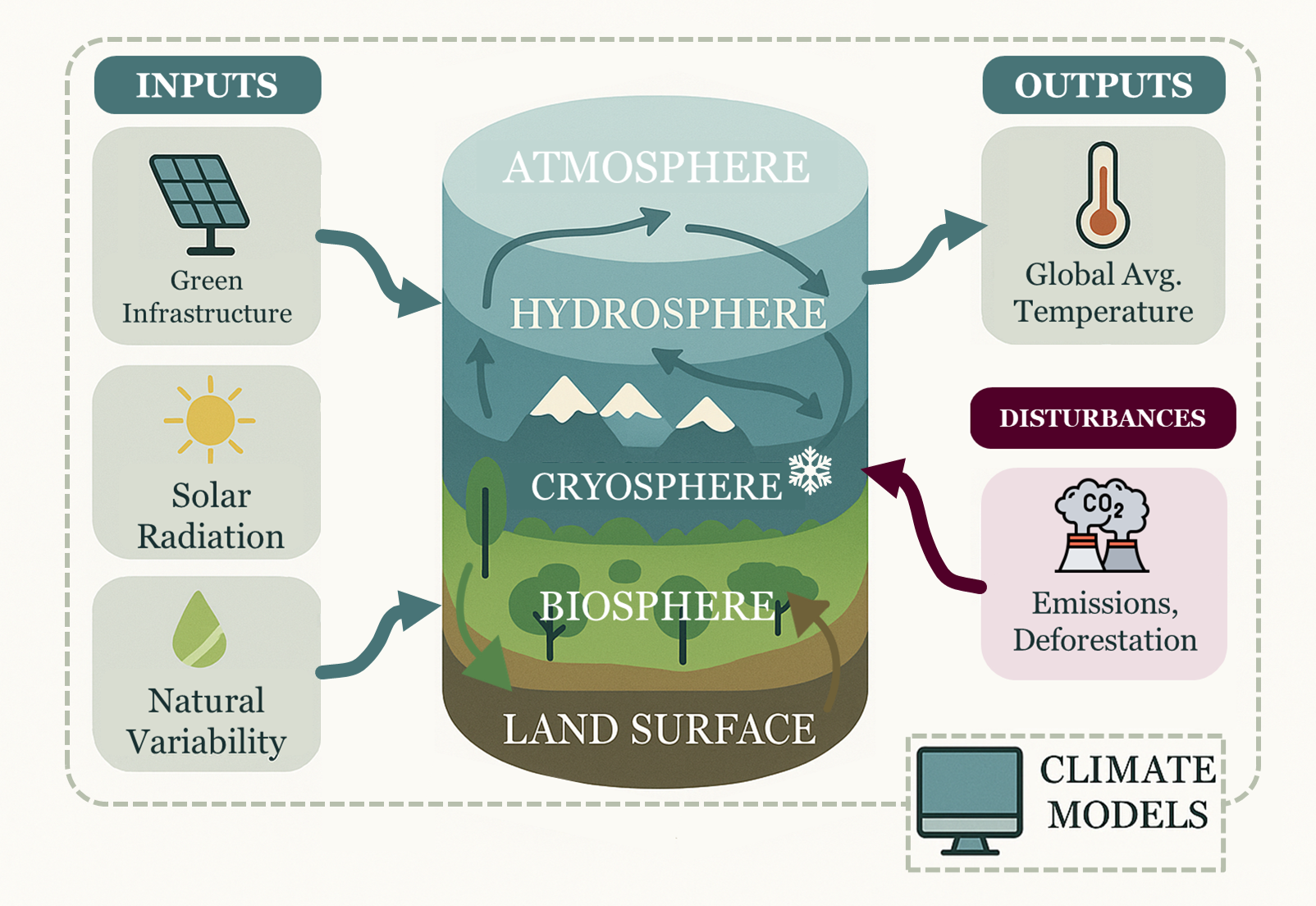
- 论文从控制系统的角度分析气候模型,探索基于图和网络控制的先进方法,构建物理信息框架。
- 论文展示了简单和复杂的气候模型,建立了气候科学问题与控制理论问题之间的联系。
📝 摘要(中文)
气候科学是一个研究地球气候及其演变的多学科领域。气候模型是气候科学的核心,用于预测未来气候情景,为政策决策提供信息,并指导国家经济如何应对气候变化。气候模型通过极其复杂的常微分和偏微分方程捕捉各种相互作用的动态过程。为了模拟这些大规模复杂过程,气候科学利用超级计算机、高级模拟和统计方法来预测未来气候。控制工程是气候科学中很少研究的工程领域。鉴于气候系统本质上是动态的,因此在动态系统科学的框架内分析它们是直观的。然而,这种视角在文献中尚未得到充分探索。本文提供了一个教程,旨在:(i) 向控制工程界介绍气候动力学和建模,包括时空尺度和气候建模中的挑战;(ii) 从控制系统的角度对气候模型提供新的视角;(iii) 探索各种基于图和网络控制的先进方法在构建气候系统中学习、控制和估计的物理信息框架中的相关性和适用性。我们还展示了简单和更复杂的气候模型,描述了构建气候变化预测的基本思想和过程。本教程还建立了气候科学前沿的各种当代问题与其控制理论对应问题之间的相似之处和联系。我们特别观察到,大量的气候科学问题可以用语言重新措辞,并在数学上构建为控制理论问题。
🔬 方法详解
问题定义:气候科学依赖复杂的气候模型进行预测和决策,但缺乏控制工程的视角,难以有效分析和控制气候系统的动态特性。现有方法在处理气候系统中的不确定性和复杂性方面存在局限性。
核心思路:论文的核心思路是将气候系统视为一个动态系统,并利用控制工程的理论和方法来分析、建模和控制气候变化。通过引入控制理论的框架,可以更好地理解气候系统的稳定性和可控性,并设计有效的控制策略。
技术框架:论文首先介绍了气候动力学和建模的基础知识,包括时空尺度和气候建模的挑战。然后,从控制系统的角度重新审视气候模型,并探讨了基于图和网络控制的先进方法在气候系统中的应用。最后,通过展示简单和复杂的气候模型,阐述了构建气候变化预测的基本思想和过程。
关键创新:论文的关键创新在于将控制工程的理论和方法引入气候科学领域,为气候建模、控制和估计提供了一个新的视角和框架。通过将气候科学问题重新表述为控制理论问题,可以利用控制工程中成熟的工具和技术来解决气候变化带来的挑战。
关键设计:论文没有涉及具体的参数设置、损失函数或网络结构等技术细节,而是侧重于概念性的框架构建和方法论的探讨。未来的研究可以进一步探索具体的控制算法和模型,并将其应用于实际的气候系统。
🖼️ 关键图片


📊 实验亮点
论文的主要亮点在于提出了将控制工程应用于气候科学的框架性思路,并展示了气候科学问题与控制理论问题之间的对应关系。虽然没有提供具体的实验数据,但为未来的研究方向提供了明确的指导,并有望推动气候科学和控制工程的交叉融合。
🎯 应用场景
该研究成果可应用于气候模型的改进、气候变化控制策略的设计、以及气候风险评估等方面。通过引入控制工程的视角,可以更有效地预测和控制气候变化,为政策制定者提供更科学的依据,并促进可持续发展。
📄 摘要(原文)
Climate science is the multidisciplinary field that studies the Earth's climate and its evolution. At the very core of climate science are indispensable climate models that predict future climate scenarios, inform policy decisions, and dictate how a country's economy should change in light of the changing climate. Climate models capture a wide range of interacting dynamic processes via extremely complex ordinary and partial differential equations. To model these large-scale complex processes, climate science leverages supercomputers, advanced simulations, and statistical methods to predict future climate. An area of engineering that is rarely studied in climate science is control engineering. Given that climate systems are inherently dynamic, it is intuitive to analyze them within the framework of dynamic system science. This perspective has been underexplored in the literature. In this manuscript, we provide a tutorial that: (i) introduces the control engineering community to climate dynamics and modeling, including spatiotemporal scales and challenges in climate modeling; (ii) offers a fresh perspective on climate models from a control systems viewpoint; and (iii) explores the relevance and applicability of various advanced graph and network control-based approaches in building a physics-informed framework for learning, control and estimation in climate systems. We also present simple and then more complex climate models, depicting fundamental ideas and processes that are instrumental in building climate change projections. This tutorial also builds parallels and observes connections between various contemporary problems at the forefront of climate science and their control theoretic counterparts. We specifically observe that an abundance of climate science problems can be linguistically reworded and mathematically framed as control theoretic ones.