Layered Multirate Control of Constrained Linear Systems
作者: Charis Stamouli, Anastasios Tsiamis, Manfred Morari, George J. Pappas
分类: eess.SY
发布日期: 2025-04-14
💡 一句话要点
提出一种分层多速率控制方法,用于约束线性系统的运动规划,保证安全。
🎯 匹配领域: 支柱一:机器人控制 (Robot Control)
关键词: 分层控制 多速率控制 约束线性系统 运动规划 离散时间仿真函数
📋 核心要点
- 复杂约束系统的有效管理面临挑战,传统分层控制架构在高低层系统约束满足方面存在不足。
- 论文提出一种分层多速率控制方法,通过约束传递,确保高低层系统均满足约束条件,保证系统安全。
- 该方法在运动规划场景中验证,结果表明其在确保避撞方面发挥关键作用,具有实际应用价值。
📝 摘要(中文)
本文提出了一种针对受输出和输入约束的线性系统的分层多速率控制方法。该方法基于分层控制架构,包含一个低频规划器(高层)和一个高频跟踪控制器(低层)。受离散时间仿真函数的启发,我们提出了一种精简的控制设计,保证低层系统以可计算的精度跟踪高层系统的输出。基于此设计,我们推导了将低层系统约束传递到高层系统的条件和方法。这些传递的约束被整合到任意规划器的设计中,以处理高层系统约束。该框架确保低层系统的输出约束在所有高层时间步长上都得到满足,同时在所有低层时间步长上都满足其输入约束。最后,我们将该方法应用于运动规划场景,突出了其在确保避撞方面的关键作用。
🔬 方法详解
问题定义:论文旨在解决复杂约束线性系统的分层控制问题,尤其是在多速率控制架构下,如何保证高层规划器和低层跟踪控制器协同工作,同时满足系统在不同层级的输出和输入约束。现有方法难以在保证跟踪性能的同时,有效地将低层约束传递到高层,从而可能导致系统违反约束。
核心思路:论文的核心思路是利用离散时间仿真函数的概念,设计一种精简的控制策略,使得低层跟踪控制器能够以可计算的精度跟踪高层规划器的输出。通过这种方式,可以将低层系统的约束条件有效地传递到高层系统,从而在高层规划时考虑到低层系统的限制,确保整体系统的安全性。
技术框架:整体框架包含两个主要层级:高层规划器和低层跟踪控制器。高层规划器以较低的频率运行,负责生成系统的参考轨迹,并考虑了从低层传递过来的约束。低层跟踪控制器以较高的频率运行,负责跟踪高层规划器生成的参考轨迹,并保证系统的实际输出满足约束条件。约束传递机制是连接两个层级的关键,它将低层系统的约束信息传递到高层,使得高层规划器能够做出更明智的决策。
关键创新:论文的关键创新在于提出了一种基于离散时间仿真函数的约束传递方法。该方法能够精确地计算出低层跟踪控制器的跟踪误差,并将这些误差信息用于约束传递,从而保证高层规划器生成的轨迹能够被低层控制器安全地执行。这种方法避免了传统方法中由于约束传递不精确而导致的系统违反约束的问题。
关键设计:论文的关键设计包括:1) 精简的低层跟踪控制器设计,保证跟踪精度;2) 基于离散时间仿真函数的约束传递机制,精确计算跟踪误差;3) 高层规划器的约束集成方法,将传递的约束纳入规划过程。具体的参数设置和损失函数取决于具体的系统模型和约束条件,但整体目标是最小化跟踪误差,同时满足所有约束条件。
🖼️ 关键图片

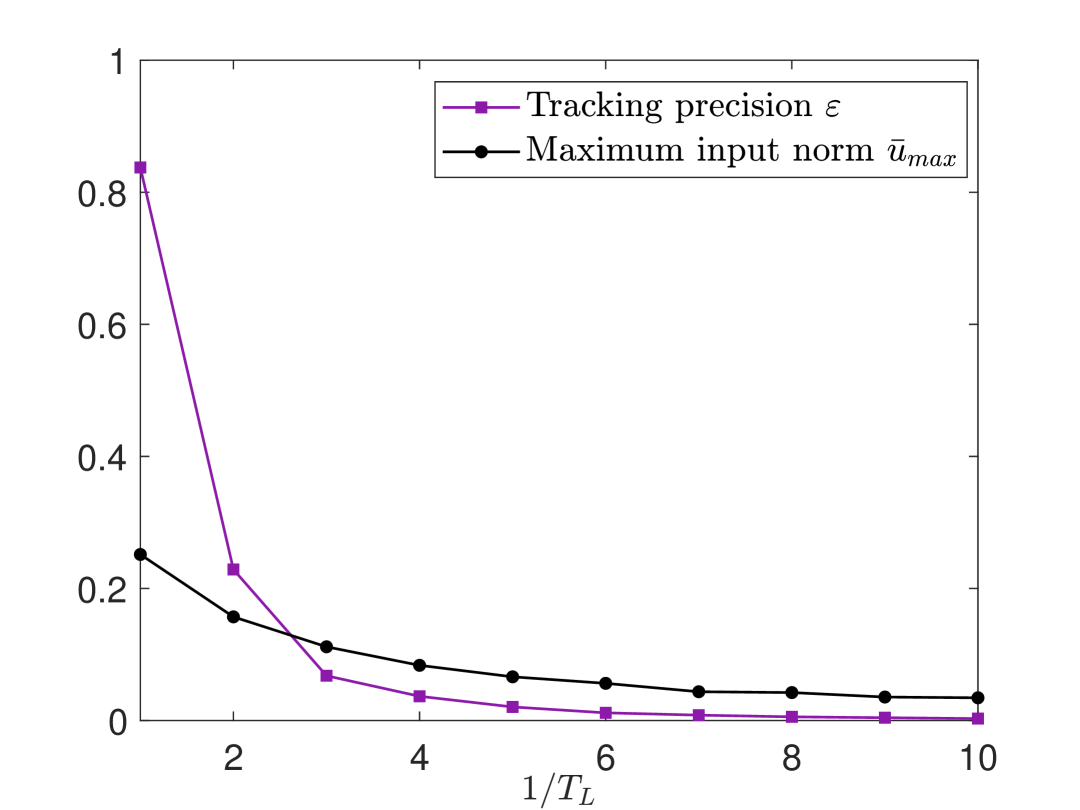

📊 实验亮点
论文通过运动规划场景验证了所提出方法的有效性。实验结果表明,该方法能够有效地将低层系统的约束传递到高层系统,从而保证高层规划器生成的轨迹能够被低层控制器安全地执行,避免了碰撞的发生。具体的性能数据和提升幅度在论文中进行了详细的展示。
🎯 应用场景
该研究成果可应用于各种需要分层控制的约束线性系统,例如机器人运动规划、自动驾驶、航空航天控制等。通过确保系统在满足约束条件的前提下运行,可以提高系统的安全性、可靠性和效率,具有重要的实际应用价值和广阔的应用前景。
📄 摘要(原文)
Layered control architectures have been a standard paradigm for efficiently managing complex constrained systems. A typical architecture consists of: i) a higher layer, where a low-frequency planner controls a simple model of the system, and ii) a lower layer, where a high-frequency tracking controller guides a detailed model of the system toward the output of the higher-layer model. A fundamental problem in this layered architecture is the design of planners and tracking controllers that guarantee both higher- and lower-layer system constraints are satisfied. Toward addressing this problem, we introduce a principled approach for layered multirate control of linear systems subject to output and input constraints. Inspired by discrete-time simulation functions, we propose a streamlined control design that guarantees the lower-layer system tracks the output of the higher-layer system with computable precision. Using this design, we derive conditions and present a method for propagating the constraints of the lower-layer system to the higher-layer system. The propagated constraints are integrated into the design of an arbitrary planner that can handle higher-layer system constraints. Our framework ensures that the output constraints of the lower-layer system are satisfied at all high-level time steps, while respecting its input constraints at all low-level time steps. We apply our approach in a scenario of motion planning, highlighting its critical role in ensuring collision avoidance.