Balancing Operators Risk Averseness in Model Predictive Control for Real-time Reservoir Flood Control
作者: Ja-Ho Koo, Edo Abraham, Andreja Jonoski, Dimitri P. Solomatine
分类: eess.SY
发布日期: 2024-07-05 (更新: 2025-03-29)
备注: This article was published at the Journal of Hydroinformatics in 2025. (Koo, Ja-Ho, Edo Abraham, Andreja Jonoski, and Dimitri P. Solomatine. Balancing operators risk averseness in model predictive control for real-time reservoir flood control. Journal of Hydroinformatics (2025): jh2025019.)
期刊: Journal of Hydroinformatics jh2025019 (2025)
💡 一句话要点
提出参数化动态MPC框架,用于实时水库防洪控制并平衡操作员风险偏好
🎯 匹配领域: 支柱一:机器人控制 (Robot Control)
关键词: 模型预测控制 水库防洪 实时优化 动态参数优化 多目标优化
📋 核心要点
- 现有水库防洪的MPC方法难以兼顾实际操作约束和操作员偏好,导致难以在实际中应用。
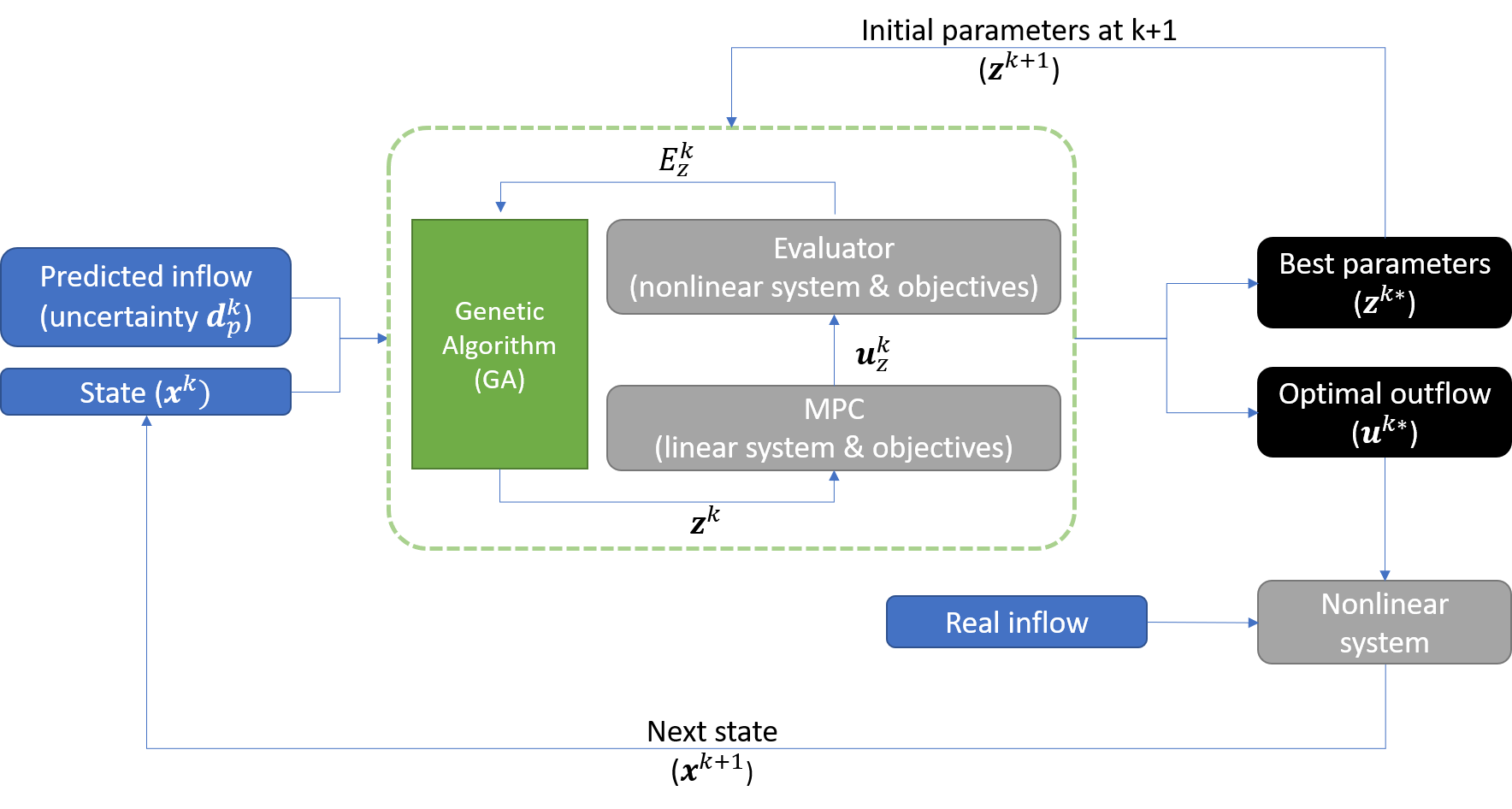
- 提出参数化动态MPC(PD-MPC)框架,通过动态优化权重和参数,将复杂问题转化为参数化线性MPC问题。
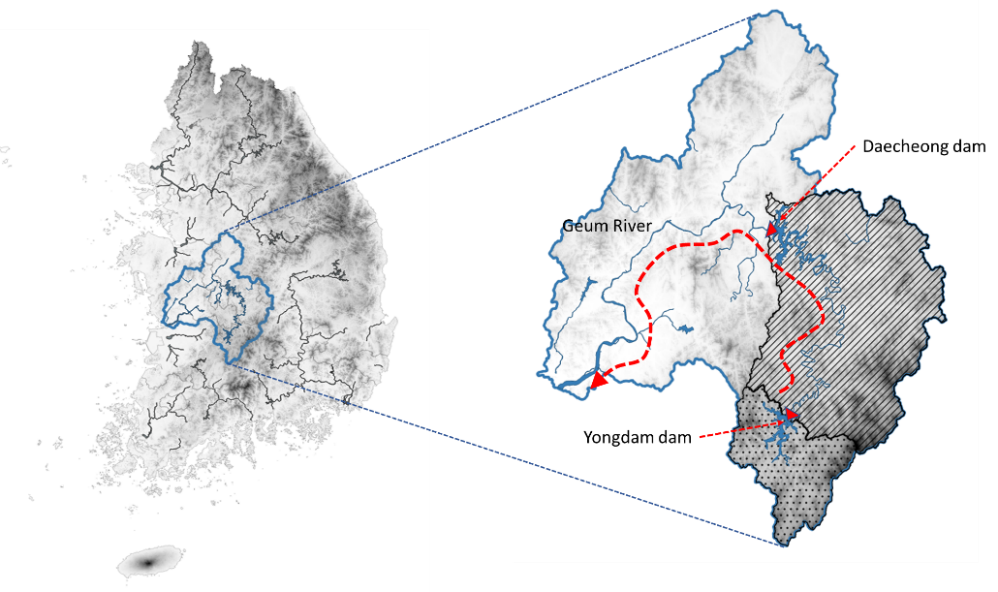
- 在大清水库的实验表明,PD-MPC优于标准MPC,且权重和参数随水文条件动态变化。
📝 摘要(中文)
本文针对水资源基础设施的洪水控制,提出了一种模型预测控制(MPC)策略。尽管水库防洪控制研究众多且理论贡献显著,但由于研究假设与实际需求存在差异,优化方法尚未在实时运行中得到广泛应用。为了弥合这一差距,本文纳入了实际目标,例如最小化现有出流计划中变化的幅度和频率。这些目标的加入将问题转化为难以实时解决的多目标非线性优化问题。此外,操作员的偏好(权重和参数)会随系统状态变化。为了克服这些限制,本文提出了一个框架,通过引入基于模型的学习概念,将原始难处理的问题转化为具有动态权重和参数优化的参数化线性MPC问题,称之为参数化动态MPC(PD-MPC)。通过韩国大清多用途水库的数值实验验证了该框架的有效性。结果表明,对于目标权重和模型参数,PD-MPC优于没有动态优化过程的标准MPC设计。此外,本文还证明了权重和参数随水文条件的变化而变化。
🔬 方法详解
问题定义:现有水库防洪的MPC方法,在实际应用中面临挑战。一方面,需要考虑实际操作约束,如尽量减少出流计划的频繁变动。另一方面,操作员的风险偏好(体现在模型权重和参数上)会随着水文条件变化,而传统MPC难以动态调整这些参数。这导致优化问题变得复杂,难以实时求解。
核心思路:本文的核心思路是将复杂的多目标非线性优化问题,转化为一系列参数化的线性MPC问题。通过动态优化这些参数,来适应不同的水文条件和操作员偏好。这种方法降低了计算复杂度,使其能够满足实时性要求。
技术框架:PD-MPC框架包含以下几个主要步骤:1) 建立水库的数学模型,描述入库流量、出库流量和水位的关系。2) 定义目标函数,包括防洪目标(如降低洪峰)和操作约束(如减少出流变化)。3) 将目标函数和约束条件转化为参数化的线性MPC问题。4) 使用基于模型的学习方法,动态优化MPC问题的权重和参数,使其适应当前的水文条件和操作员偏好。5) 将优化后的控制策略应用于水库的实际运行。
关键创新:PD-MPC的关键创新在于将传统的静态MPC问题,转化为动态参数化的MPC问题。通过引入基于模型的学习方法,能够根据水文条件和操作员偏好,动态调整MPC的权重和参数。这使得MPC能够更好地适应实际运行中的不确定性和变化,提高了防洪效果和操作的灵活性。
关键设计:PD-MPC的关键设计包括:1) 参数化MPC问题的具体形式,例如如何选择参数化的变量和函数。2) 基于模型的学习方法的选择,例如使用强化学习或贝叶斯优化等方法来优化权重和参数。3) 目标函数的具体设计,如何平衡防洪目标和操作约束,以及如何量化操作员的风险偏好。4) 优化算法的选择,需要在计算效率和优化效果之间进行权衡。
🖼️ 关键图片
📊 实验亮点
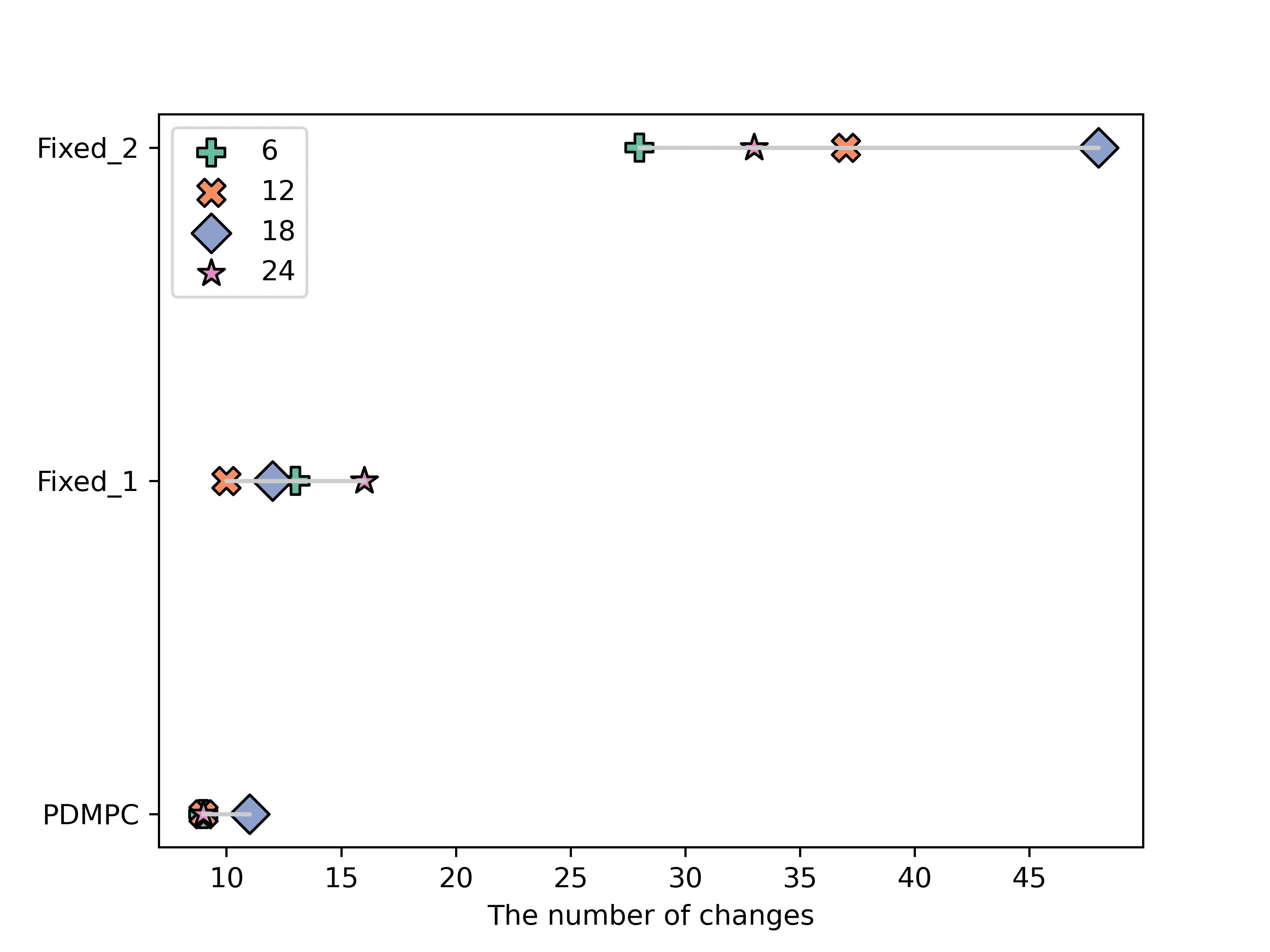
数值实验表明,PD-MPC在大清水库的防洪控制中优于标准MPC。具体来说,PD-MPC能够更好地平衡防洪目标和操作约束,在降低洪峰的同时,减少出流计划的频繁变动。此外,实验还证明了PD-MPC能够根据水文条件动态调整权重和参数,从而更好地适应实际运行中的不确定性。
🎯 应用场景
该研究成果可应用于水库、水坝等水利设施的实时防洪调度。通过动态调整控制策略,可以更有效地应对不同水文条件下的洪水风险,减少洪涝灾害损失。此外,该方法还可以应用于其他具有类似控制需求的领域,如电力系统调度、交通流量控制等。
📄 摘要(原文)
Model Predictive Control (MPC) is an optimal control strategy suited for flood control of water resources infrastructure. Despite many studies on reservoir flood control and their theoretical contribution, optimisation methodologies have not been widely applied in real-time operation due to disparities between research assumptions and practical requirements. To address this gap, we include practical objectives, such as minimising the magnitude and frequency of changes in the existing outflow schedule. Incorporating these objectives transforms the problem into a multi-objective nonlinear optimisation problem that is difficult to solve in real-time. Additionally, it is reasonable to assume that the weights and some parameters, considered the operators' preferences, vary depending on the system state. To overcome these limitations, we propose a framework that converts the original intractable problem into parameterized linear MPC problems with dynamic optimisation of weights and parameters. This is done by introducing a model-based learning concept. We refer to this framework as Parameterised Dynamic MPC (PD-MPC). The effectiveness of this framework is demonstrated through a numerical experiment for the Daecheong multipurpose reservoir in South Korea. We find that PD-MPC outperforms standard MPC-based designs without a dynamic optimisation process for the objective weights and model parameters. Moreover, we demonstrate that the weights and parameters vary with changing hydrological conditions.