Online Constraint Tightening in Stochastic Model Predictive Control: A Regression Approach
作者: Alexandre Capone, Tim Brüdigam, Sandra Hirche
分类: eess.SY, cs.LG, stat.ML
发布日期: 2023-10-04
备注: Submitted to Transactions on Automatic Control
💡 一句话要点
提出数据驱动方法以在线学习约束紧缩参数解决随机控制问题
🎯 匹配领域: 支柱一:机器人控制 (Robot Control)
关键词: 随机控制 机会约束 约束紧缩 高斯过程 在线学习 最优控制 数据驱动
📋 核心要点
- 现有方法在选择约束紧缩参数时面临挑战,且通常假设过程噪声分布已知,导致机会约束未被严格满足。
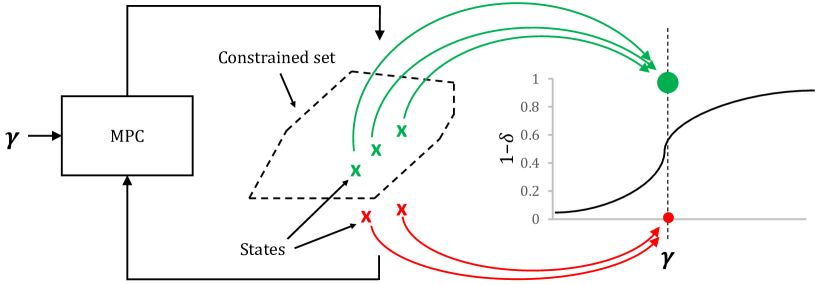
- 本文提出将约束紧缩参数的选择视为二元回归问题,利用高斯过程模型在线学习最小约束紧缩参数。
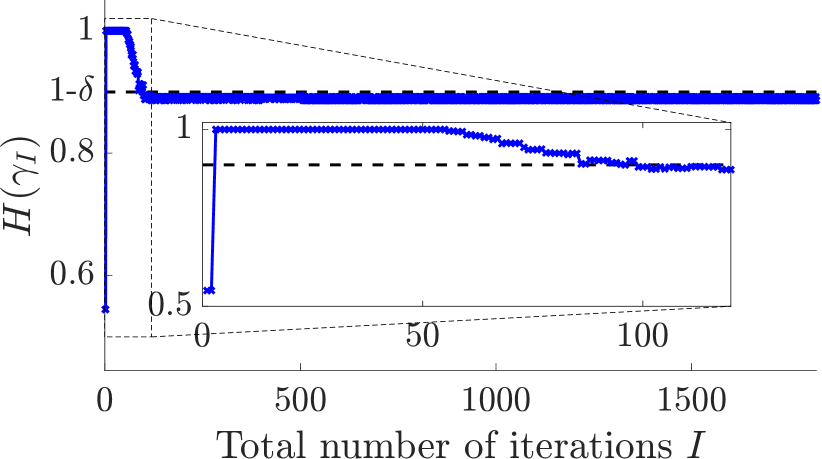
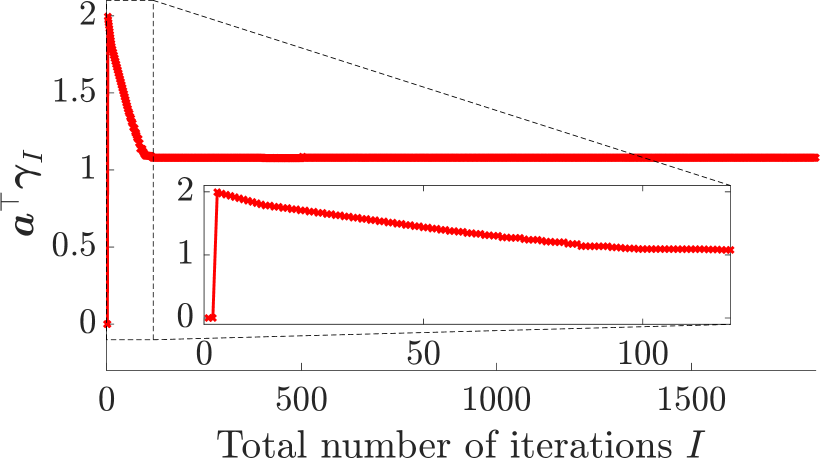
- 实验结果显示,所提方法的约束紧缩参数能够紧密满足机会约束,平均成本低于三种现有先进方法。
📝 摘要(中文)
解决机会约束的随机最优控制问题是控制领域的一项重大挑战,因为目前仅有少数特例存在解析解。常用的计算高效方法是将机会约束重构为硬约束,但选择约束紧缩参数仍然困难,且通常假设过程噪声分布已知。此外,机会约束往往未被严格满足,导致成本过高。本文提出了一种数据驱动的方法,通过将约束紧缩参数的选择重构为二元回归问题,在线学习这些参数。利用高表达能力的高斯过程模型,我们能够近似满足机会约束的最小约束紧缩参数。实验结果表明,该方法在数值实验中产生的约束紧缩参数能够紧密满足机会约束,且平均成本低于三种其他先进方法。
🔬 方法详解
问题定义:本文解决的是机会约束随机最优控制问题,现有方法在选择约束紧缩参数时存在困难,且通常假设过程噪声分布已知,导致机会约束未被严格满足。
核心思路:论文的核心思路是将约束紧缩参数的选择转化为二元回归问题,通过在线学习来动态调整这些参数,以确保在控制过程中能够满足机会约束。
技术框架:整体架构包括数据收集、模型训练和在线调整三个主要模块。首先收集控制过程中的数据,然后利用高斯过程模型进行训练,最后根据实时数据在线调整约束紧缩参数。
关键创新:最重要的技术创新在于将约束紧缩参数的选择形式化为二元回归问题,并使用高斯过程模型进行近似,这与传统方法的静态参数选择有本质区别。
关键设计:在参数设置上,采用高斯过程模型的超参数进行调优,损失函数设计为满足机会约束的最小化目标,网络结构则基于高斯过程的特性进行构建,以确保模型的表达能力。
🖼️ 关键图片
📊 实验亮点
实验结果表明,所提方法在数值实验中产生的约束紧缩参数能够紧密满足机会约束,平均成本比三种其他先进方法低,显示出显著的性能提升,具体提升幅度未知。
🎯 应用场景
该研究的潜在应用领域包括自动驾驶、机器人控制以及智能制造等需要实时决策的场景。通过在线学习约束紧缩参数,可以提高系统的安全性和经济性,降低操作成本,具有重要的实际价值和广泛的应用前景。
📄 摘要(原文)
Solving chance-constrained stochastic optimal control problems is a significant challenge in control. This is because no analytical solutions exist for up to a handful of special cases. A common and computationally efficient approach for tackling chance-constrained stochastic optimal control problems consists of reformulating the chance constraints as hard constraints with a constraint-tightening parameter. However, in such approaches, the choice of constraint-tightening parameter remains challenging, and guarantees can mostly be obtained assuming that the process noise distribution is known a priori. Moreover, the chance constraints are often not tightly satisfied, leading to unnecessarily high costs. This work proposes a data-driven approach for learning the constraint-tightening parameters online during control. To this end, we reformulate the choice of constraint-tightening parameter for the closed-loop as a binary regression problem. We then leverage a highly expressive \gls{gp} model for binary regression to approximate the smallest constraint-tightening parameters that satisfy the chance constraints. By tuning the algorithm parameters appropriately, we show that the resulting constraint-tightening parameters satisfy the chance constraints up to an arbitrarily small margin with high probability. Our approach yields constraint-tightening parameters that tightly satisfy the chance constraints in numerical experiments, resulting in a lower average cost than three other state-of-the-art approaches.