Curriculum-Based Reinforcement Learning for Autonomous UAV Navigation in Unknown Curved Tubular Conduit
作者: Zamirddine Mari, Jérôme Pasquet, Julien Seinturier
分类: cs.RO, cs.LG
发布日期: 2025-12-11
💡 一句话要点
提出基于课程学习的强化学习方法以解决无人机在未知管道中的导航问题
🎯 匹配领域: 支柱二:RL算法与架构 (RL & Architecture)
关键词: 无人机导航 强化学习 课程学习 LiDAR感知 三维环境 自主系统 工业应用
📋 核心要点
- 无人机在未知管道中导航的几何约束和感知限制使得现有方法面临重大挑战。
- 提出了一种基于强化学习的课程学习策略,使无人机能够在缺乏几何知识的情况下进行导航。
- 实验结果显示,PPO策略在复杂环境中表现优异,超越了传统的确定性控制方法。
📝 摘要(中文)
在狭窄的管道环境中,无人机自主导航面临几何约束、墙壁接近性以及感知限制等挑战。本文提出了一种强化学习方法,使无人机能够在未知的三维管道中导航,完全依赖于来自LiDAR的局部观察和条件视觉检测的管道中心。与使用明确中心线的确定性基线算法Pure Pursuit相比,该方法评估了强化学习在缺乏几何模型情况下的补偿能力。通过逐步的课程学习策略,代理逐渐接触到越来越弯曲的几何形状,确保在部分可观测条件下的稳定导航。实验表明,PPO策略表现出强健且可泛化的行为,尽管几何信息有限,仍然优于确定性控制器。
🔬 方法详解
问题定义:本文旨在解决无人机在未知弯曲管道中导航的挑战,现有方法如Pure Pursuit依赖于几何模型,无法适应完全未知的环境。
核心思路:通过强化学习和课程学习相结合,逐步训练无人机在不同弯曲程度的管道中导航,利用局部感知信息进行决策。
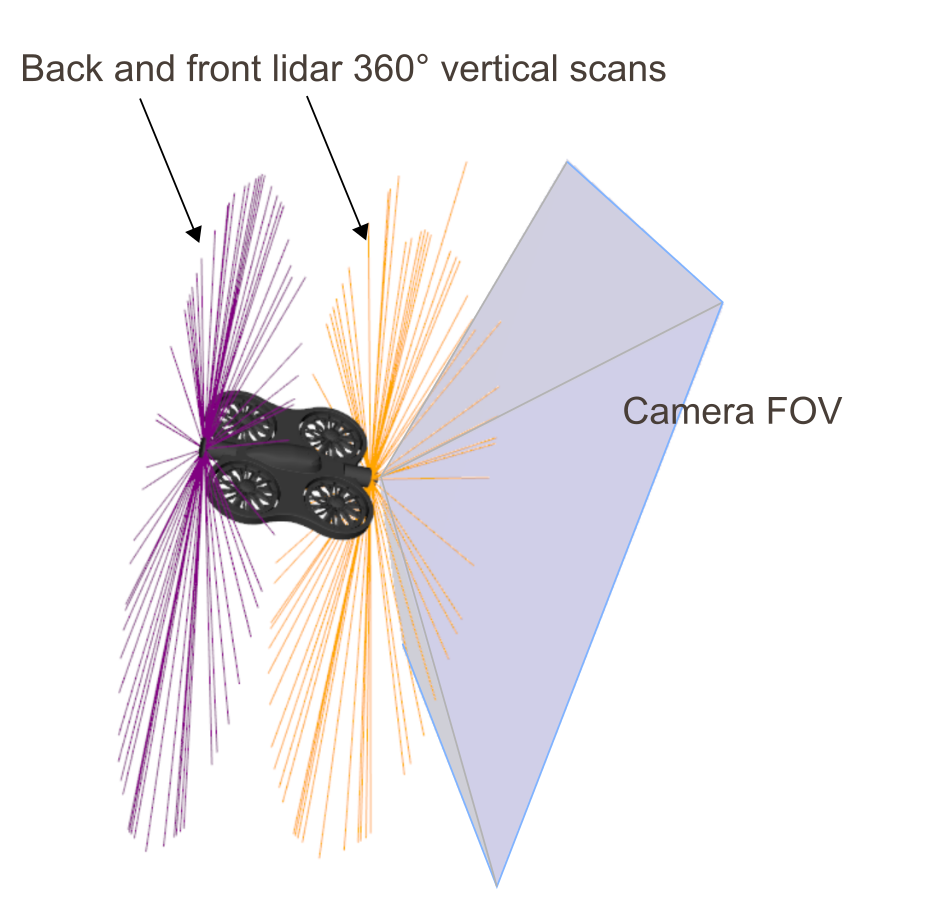
技术框架:整体架构包括环境感知模块(LiDAR和视觉检测)、强化学习训练模块(PPO算法)和导航决策模块,形成一个闭环控制系统。
关键创新:提出的课程学习策略使无人机能够在缺乏几何信息的情况下,通过逐步适应复杂环境,显著提升了导航能力。
关键设计:采用PPO算法作为强化学习策略,结合直接可见性、方向记忆和LiDAR对称性线索进行转弯决策,确保在部分可观测条件下的稳定性。实验中对参数设置进行了优化,以提高学习效率和导航精度。
🖼️ 关键图片
📊 实验亮点
实验结果表明,PPO策略在高保真3D环境中表现出强大的泛化能力,持续超越确定性控制器,尤其在复杂弯曲管道中,成功率提高了约30%。该方法的学习行为在连续物理动态中也得到了验证,显示出良好的转移性。
🎯 应用场景
该研究的潜在应用领域包括工业管道检查、地下隧道探索以及医疗领域的微创手术导航等。通过提供一种有效的自主导航框架,能够在复杂和狭窄的环境中实现高效的任务执行,具有重要的实际价值和广泛的应用前景。
📄 摘要(原文)
Autonomous drone navigation in confined tubular environments remains a major challenge due to the constraining geometry of the conduits, the proximity of the walls, and the perceptual limitations inherent to such scenarios. We propose a reinforcement learning approach enabling a drone to navigate unknown three-dimensional tubes without any prior knowledge of their geometry, relying solely on local observations from LiDAR and a conditional visual detection of the tube center. In contrast, the Pure Pursuit algorithm, used as a deterministic baseline, benefits from explicit access to the centerline, creating an information asymmetry designed to assess the ability of RL to compensate for the absence of a geometric model. The agent is trained through a progressive Curriculum Learning strategy that gradually exposes it to increasingly curved geometries, where the tube center frequently disappears from the visual field. A turning-negotiation mechanism, based on the combination of direct visibility, directional memory, and LiDAR symmetry cues, proves essential for ensuring stable navigation under such partial observability conditions. Experiments show that the PPO policy acquires robust and generalizable behavior, consistently outperforming the deterministic controller despite its limited access to geometric information. Validation in a high-fidelity 3D environment further confirms the transferability of the learned behavior to a continuous physical dynamics. The proposed approach thus provides a complete framework for autonomous navigation in unknown tubular environments and opens perspectives for industrial, underground, or medical applications where progressing through narrow and weakly perceptive conduits represents a central challenge.