Design and Fabrication of Soft Locomotion Robots based on Spatial Compliant Mechanisms
作者: Andrija Milojevic, Kyrre Glette
分类: cs.RO
发布日期: 2024-08-09
备注: 20 pages, 11 figures
💡 一句话要点
提出基于空间顺应机构的软体机器人设计与制造方法,实现快速运动。
🎯 匹配领域: 支柱一:机器人控制 (Robot Control)
关键词: 软体机器人 空间顺应机构 进化算法 3D打印 运动控制
📋 核心要点
- 现有软体机器人设计复杂且难以制造,缺乏高效统一的设计方法。
- 提出一种基于弹性梁和空间顺应机构的软体机器人设计方法,利用进化算法优化。
- 实验验证了该方法的可行性,实现了快速运动、有效载荷运动和水下运动等功能。
📝 摘要(中文)
软体机器人因其柔性、安全和减震等特性,在多个领域展现出巨大潜力。然而,有效的设计方法和生产技术仍然是软体机器人发展的挑战。针对现有软体机器人设计复杂、难以生产的问题,本文提出了一种基于弹性梁和空间顺应机构的软体机器人设计方法。该方法采用进化算法,能够创建具有高运动和力传递比的设计。具体而言,我们专注于使用中心线性致动器开发运动机构。我们的方法使用常见的塑料材料和3D打印机来制造设计。实验结果表明,该方法能够成功生产并实现软体机器人的实际操作。实验结果表明,使用弹性梁和进化方法可以促进具有理想运动特性的软体机器人的创建,包括高达每秒3.7倍体长的快速运动、有效载荷运动和水下运动。该方法有望促进更高效、更实用的软体机器人在各个领域的应用。
🔬 方法详解
问题定义:论文旨在解决软体机器人设计复杂、制造困难的问题。现有软体机器人的设计往往过于复杂,难以生产,缺乏一种高效且统一的设计方法,限制了软体机器人在实际应用中的推广。
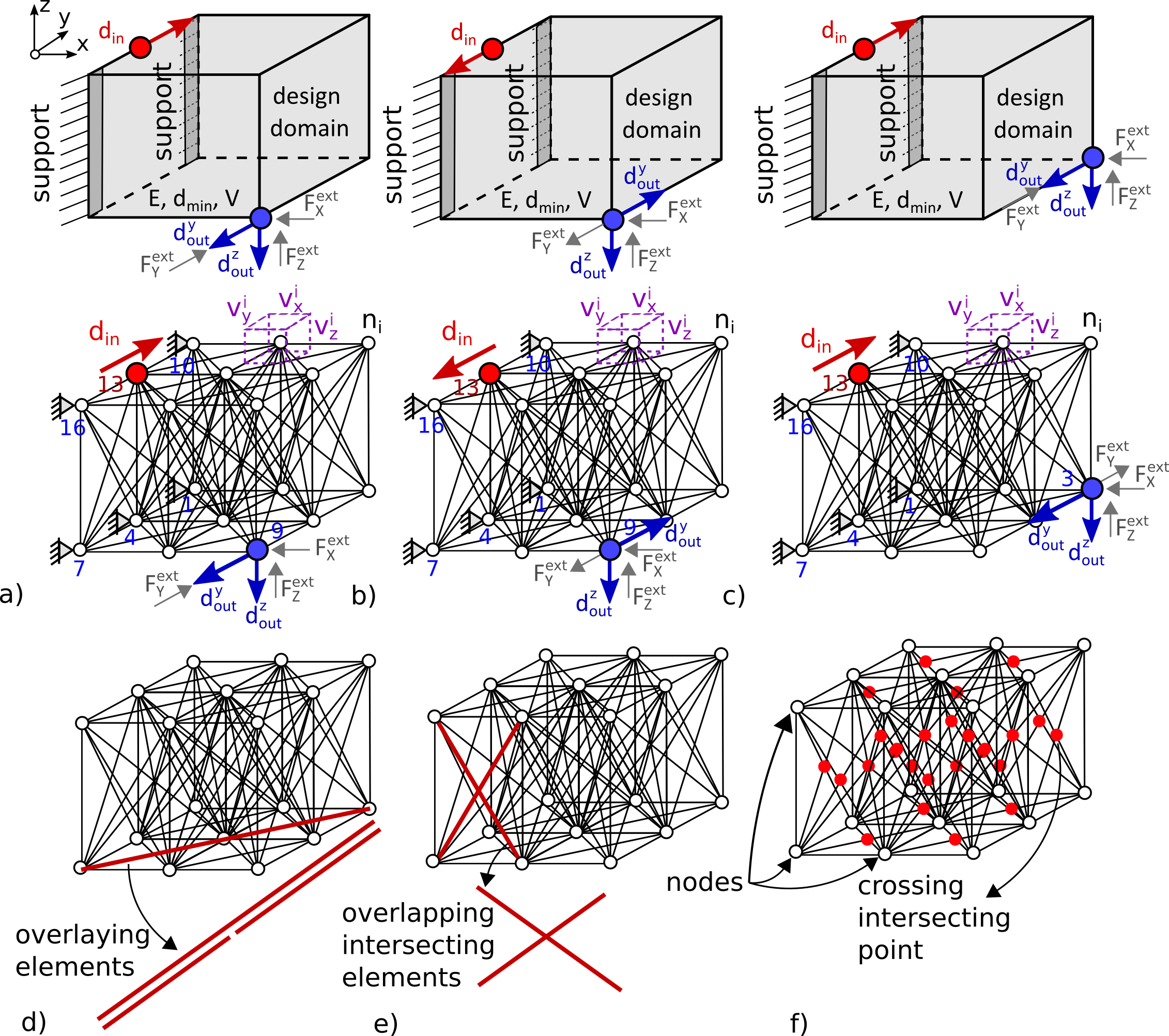
核心思路:论文的核心思路是利用弹性梁和空间顺应机构,通过进化算法优化软体机器人的设计,使其具有高运动和力传递比。这种设计思路旨在简化软体机器人的结构,使其更易于制造,同时保证其运动性能。
技术框架:该方法主要包含以下几个阶段:1) 定义软体机器人的运动需求;2) 基于弹性梁和空间顺应机构构建软体机器人的初始设计;3) 使用进化算法对设计进行优化,目标是最大化运动和力传递比;4) 使用3D打印技术制造软体机器人;5) 进行实验验证,评估软体机器人的运动性能。
关键创新:该方法的关键创新在于将弹性梁和空间顺应机构与进化算法相结合,实现软体机器人的优化设计。与传统的软体机器人设计方法相比,该方法能够自动搜索最优设计方案,避免了人工设计的局限性,提高了设计效率和性能。
关键设计:进化算法是该方法的关键组成部分。算法需要定义合适的适应度函数,用于评估软体机器人的运动性能。适应度函数通常包括运动速度、力传递比等指标。此外,还需要选择合适的进化算子,如交叉和变异,以保证算法的收敛性和多样性。材料选择方面,论文使用了常见的塑料材料,以便于3D打印制造。
🖼️ 关键图片


📊 实验亮点
实验结果表明,该方法能够成功制造出具有良好运动性能的软体机器人。实验中,软体机器人实现了高达每秒3.7倍体长的快速运动,并能够携带有效载荷进行运动。此外,该软体机器人还能够在水下环境中运动,展示了其良好的环境适应性。这些实验结果验证了该方法的可行性和有效性。
🎯 应用场景
该研究成果可应用于搜索救援、医疗康复、水下探测等领域。软体机器人具有良好的环境适应性和安全性,能够在复杂和危险的环境中执行任务。例如,在灾难现场,软体机器人可以进入狭窄的空间进行搜索救援;在医疗领域,软体机器人可以用于微创手术和康复训练;在水下环境,软体机器人可以进行水下探测和维护。未来,该方法有望推动软体机器人在更多领域的应用。
📄 摘要(原文)
Soft robotics has emerged as a promising technology that holds great potential for various application areas. This is due to soft materials unique properties, including flexibility, safety, and shock absorption, among others. Despite many advancement in the field, the development of effective design methodologies and production techniques for soft robots remains a challenge. Although numerous robot prototypes have been proposed in recent years, their designs are often complex and difficult to produce. As such, there is a need for more efficient and unified design approaches that can facilitate the production of soft robots with desirable properties. In this paper, we propose a method for designing soft robots using elastic beams and spatial compliant mechanisms. The method is based on an evolutionary approach that enables the creation of designs with both high motion and force transmission ratios. Specifically, we focus on the development of locomotion mechanisms using a central linear actuator. Our approach involves the use of commonly available plastic materials and a 3D printer to manufacture the designs. We demonstrate the feasibility of our approach by presenting experimental results that show successful production and real world operation. Overall, our findings suggest that the use of elastic beams and an evolutionary approach can facilitate the creation of soft robots with desirable locomotion properties, including fast locomotion up to 3.7 body lengths per second, locomotion with a payload, and underwater locomotion. This method has the potential to enable the development of more efficient and practical soft robots for various applications.