ExoRecovery: Push Recovery with a Lower-Limb Exoskeleton based on Stepping Strategy
作者: Zeynep Özge Orhan, Milad Shafiee, Vincent Juillard, Joel Coelho Oliveira, Auke Ijspeert, Mohamed Bouri
分类: cs.RO, eess.SY
发布日期: 2023-10-31
备注: Submitted for a conference. 8 pages including references, 8 figures
💡 一句话要点
提出基于步态策略的下肢外骨骼推力恢复控制框架
🎯 匹配领域: 支柱一:机器人控制 (Robot Control)
关键词: 下肢外骨骼 推力恢复 步态规划 实时优化 用户安全性 康复机器人 阻抗控制
📋 核心要点
- 平衡丧失是下肢外骨骼应用中的主要问题,现有方法在应对外部推力时缺乏有效的恢复策略。
- 本文提出了一种基于步态策略的控制框架,通过在线优化步长和位置,实现全向恢复步态规划。
- 实验结果表明,在零扭矩模式下的推力恢复实验与外骨骼的恢复辅助模式一致,验证了控制框架的有效性。
📝 摘要(中文)
平衡丧失是下肢外骨骼应用中的重大挑战,可能导致用户跌倒,从而影响安全性和信心。本文提出了一种控制框架,通过在线优化步长和位置来实现全向恢复步态规划,以应对外部力量。我们将步长和位置映射到类人足部轨迹,并通过逆向运动学转换为关节轨迹。这些轨迹通过阻抗控制器执行,促进外骨骼与用户之间的协作。此外,该框架基于运动的发散成分概念,即外推质心,已被确立为描述人类运动的一致动态。我们的实时在线优化框架增强了外骨骼用户在不可预见力量下的适应性,从而提高了整体用户稳定性和安全性。通过仿真和实验验证了我们方法的有效性。
🔬 方法详解
问题定义:本文旨在解决下肢外骨骼在遭遇外部推力时的平衡丧失问题。现有方法在动态环境中缺乏有效的恢复策略,导致用户安全性降低。
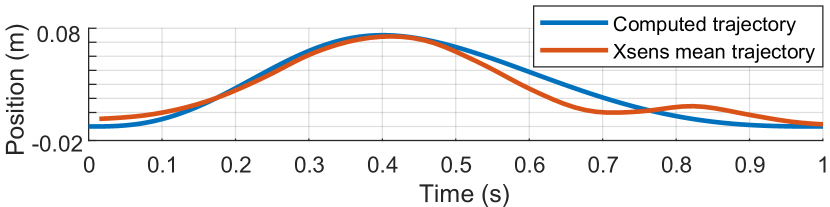
核心思路:提出了一种控制框架,通过在线优化步长和位置,实时生成类人足部轨迹,并将其转换为关节轨迹,以实现有效的推力恢复。
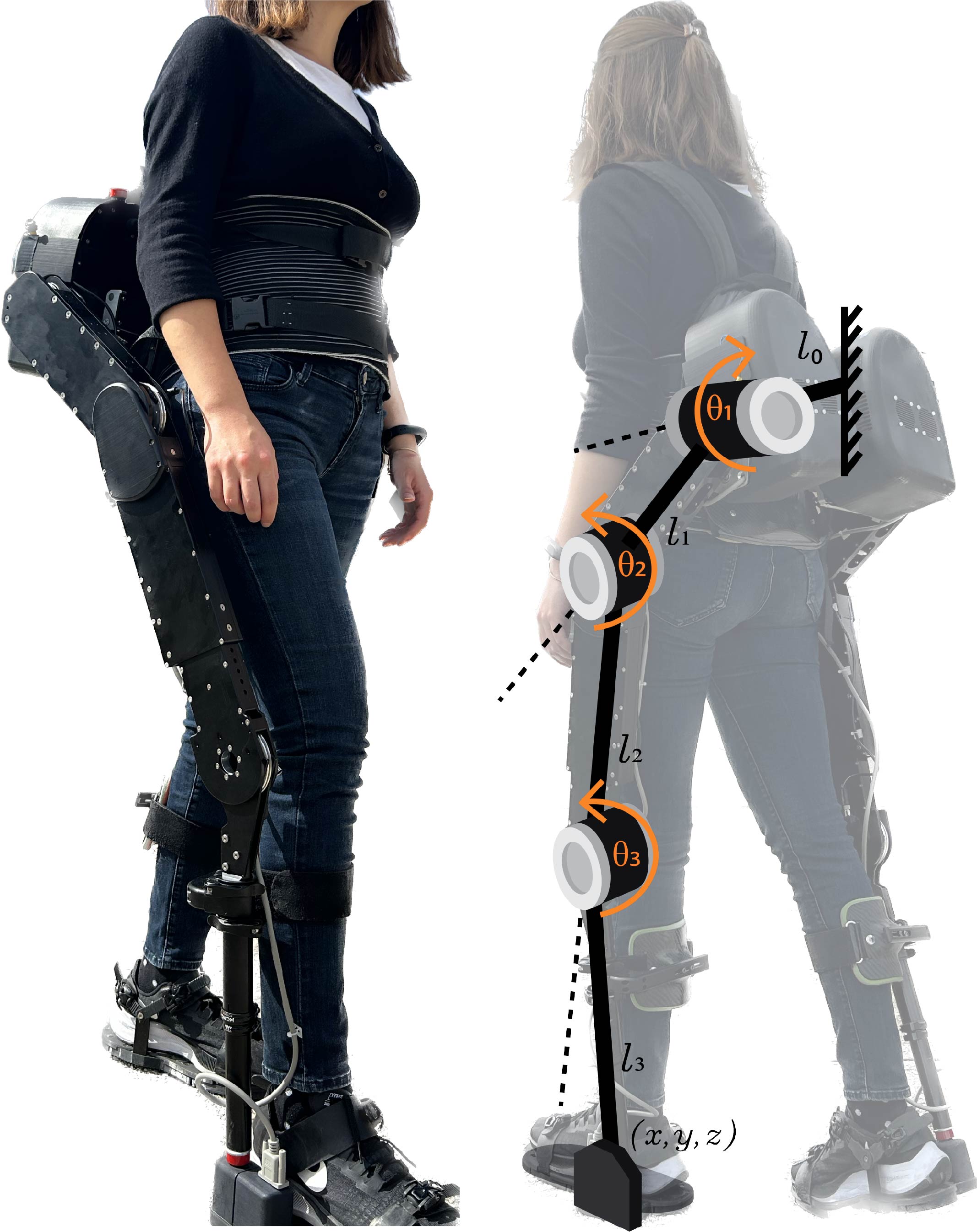
技术框架:整体架构包括步态规划模块、逆向运动学模块和阻抗控制器。步态规划模块负责在线优化步长和位置,逆向运动学模块将足部轨迹转换为关节轨迹,阻抗控制器则执行这些轨迹以实现用户与外骨骼的协作。
关键创新:本研究首次提出了一种协作推力恢复框架,依赖于在前后和侧向方向上同时调整步态参数,显著提升了外骨骼的适应性和用户的稳定性。
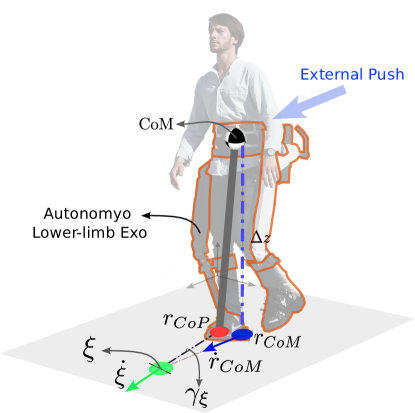
关键设计:在步态规划中,采用了发散成分的概念来优化步长和位置,确保生成的轨迹符合人类运动的动态特性。
🖼️ 关键图片
📊 实验亮点
实验结果显示,在零扭矩模式下的推力恢复实验与外骨骼的恢复辅助模式高度一致,验证了控制框架的有效性。该方法在用户稳定性和安全性方面的提升幅度显著,展示了其在实际应用中的潜力。
🎯 应用场景
该研究的潜在应用领域包括康复机器人、助行器和老年人辅助设备等。通过提高下肢外骨骼的适应性和用户安全性,能够显著提升用户的生活质量和独立性,未来可能在医疗和日常生活中发挥重要作用。
📄 摘要(原文)
Balance loss is a significant challenge in lower-limb exoskeleton applications, as it can lead to potential falls, thereby impacting user safety and confidence. We introduce a control framework for omnidirectional recovery step planning by online optimization of step duration and position in response to external forces. We map the step duration and position to a human-like foot trajectory, which is then translated into joint trajectories using inverse kinematics. These trajectories are executed via an impedance controller, promoting cooperation between the exoskeleton and the user. Moreover, our framework is based on the concept of the divergent component of motion, also known as the Extrapolated Center of Mass, which has been established as a consistent dynamic for describing human movement. This real-time online optimization framework enhances the adaptability of exoskeleton users under unforeseen forces thereby improving the overall user stability and safety. To validate the effectiveness of our approach, simulations, and experiments were conducted. Our push recovery experiments employing the exoskeleton in zero-torque mode (without assistance) exhibit an alignment with the exoskeleton's recovery assistance mode, that shows the consistency of the control framework with human intention. To the best of our knowledge, this is the first cooperative push recovery framework for the lower-limb human exoskeleton that relies on the simultaneous adaptation of intra-stride parameters in both frontal and sagittal directions. The proposed control scheme has been validated with human subject experiments.