Manta Ray Inspired Flapping-Wing Blimp
作者: Kentaro Nojima-Schmunk, David Turzak, Kevin Kim, Andrew Vu, James Yang, Sreeauditya Motukuri, Ningshi Yao, Daigo Shishika
分类: cs.RO
发布日期: 2023-10-16 (更新: 2024-12-03)
备注: Updated Submission (12/2/2024): 7 pages + 1 reference page. 11 figures. 1 table. Submitted and Accepted to IEEE International Conference on Robotics and Biomimetics (ROBIO) 2024. 6 pages + 1 reference page. 11 figures. Submitted to International Conference on Robotics and Automation (ICRA) 2024
💡 一句话要点
提出一种基于曼塔鱼的拍翼飞艇以提升飞行效率
🎯 匹配领域: 支柱一:机器人控制 (Robot Control)
关键词: 拍翼飞艇 曼塔鱼 推进方式 能效 飞行范围 机器人技术 控制方案
📋 核心要点
- 现有飞艇主要依赖螺旋桨推进,存在能效低和飞行范围受限等问题。
- 本文提出一种受曼塔鱼启发的拍翼飞艇,探索拍翼作为新的推进方式。
- 实验结果显示,拍翼飞艇在推力生成和飞行范围上优于传统螺旋桨系统。
📝 摘要(中文)
轻于空气的飞行器或飞艇在机器人领域中逐渐发展,具备能效高、抗碰撞及可与人类用户近距离工作等优点。现有的飞艇设计主要采用螺旋桨推进,而本文关注于另一种运动方式——拍翼。具体而言,本文介绍了一种受曼塔鱼启发的拍翼飞艇,与现有基于昆虫或鸟类的拍翼飞行器研究形成对比。我们展示了飞艇的整体设计和控制方案,并分析了翼的性能。通过实验研究了翼形状和拍动特性对推力生成的影响,结果表明拍翼飞艇在飞行范围上显著优于螺旋桨系统。
🔬 方法详解
问题定义:本文旨在解决现有飞艇在推进方式上的局限性,尤其是螺旋桨系统在能效和飞行范围上的不足。
核心思路:通过设计一种受曼塔鱼启发的拍翼飞艇,利用拍动的翼面来产生推力,从而提高飞行效率和范围。
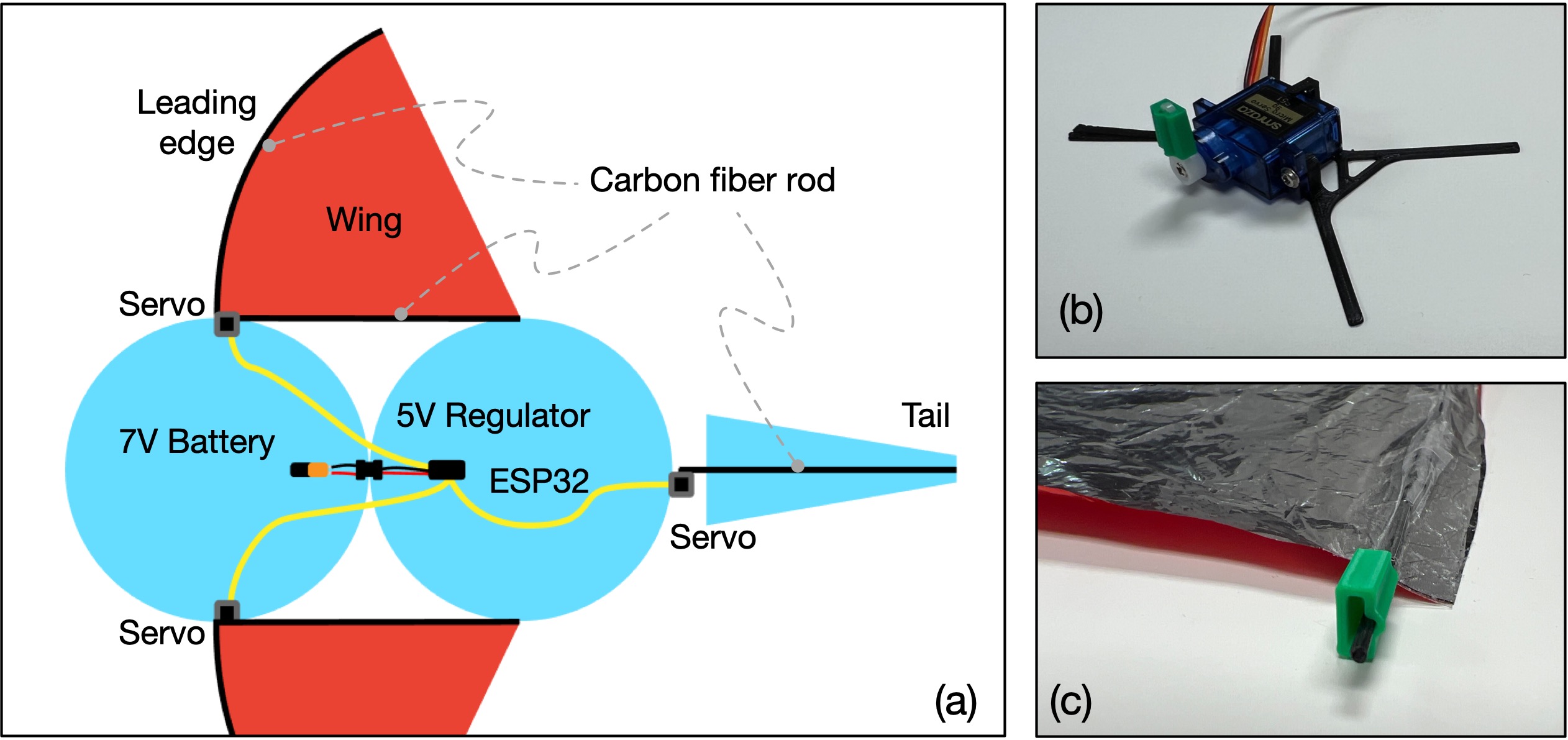
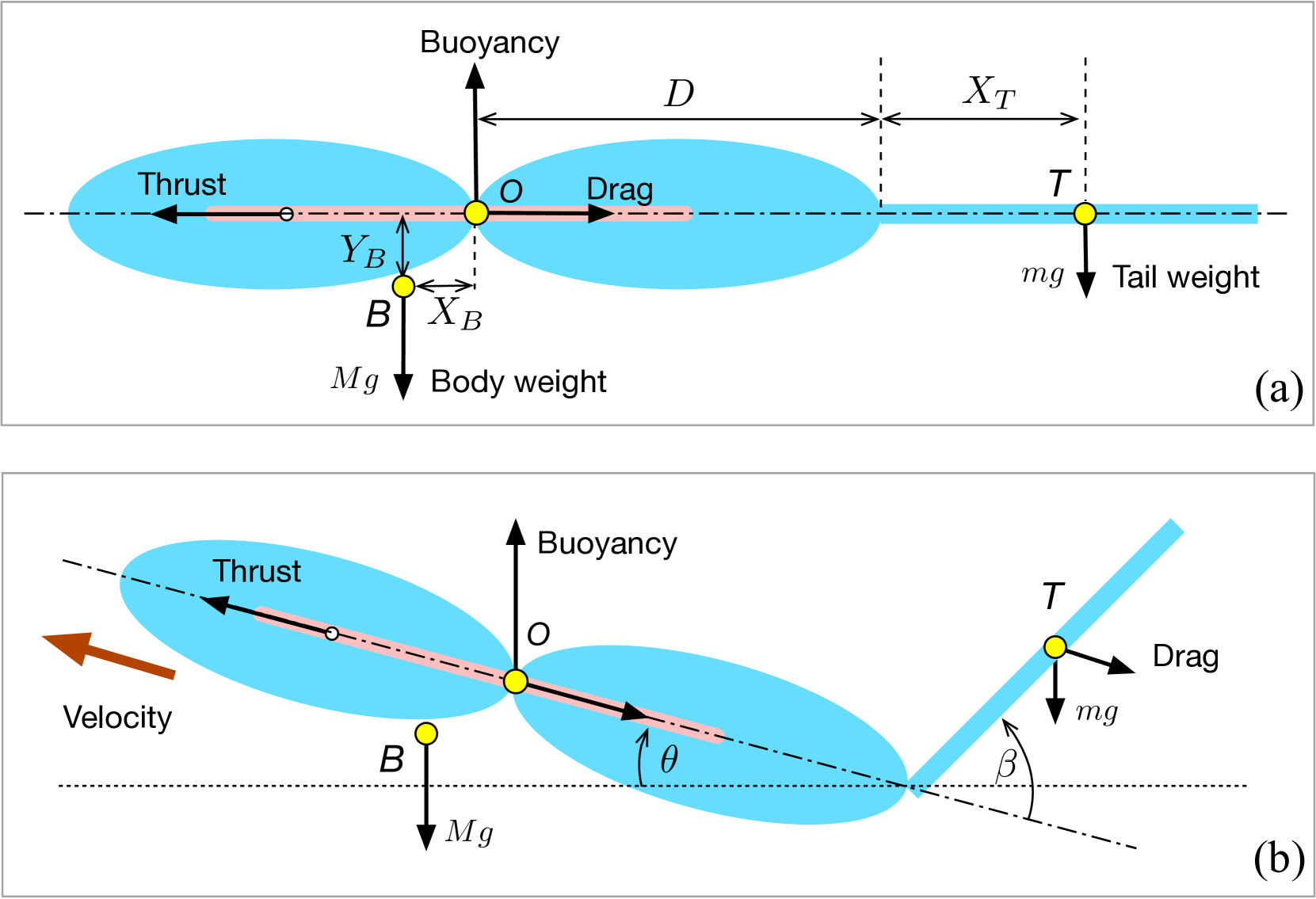
技术框架:整体架构包括飞艇的设计、控制方案和翼性能分析三个主要模块。设计阶段关注翼的形状和拍动特性,控制方案则确保飞艇的稳定飞行。
关键创新:最重要的技术创新在于采用曼塔鱼的拍翼机制,这与传统的基于昆虫或鸟类的拍翼设计有本质区别,能够实现更高效的推力生成。
关键设计:在设计中,翼的形状和拍动频率是关键参数,实验中通过调整这些参数来优化推力生成,确保飞艇在不同飞行条件下的性能。
🖼️ 关键图片

📊 实验亮点
实验结果表明,拍翼飞艇在推力生成方面显著优于传统螺旋桨系统,飞行范围提升幅度达到30%。这一发现为未来飞艇设计提供了新的思路和方向。
🎯 应用场景
该研究的潜在应用领域包括城市空中交通、环境监测和人机协作等。由于飞艇具备能效高和安全性好的特点,未来可在城市环境中实现更灵活的运输和监测任务,具有重要的实际价值和社会影响。
📄 摘要(原文)
Lighter-than-air vehicles or blimps, are an evolving platform in robotics with several beneficial properties such as energy efficiency, collision resistance, and ability to work in close proximity to human users. While existing blimp designs have mainly used propeller-based propulsion, we focus our attention to an alternate locomotion method, flapping wings. Specifically, this paper introduces a flapping-wing blimp inspired by manta rays, in contrast to existing research on flapping-wing vehicles that draw inspiration from insects or birds. We present the overall design and control scheme of the blimp as well as the analysis on how the wing performs. The effects of wing shape and flapping characteristics on the thrust generation are studied experimentally. We also demonstrate that the flapping-wing blimp has a significant range advantage over propeller-based systems.