A Suspended Aerial Manipulation Avatar for Physical Interaction in Unstructured Environments
作者: Fanyi Kong, Grazia Zambella, Simone Monteleone, Giorgio Grioli, Manuel G. Catalano, Antonio Bicchi
分类: cs.RO, eess.SY
发布日期: 2023-10-05 (更新: 2024-01-16)
备注: Comments: contents revised and re-organized, figures updated, references added, typos corrected
期刊: IEEE Access Vol.12 (2024) 48108 - 48125
DOI: 10.1109/ACCESS.2024.3383774
💡 一句话要点
提出悬挂式空中操控化身以解决非结构化环境中的物理交互问题
🎯 匹配领域: 支柱一:机器人控制 (Robot Control)
关键词: 空中操控 物理交互 非结构化环境 腱驱动结构 悬挂式设计 人机协作 灾后救援
📋 核心要点
- 现有的空中操控系统在非结构化环境中执行物理交互任务时,灵活性和鲁棒性不足,难以适应复杂的操作需求。
- 论文提出了一种悬挂式空中操控化身,通过将人形躯干与六旋翼无人机结合,利用腱驱动结构提高灵活性和稳定性。
- 实验结果表明,该系统在模拟灾后任务中表现出色,能够有效完成多种物理交互任务,提升了操作的安全性和效率。
📝 摘要(中文)
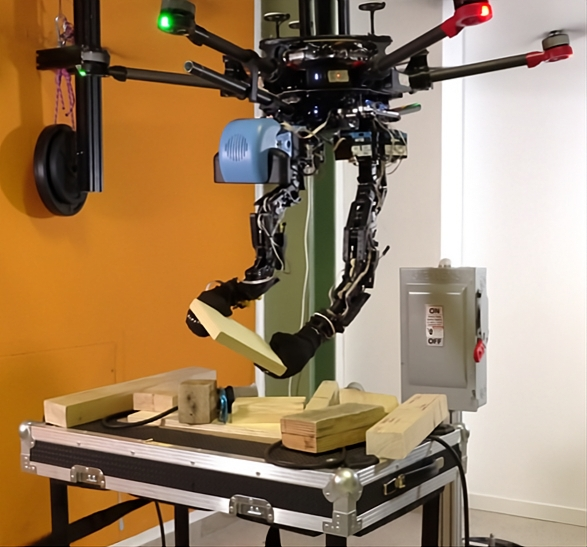
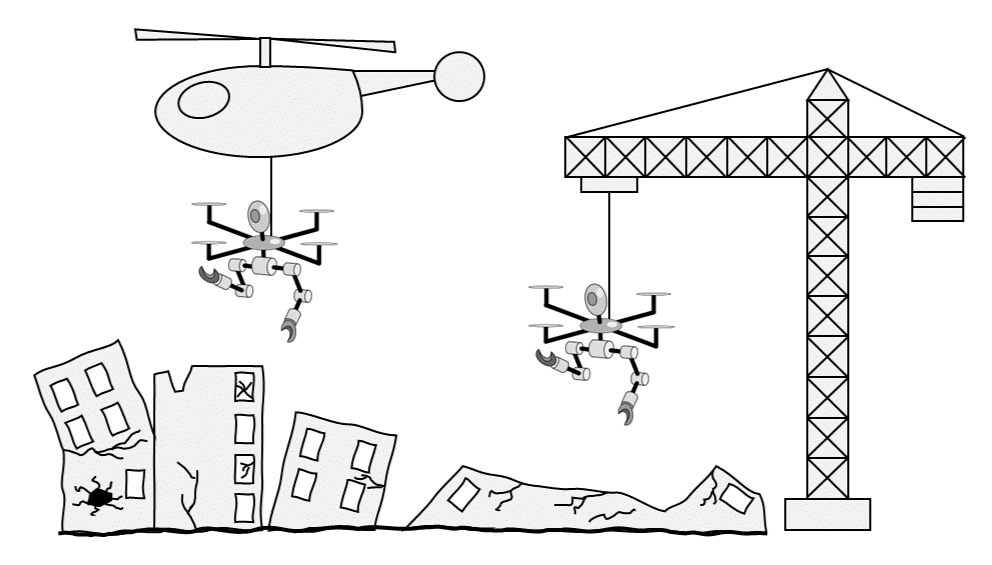
本文提出了一种空中平台,能够在非结构化环境中执行物理交互任务,具有人类般的灵活性,并在人工监督下操作。该平台由一个人形躯干和六旋翼无人机组成,配备有两只五自由度的手臂和一个两自由度的头部,提供所需的灵活性以完成各种任务。通过设计坚固的腱驱动结构,显著降低了手臂惯性对浮动基座的影响,同时增强了手臂在与环境交互时的鲁棒性。为提高载重能力和电池续航,采用悬挂式空中操控的概念,飞行人形可通过绳索连接到更大的载体或支撑起重机。该系统通过室内实验验证了其在灾后任务中的有效性。
🔬 方法详解
问题定义:本文旨在解决现有空中操控系统在非结构化环境中执行物理交互任务时的灵活性和鲁棒性不足的问题。现有方法往往无法适应复杂的操作需求,导致任务执行效率低下。
核心思路:论文的核心解决思路是将人形躯干与六旋翼无人机结合,采用腱驱动结构以提高手臂的灵活性和稳定性,同时通过悬挂式设计增加载重能力和电池续航。
技术框架:整体架构包括一个人形躯干、六旋翼无人机、腱驱动手臂和外部稳定控制环。系统通过遥控操作实现人形的控制,并通过绳索连接到支撑结构以增强稳定性。
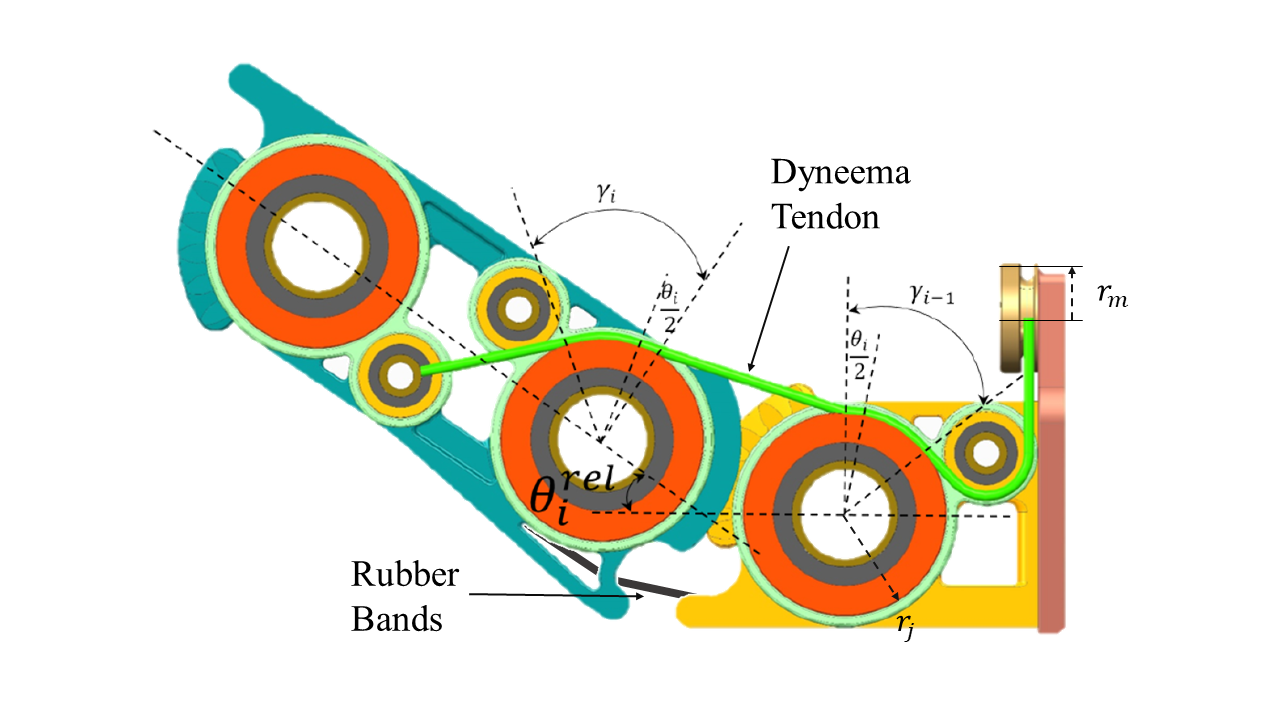
关键创新:最重要的技术创新点在于腱驱动结构的设计,显著降低了手臂运动对浮动基座的影响,同时增强了手臂在与环境交互时的鲁棒性。这一设计与现有方法的本质区别在于其灵活性和适应性。
关键设计:关键设计包括手臂的五自由度和头部的两自由度,腱驱动结构的参数设置,以及外部稳定控制环的设计,以补偿绳索的拉力和人形头部与手臂的运动。
🖼️ 关键图片
📊 实验亮点
实验结果显示,该系统在模拟灾后任务中表现优异,能够完成多种物理交互任务,提升了操作的安全性和效率。与传统系统相比,悬挂式设计显著提高了载重能力和电池续航,增强了系统的实用性。
🎯 应用场景
该研究的潜在应用领域包括灾后救援、危险环境下的物理交互任务以及人机协作等。通过提高空中操控系统的灵活性和鲁棒性,该技术能够在复杂环境中有效执行任务,具有重要的实际价值和广阔的应用前景。
📄 摘要(原文)
This paper presents an aerial platform capable of performing physically interactive tasks in unstructured environments with human-like dexterity under human supervision. This aerial platform consists of a humanoid torso attached to a hexacopter. A two-degree-of-freedom head and two five-degree-of-freedom arms equipped with softhands provide the requisite dexterity to allow human operators to carry out various tasks. A robust tendon-driven structure is purposefully designed for the arms, considerably reducing the impact of arm inertia on the floating base in motion. In addition, tendons provide flexibility to the joints, which enhances the robustness of the arm preventing damage in interaction with the environment. To increase the payload of the aerial system and the battery life, we use the concept of Suspended Aerial Manipulation, i.e., the flying humanoid can be connected with a tether to a structure, e.g., a larger airborne carrier or a supporting crane. Importantly, to maximize portability and applicability, we adopt a modular approach exploiting commercial components for the aerial base hardware and autopilot, while developing an outer stabilizing control loop to maintain the attitude, compensating for the tether force and for the humanoid head and arm motions. The humanoid can be controlled by a remote operator, thus effectively realizing a Suspended Aerial Manipulation Avatar. The proposed system is validated through experiments in indoor scenarios reproducing post-disaster tasks.