ElasticVR: Elastic Task Computing in Multi-User Multi-Connectivity Wireless Virtual Reality (VR) Systems
作者: Babak Badnava, Jacob Chakareski, Morteza Hashemi
分类: cs.IT, cs.LG, eess.IV
发布日期: 2025-12-13
备注: Submitted to ACM TOMM
💡 一句话要点
ElasticVR:面向多用户多连接无线VR系统的弹性任务计算框架
🎯 匹配领域: 支柱二:RL算法与架构 (RL & Architecture)
关键词: 虚拟现实 弹性计算 多连接 深度强化学习 边缘计算 360视频 任务卸载
📋 核心要点
- 现有VR应用对计算和数据速率需求高,传统方法难以根据用户和系统资源动态调整。
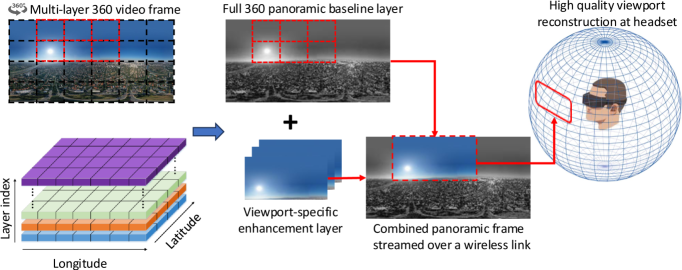
- ElasticVR通过可扩展的360视频分块和多连接架构,实现VR计算任务的弹性卸载,优化QoE和能耗。
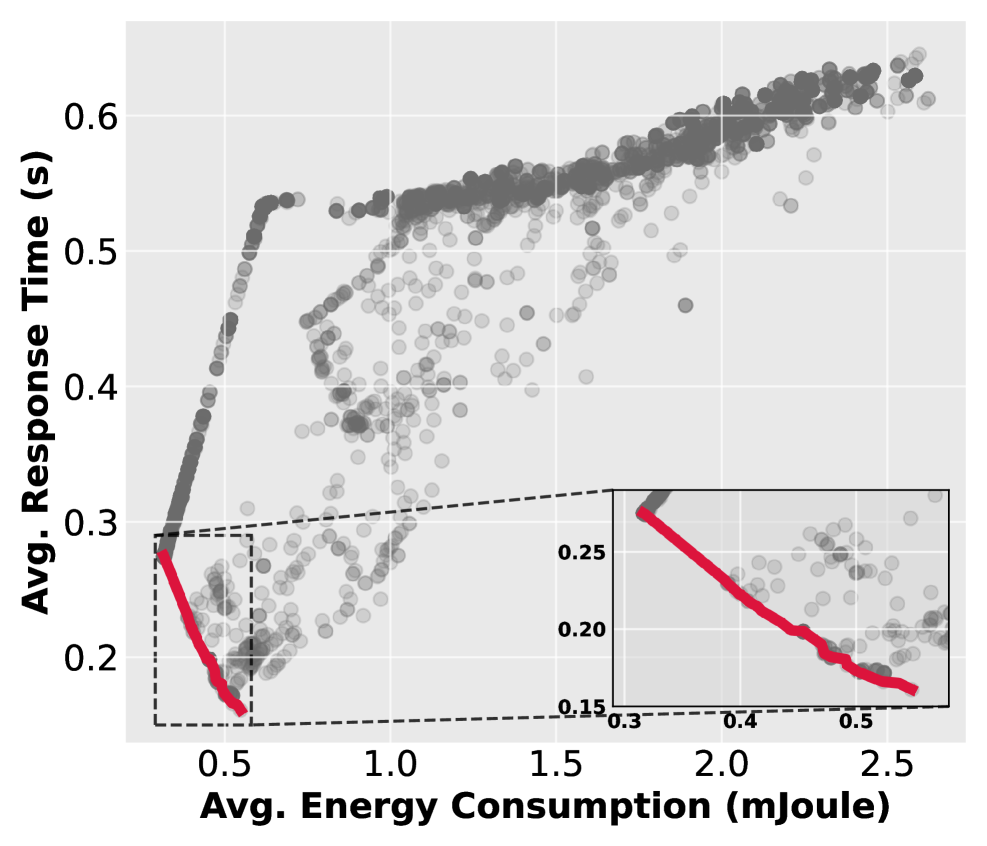
- 实验表明,ElasticVR显著提升了PSNR,并降低了响应时间和能耗,验证了其有效性。
📝 摘要(中文)
本文提出ElasticVR框架,旨在解决新兴VR应用中高保真360视频流对计算和数据速率的大量需求。ElasticVR利用可扩展的360视频分块技术,实现弹性VR计算任务,使其能够根据用户和系统资源自适应地调整计算和数据速率。该框架将可扩展的360视频分块集成到边缘-客户端无线多连接架构中,用于跨多个VR用户的联合弹性任务计算卸载。为了平衡通信、计算、能耗和QoE之间的权衡,本文构建了一个约束QoE和能量优化问题,该问题将多用户/多连接动作空间与VR计算任务的弹性相结合。ElasticVR框架引入了两种多智能体深度强化学习解决方案:CPPG和IPPG。实验结果表明,与未采用弹性的VR计算相比,ElasticVR框架将PSNR提高了43.21%,同时将响应时间和能耗分别降低了42.35%和56.83%。
🔬 方法详解
问题定义:论文旨在解决多用户多连接无线VR系统中,如何高效地进行弹性任务计算卸载,以满足高保真360视频流的需求。现有方法难以在通信、计算、能耗和QoE之间取得平衡,并且缺乏对VR计算任务弹性的有效利用。
核心思路:论文的核心思路是利用可扩展的360视频分块技术,将VR计算任务分解为具有弹性的子任务,并根据用户和系统资源动态调整这些子任务的计算和数据速率。通过多连接架构,实现跨多个VR用户的联合任务卸载,从而优化整体的QoE和能耗。
技术框架:ElasticVR框架包含以下主要模块:1) 可扩展的360视频分块模块,用于将360视频分解为不同分辨率和质量的瓦片;2) 多连接无线网络模块,提供多个无线连接供用户选择;3) 边缘计算服务器,用于执行部分VR计算任务;4) 多智能体深度强化学习模块,用于制定任务卸载和资源分配策略。框架首先对360视频进行分块,然后用户根据自身状态和网络状况,选择合适的瓦片进行请求。边缘服务器根据用户的请求和系统资源,动态调整任务卸载策略,最终将计算结果返回给用户。
关键创新:论文的关键创新在于将可扩展的360视频分块技术与多智能体深度强化学习相结合,实现了VR计算任务的弹性卸载。此外,论文还提出了两种多智能体深度强化学习解决方案:CPPG和IPPG,分别采用集中式训练和集中式执行,以及集中式训练和分布式执行的策略,以应对不同的系统规模和计算资源限制。
关键设计:CPPG采用集中式训练和集中式执行,通过一个中心化的策略网络来控制所有用户的任务卸载和资源分配。IPPG采用集中式训练和分布式执行,每个用户都有一个独立的策略网络,根据本地状态信息独立地做出决策。IPPG通过参数共享和信息共享来学习鲁棒的策略。论文使用PSNR作为QoE的衡量指标,并设计了一个约束优化问题,以最大化QoE并最小化能耗。具体损失函数的设计和网络结构细节未明确给出,属于未知信息。
🖼️ 关键图片

📊 实验亮点
实验结果表明,ElasticVR框架在多用户多连接无线VR系统中表现出色。与未采用弹性的VR计算相比,ElasticVR框架将PSNR提高了43.21%,同时将响应时间和能耗分别降低了42.35%和56.83%。这些数据表明,ElasticVR能够有效地提升用户体验,并降低系统能耗。
🎯 应用场景
ElasticVR框架可应用于各种需要高计算和数据速率的VR应用场景,例如远程协作、虚拟现实游戏、360度视频直播等。通过弹性任务计算卸载,可以显著提升用户体验,降低能耗,并提高系统的可扩展性。该研究对于推动VR技术在无线环境下的普及具有重要意义。
📄 摘要(原文)
Diverse emerging VR applications integrate streaming of high fidelity 360 video content that requires ample amounts of computation and data rate. Scalable 360 video tiling enables having elastic VR computational tasks that can be scaled adaptively in computation and data rate based on the available user and system resources. We integrate scalable 360 video tiling in an edge-client wireless multi-connectivity architecture for joint elastic task computation offloading across multiple VR users called ElasticVR. To balance the trade-offs in communication, computation, energy consumption, and QoE that arise herein, we formulate a constrained QoE and energy optimization problem that integrates the multi-user/multi-connectivity action space with the elasticity of VR computational tasks. The ElasticVR framework introduces two multi-agent deep reinforcement learning solutions, namely CPPG and IPPG. CPPG adopts a centralized training and centralized execution approach to capture the coupling between users' communication and computational demands. This leads to globally coordinated decisions at the cost of increased computational overheads and limited scalability. To address the latter challenges, we also explore an alternative strategy denoted IPPG that adopts a centralized training with decentralized execution paradigm. IPPG leverages shared information and parameter sharing to learn robust policies; however, during execution, each user takes action independently based on its local state information only. The decentralized execution alleviates the communication and computation overhead of centralized decision-making and improves scalability. We show that the ElasticVR framework improves the PSNR by 43.21%, while reducing the response time and energy consumption by 42.35% and 56.83%, respectively, compared with a case where no elasticity is incorporated into VR computations.