Integrating Large Language Models for Automated Structural Analysis
作者: Haoran Liang, Mohammad Talebi Kalaleh, Qipei Mei
分类: cs.SE, cs.LG
发布日期: 2025-04-13
💡 一句话要点
提出集成LLM的自动化结构分析框架,解决工程结构分析效率问题。
🎯 匹配领域: 支柱九:具身大模型 (Embodied Foundation Models)
关键词: 大型语言模型 结构分析 自动化 有限元分析 代码生成
📋 核心要点
- 现有AI驱动的结构分析方法缺乏系统性框架,难以充分利用大型语言模型(LLM)的潜力。
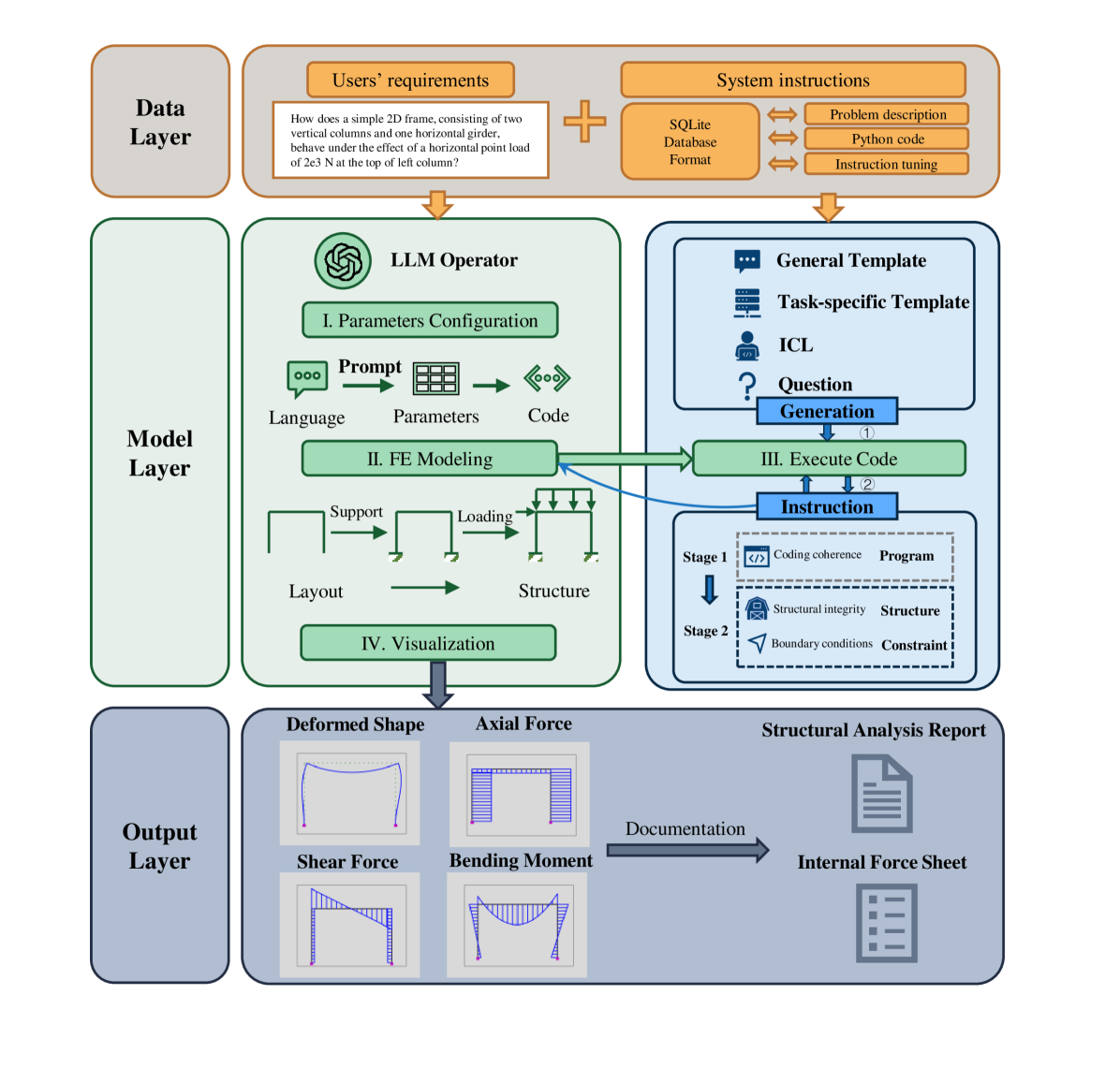
- 该框架利用LLM解析结构描述并生成可执行代码,结合有限元工具实现自动化结构分析。
- 实验表明,该框架在结构分析文字问题(SAWP)上取得了显著的性能提升,尤其是在GPT-4o上达到了100%的准确率。
📝 摘要(中文)
本文提出了一种新颖的框架,将大型语言模型(LLM)集成到结构分析软件中,以实现工程结构的自动化分析,从而最大限度地减少重复性任务,提高效率。该框架以LLM为核心引擎,解析文本中的结构描述,并将其转换为可执行的Python脚本。此外,该框架还将LLM的生成能力与基于代码的有限元(FE)工具(如OpenSeesPy)相结合。通过领域特定的提示设计和上下文学习策略,增强LLM的问题解决能力和生成稳定性,从而实现从描述性文本到模型输出的完全自动化结构分析。实验中,作者构建了一个包含20个结构分析文字问题(SAWP)的小规模基准数据集,并评估了不同LLM在该框架下解决SAWP的性能。同时,研究了结构工程师设计的系统指令对LLM驱动的结构分析的影响,并检验了框架的生成稳定性。实验结果表明,与传统方法相比,该框架可以显著提高解决SAWP的自动化水平。基于GPT-4o构建的框架实现了100%的准确率,超过了GPT-4(85%)、Gemini 1.5 Pro(80%)和Llama-3.3(30%)。此外,集成领域特定指令使非对称结构问题的性能提高了30%。
🔬 方法详解
问题定义:论文旨在解决工程结构分析中重复性任务过多、效率低下的问题。现有方法虽然开始采用AI,但缺乏一个系统性的框架来充分利用大型语言模型(LLM)的能力,无法实现从文本描述到结构分析结果的完全自动化流程。
核心思路:论文的核心思路是将LLM作为核心引擎,利用其强大的自然语言理解和代码生成能力,将结构分析的文本描述转化为可执行的Python脚本,并结合有限元分析工具(如OpenSeesPy)进行结构分析。这种方法旨在通过LLM的自动化能力,减少人工干预,提高分析效率。
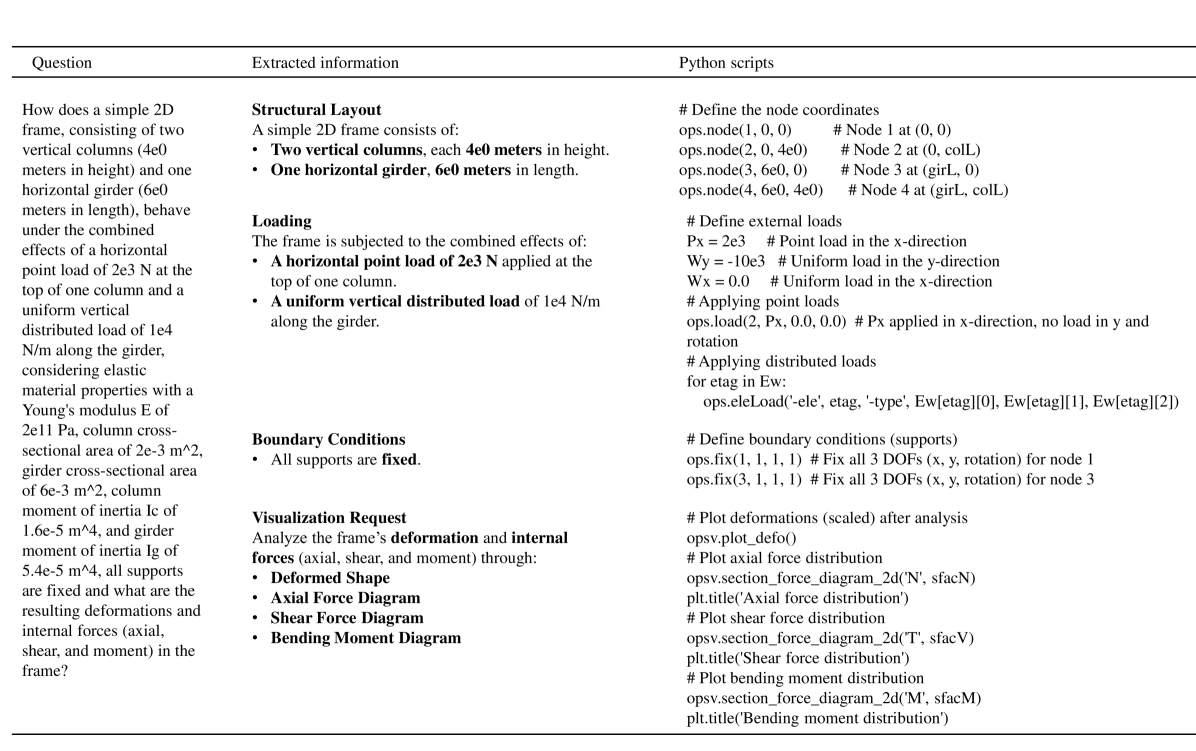
技术框架:该框架主要包含以下几个模块:1) 文本解析模块:利用LLM解析输入的结构描述文本,提取关键的结构参数和约束条件。2) 代码生成模块:LLM将解析后的结构信息转化为OpenSeesPy等有限元分析软件的Python脚本。3) 有限元分析模块:执行生成的Python脚本,进行结构分析计算。4) 结果输出模块:将分析结果以易于理解的方式呈现。整个流程实现了从文本描述到结构分析结果的自动化。
关键创新:该论文的关键创新在于将LLM与传统的结构分析软件相结合,构建了一个端到端的自动化结构分析框架。与传统方法相比,该框架无需人工编写代码,而是通过LLM自动生成,大大提高了效率。此外,论文还采用了领域特定的提示设计和上下文学习策略,以增强LLM在结构分析领域的性能。
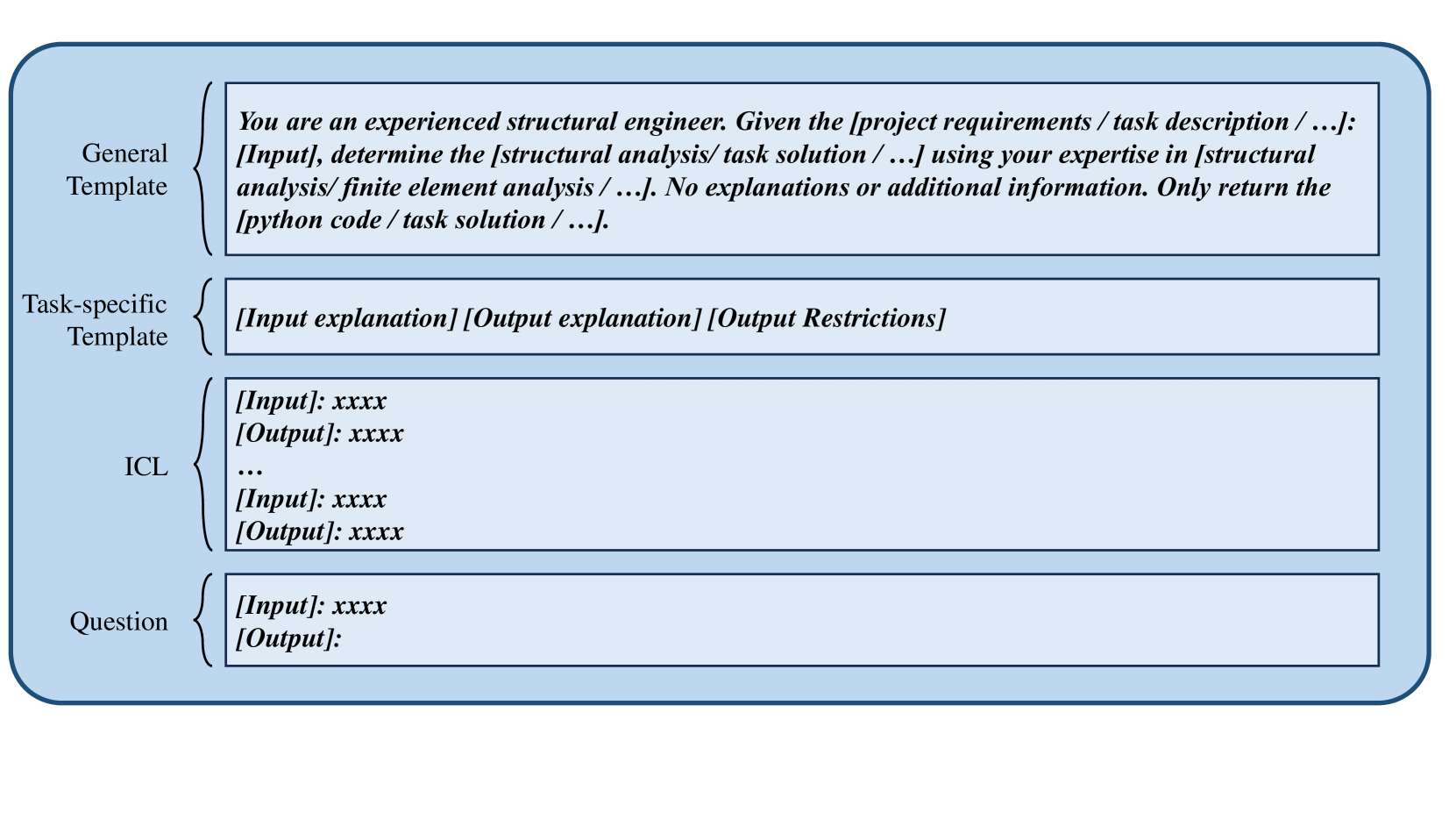
关键设计:论文中关键的设计包括:1) 领域特定提示设计:针对结构分析问题,设计了专门的提示语,引导LLM生成正确的代码。2) 上下文学习策略:通过提供少量的示例,让LLM学习如何将文本描述转化为结构分析代码。3) 系统指令:结构工程师编写的系统指令,用于指导LLM处理特定类型的结构问题,例如非对称结构。
🖼️ 关键图片
📊 实验亮点
实验结果表明,该框架在结构分析文字问题(SAWP)上取得了显著的性能提升。基于GPT-4o构建的框架实现了100%的准确率,超过了GPT-4(85%)、Gemini 1.5 Pro(80%)和Llama-3.3(30%)。此外,集成领域特定指令使非对称结构问题的性能提高了30%。
🎯 应用场景
该研究成果可应用于建筑、桥梁、航空航天等工程领域,实现结构设计和分析的自动化。通过减少人工干预,可以显著提高设计效率,降低成本,并加速工程项目的开发周期。未来,该技术有望与BIM(建筑信息模型)等技术结合,实现更智能化的结构设计和分析。
📄 摘要(原文)
Automated analysis for engineering structures offers considerable potential for boosting efficiency by minimizing repetitive tasks. Although AI-driven methods are increasingly common, no systematic framework yet leverages Large Language Models (LLMs) for automatic structural analysis. To address this gap, we propose a novel framework that integrates LLMs with structural analysis software. LLMs serve as the core engine: they parse structural descriptions from text and translate them into executable Python scripts. Moreover, the framework integrates the generative capabilities of LLMs with code-based finite element (FE) tools like OpenSeesPy. It employs domain-specific prompt design and in-context learning strategies to enhance the LLM's problem-solving capabilities and generative stability, enabling fully automated structural analysis from descriptive text to model outputs. In our experiments, we introduce a well-curated small-scale benchmark dataset of 20 structural analysis word problems (SAWPs) with ground-truth solutions and evaluate the performance of different LLMs within our framework in solving these SAWPs. The role of system instructions, crafted by structural engineers, is also investigated to understand their impact on LLM-driven structural analysis. Additionally, the generative stability of our framework is examined. Through multiple validation experiments on the benchmark, our results demonstrate that the proposed framework can substantially increase the level of automation in solving SAWPs compared to traditional methods. Quantitatively, the framework, built on GPT-4o, achieved 100% accuracy, surpassing GPT-4 (85%), Gemini 1.5 Pro (80%), and Llama-3.3 (30%) on the test examples. Furthermore, integrating domain-specific instructions enhanced performance by 30% on problems with asymmetrical structural configurations.