AGENT: An Aerial Vehicle Generation and Design Tool Using Large Language Models
作者: Colin Samplawski, Adam D. Cobb, Susmit Jha
分类: cs.LG, cs.AI
发布日期: 2025-04-11
💡 一句话要点
AGENT:基于大语言模型的飞行器生成与设计工具,加速CAD流程。
🎯 匹配领域: 支柱九:具身大模型 (Embodied Foundation Models)
关键词: 大语言模型 飞行器设计 计算机辅助设计 无人机 CodeT5+ 物理模拟 AircraftVerse
📋 核心要点
- 传统CAD流程依赖计算昂贵的物理模拟器,效率较低,成为瓶颈。
- AGENT利用CodeT5+大语言模型,直接从文本设计中学习,加速设计流程。
- 实验表明,AGENT能根据飞行属性生成设计,并评估设计方案,性能优异。
📝 摘要(中文)
本文提出了一种名为AGENT(Aircraft GENeraTor)的飞行器设计工具,该工具利用大语言模型(LLM)CodeT5+,直接从JSON文件中学习飞行器文本设计表示。AGENT基于AircraftVerse数据集进行训练,该数据集包含多种无人机设计及其物理模拟结果。通过设计一系列训练任务,AGENT能够生成满足特定飞行动力学属性(如悬停时间、最大速度等)的设计,并能评估设计方案,充当AircraftVerse数据集底层物理模拟的替代模型。实验结果表明,AGENT仅使用CodeT5+模型家族中最小的成员(220M参数)就能实现强大的性能,使其能够在单个GPU上运行,为未来的部署提供了清晰的路径。
🔬 方法详解
问题定义:传统计算机辅助设计(CAD)流程中,对赛博物理系统进行设计时,需要创建详细的数字模型,并通过物理模拟器进行评估。然而,这些模拟器通常计算成本高昂且速度慢,严重制约了设计迭代的速度。因此,如何加速CAD流程,降低对计算资源的需求,是本文要解决的核心问题。
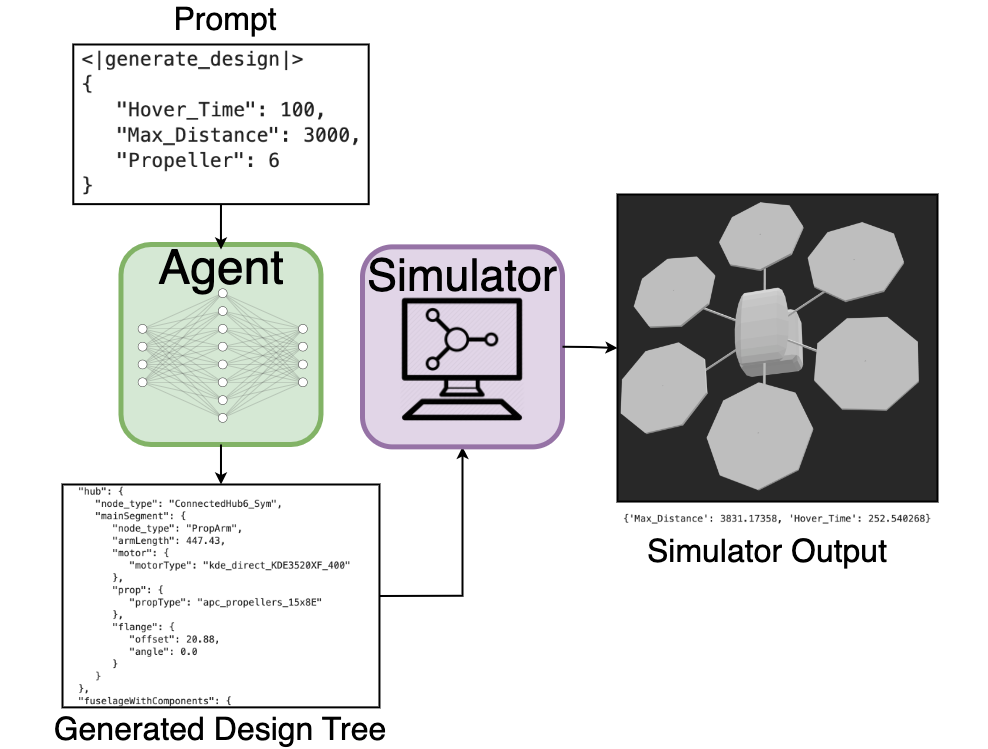
核心思路:本文的核心思路是利用大语言模型(LLM)强大的学习和生成能力,直接从已有的飞行器设计数据中学习设计模式,并能够根据用户指定的性能指标生成新的设计方案。同时,LLM还可以作为物理模拟器的替代模型,快速评估设计方案的性能,从而加速设计流程。
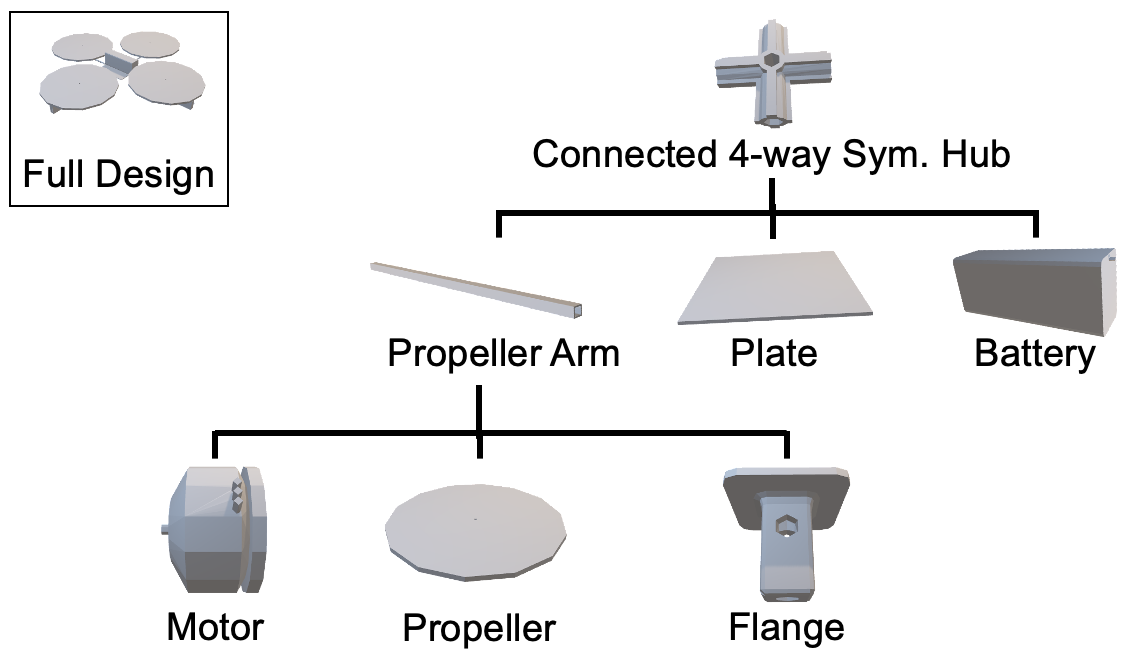
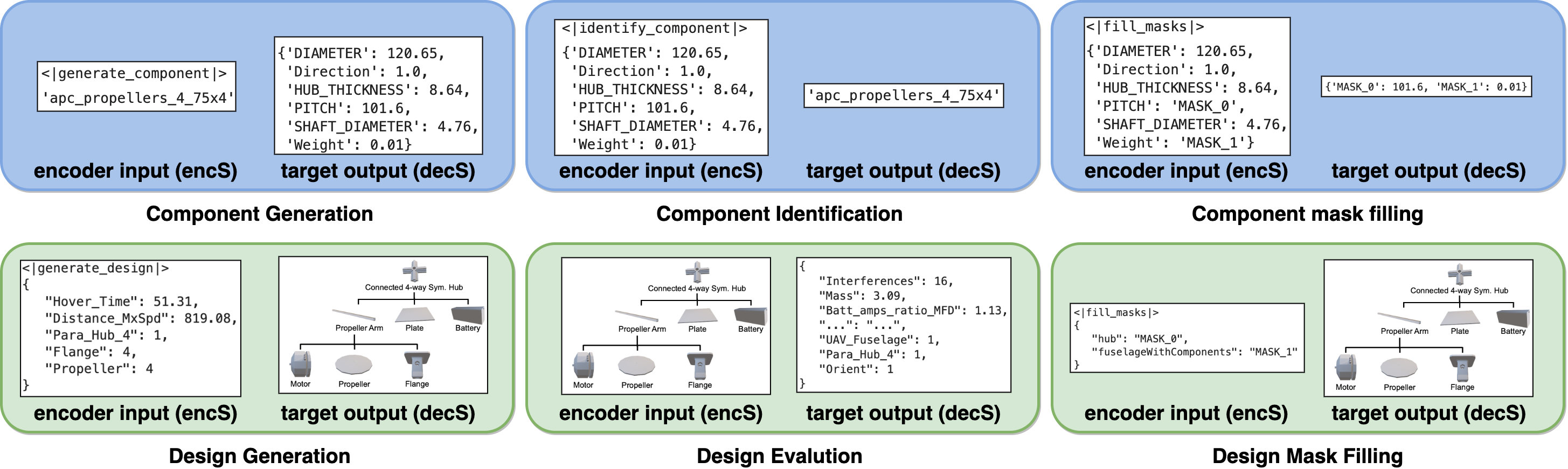
技术框架:AGENT的整体框架基于CodeT5+大语言模型。首先,利用AircraftVerse数据集对CodeT5+进行训练,使其能够理解和生成飞行器的文本设计表示。然后,通过设计一系列训练任务,赋予AGENT生成满足特定飞行动力学属性设计的能力,以及评估设计方案的能力。AGENT可以直接从JSON文件中读取设计数据,并输出新的设计方案或性能评估结果。
关键创新:AGENT的关键创新在于将大语言模型应用于飞行器设计领域,并将其作为物理模拟器的替代模型。与传统的基于物理模拟的设计方法相比,AGENT能够显著提高设计效率,降低计算成本。此外,AGENT还能够根据用户指定的性能指标生成定制化的设计方案,具有更高的灵活性和可扩展性。
关键设计:AGENT使用CodeT5+模型作为基础架构,并针对飞行器设计任务进行了微调。训练数据来自AircraftVerse数据集,包含大量的无人机设计及其物理模拟结果。训练任务包括设计生成和性能评估两个方面。在设计生成方面,AGENT需要根据用户指定的飞行动力学属性生成新的设计方案。在性能评估方面,AGENT需要预测给定设计方案的性能指标,如悬停时间和最大速度等。论文中没有明确给出损失函数和网络结构的具体细节,这部分信息未知。
🖼️ 关键图片
📊 实验亮点
AGENT使用仅有220M参数的CodeT5+模型,在无人机设计生成和性能评估任务上表现出色。这表明即使是相对较小的LLM,也能在特定领域取得显著成果。能够在单GPU上运行,降低了部署门槛,为实际应用奠定了基础。具体的性能数据和对比基线在摘要中没有明确给出,这部分信息未知。
🎯 应用场景
AGENT可应用于无人机、飞行汽车等航空航天领域的设计与优化。它能加速设计迭代,降低研发成本,并根据特定需求定制飞行器。未来,AGENT有望集成到更广泛的CAD工具中,赋能工程师快速高效地设计各种赛博物理系统。
📄 摘要(原文)
Computer-aided design (CAD) is a promising application area for emerging artificial intelligence methods. Traditional workflows for cyberphysical systems create detailed digital models which can be evaluated by physics simulators in order to narrow the search space before creating physical prototypes. A major bottleneck of this approach is that the simulators are often computationally expensive and slow. Recent advancements in AI methods offer the possibility to accelerate these pipelines. We use the recently released AircraftVerse dataset, which is especially suited for developing and evaluating large language models for designs. AircraftVerse contains a diverse set of UAV designs represented via textual design trees together with detailed physics simulation results. Following the recent success of large language models (LLMs), we propose AGENT (Aircraft GENeraTor). AGENT is a comprehensive design tool built on the CodeT5+ LLM which learns powerful representations of aircraft textual designs directly from JSON files. We develop a curriculum of training tasks which imbues a single model with a suite of useful features. AGENT is able to generate designs conditioned on properties of flight dynamics (hover time, maximum speed, etc.). Additionally, AGENT can issue evaluations of designs allowing it to act as a surrogate model of the physics simulation that underlies the AircraftVerse dataset. We present a series of experiments which demonstrate our system's abilities. We are able to achieve strong performance using the smallest member of the CodeT5+ family (220M parameters). This allows for a flexible and powerful system which can be executed on a single GPU enabling a clear path toward future deployment.