Partially stochastic deep learning with uncertainty quantification for model predictive heating control
作者: Emma Hannula, Arttu Häkkinen, Antti Solonen, Felipe Uribe, Jana de Wiljes, Lassi Roininen
分类: stat.AP, cs.LG
发布日期: 2025-04-04 (更新: 2025-10-16)
💡 一句话要点
提出基于LSTM+BNN的部分随机深度学习模型,用于建筑供暖系统的模型预测控制。
🎯 匹配领域: 支柱一:机器人控制 (Robot Control) 支柱二:RL算法与架构 (RL & Architecture)
关键词: 深度学习 模型预测控制 不确定性量化 LSTM 贝叶斯神经网络 建筑节能 室内温度预测
📋 核心要点
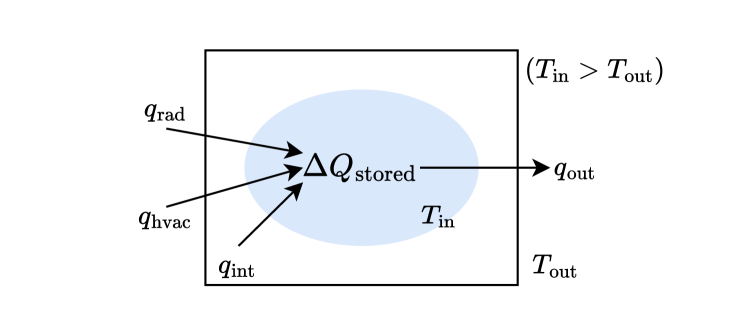
- 传统供暖控制方法未能充分考虑系统状态和太阳辐射等因素,导致热舒适性差和过热问题。
- 论文提出LSTM+BNN模型,结合LSTM处理时序信息和BNN进行不确定性量化,提升预测精度和模型可靠性。
- 实验结果表明,该模型在真实建筑数据集上显著优于工业参考模型,降低了预测误差,并具备不确定性评估能力。
📝 摘要(中文)
为了提高建筑供暖系统的能源效率,本文提出了一种部分随机深度学习架构,称为LSTM+BNN,用于构建特定建筑的室内温度模型。该模型旨在弥合传统方法(如基于规则的控制和简化的物理模型)与纯数据驱动模型之间的差距。与以往研究不同,本文在包含100栋真实建筑的综合数据集上进行了实验,结果表明LSTM+BNN优于工业界使用的参考模型,在48小时预测范围内,平均预测误差(RMSE)降低了40%以上。此外,与确定性深度学习方法不同,LSTM+BNN通过不确定性量化,能够预先评估模型在控制优化方面的能力,从而显著提高供暖模型预测控制解决方案的热舒适性和能源效率。
🔬 方法详解
问题定义:论文旨在解决建筑供暖系统中室内温度预测不准确的问题。现有方法,如基于规则的控制和简化的物理模型,精度不足;而纯数据驱动模型缺乏透明性和可靠性评估能力,难以直接应用于模型预测控制(MPC)。
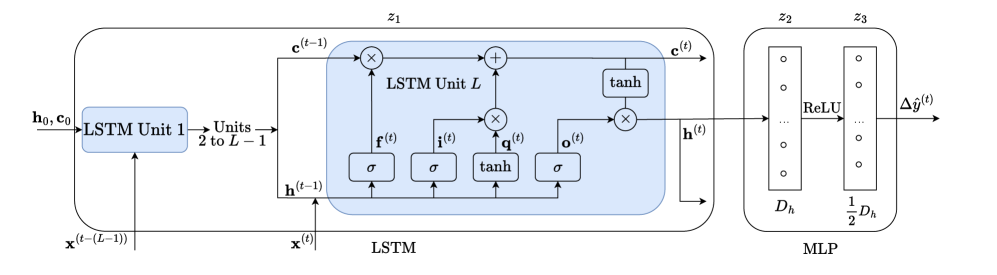
核心思路:论文的核心思路是结合长短期记忆网络(LSTM)处理时间序列数据的能力和贝叶斯神经网络(BNN)进行不确定性量化的优势,构建一个部分随机的深度学习模型。通过LSTM学习室内温度的时间依赖关系,并利用BNN估计预测结果的不确定性,从而提高预测精度和可靠性。
技术框架:整体框架包括数据预处理、LSTM+BNN模型训练和预测、以及不确定性量化三个主要阶段。首先,对历史室内温度、室外温度、太阳辐射等数据进行预处理。然后,使用处理后的数据训练LSTM+BNN模型。最后,利用训练好的模型进行室内温度预测,并使用BNN的输出来量化预测结果的不确定性。
关键创新:最重要的技术创新点在于将LSTM和BNN结合,构建了一个部分随机的深度学习模型。与传统的确定性深度学习模型相比,该模型能够提供预测结果的不确定性估计,从而更好地评估模型的可靠性,并为MPC提供更可靠的输入。
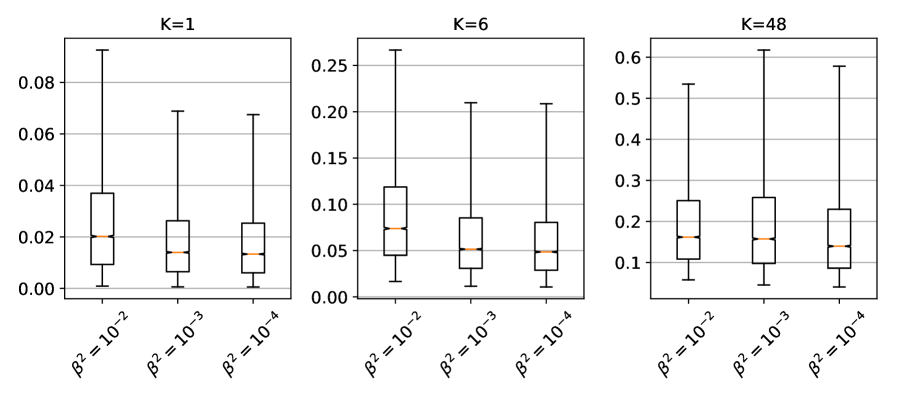
关键设计:LSTM部分采用标准LSTM结构,BNN部分采用多层感知机结构,并使用变分推理方法进行训练。损失函数包括预测误差和正则化项,用于防止过拟合。关键参数包括LSTM的隐藏层大小、BNN的层数和神经元数量、以及变分推理的参数。
🖼️ 关键图片
📊 实验亮点
在包含100栋真实建筑的综合数据集上,LSTM+BNN模型与工业界使用的参考模型相比,在48小时预测范围内,平均预测误差(RMSE)降低了40%以上。这一结果表明,该模型在实际应用中具有显著的性能优势。
🎯 应用场景
该研究成果可应用于智能建筑、智慧城市等领域,通过更精确的室内温度预测和不确定性量化,优化供暖系统的控制策略,提高能源利用效率,降低碳排放,并提升居住舒适度。未来可进一步扩展到其他建筑能源管理系统,如制冷、通风等。
📄 摘要(原文)
Making the control of building heating systems more energy efficient is crucial for reducing global energy consumption and greenhouse gas emissions. Traditional rule-based control methods use a static, outdoor temperature-dependent heating curve to regulate heat input. This open-loop approach fails to account for both the current state of the system (indoor temperature) and free heat gains, such as solar radiation, often resulting in poor thermal comfort and overheating. Model Predictive Control (MPC) addresses these drawbacks by using predictive modeling to optimize heating based on a building's learned thermal behavior, current system state, and weather forecasts. However, current industrial MPC solutions often employ simplified physics-inspired indoor temperature models, sacrificing accuracy for robustness and interpretability. While purely data-driven models offer superior predictive performance and therefore more accurate control, they face challenges such as a lack of transparency. To bridge this gap, we propose a partially stochastic deep learning (DL) architecture, dubbed LSTM+BNN, for building-specific indoor temperature modeling. Unlike most studies that evaluate model performance through simulations or limited test buildings, our experiments across a comprehensive dataset of 100 real-world buildings, under various weather conditions, demonstrate that LSTM+BNN outperforms an industry-proven reference model, reducing the average prediction error measured as RMSE by more than 40% for the 48-hour prediction horizon of interest. Unlike deterministic DL approaches, LSTM+BNN offers a critical advantage by enabling pre-assessment of model competency for control optimization through uncertainty quantification. Thus, the proposed model shows significant potential to improve thermal comfort and energy efficiency achieved with heating MPC solutions.