Graph Contrastive Learning for Connectome Classification
作者: Martín Schmidt, Sara Silva, Federico Larroca, Gonzalo Mateos, Pablo Musé
分类: cs.LG
发布日期: 2025-02-07 (更新: 2025-11-12)
备注: Presented at Asilomar Conference on Signals, Systems, and Computers 2025
💡 一句话要点
提出基于图对比学习的连接组分类方法,提升脑网络分析性能
🎯 匹配领域: 支柱二:RL算法与架构 (RL & Architecture)
关键词: 图对比学习 连接组分类 脑网络分析 图神经网络 Encoder-Decoder
📋 核心要点
- 现有脑网络分析方法难以有效融合结构和功能连接信息,限制了对大脑复杂连接模式的理解。
- 提出基于图对比学习的框架,通过Encoder-Decoder架构联合考虑结构和功能连接,学习高质量的连接组表示。
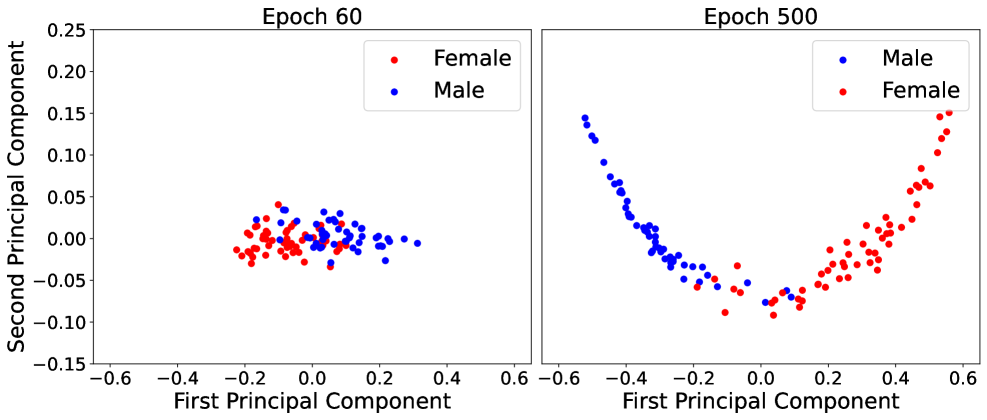
- 在性别分类任务中,该方法利用数据增强技术,在Human Connectome Project数据集上取得了state-of-the-art的性能。
📝 摘要(中文)
随着磁共振成像(MRI)等非侵入式脑活动测量技术的进步,通过图信号处理(GSP)研究结构和功能性脑网络(即连接组)变得越来越重要。GSP是揭示大脑功能和结构之间相互作用的关键工具。本文在图表示学习领域探索了有监督的对比学习方法,旨在生成subject-level(即graph-level)的向量表示,将具有相同标签的subject聚集在一起,并将具有不同标签的subject分开。这些连接组嵌入是从一个图神经网络Encoder-Decoder架构中获得的,该架构共同考虑了结构和功能连接。通过利用数据增强技术,该框架在Human Connectome Project数据上的性别分类任务中实现了最先进的性能。更广泛地说,我们以连接组为中心的方法学进展支持了使用GSP来发现更多关于大脑功能的有希望的前景,并可能影响对神经退行性疾病异质性的理解,从而促进精准医疗和诊断。
🔬 方法详解
问题定义:论文旨在解决脑网络连接组分类问题,即如何有效地利用图神经网络学习subject-level的连接组表示,从而区分不同类别的个体。现有方法可能无法充分融合结构和功能连接信息,或者在对比学习中缺乏有效的监督信号,导致表示学习效果不佳。
核心思路:论文的核心思路是利用有监督的对比学习,将具有相同标签的连接组样本在嵌入空间中拉近,将具有不同标签的样本推远。通过这种方式,学习到的连接组表示能够更好地反映个体之间的差异,从而提高分类性能。同时,使用Encoder-Decoder架构联合考虑结构和功能连接信息,增强了表示的表达能力。
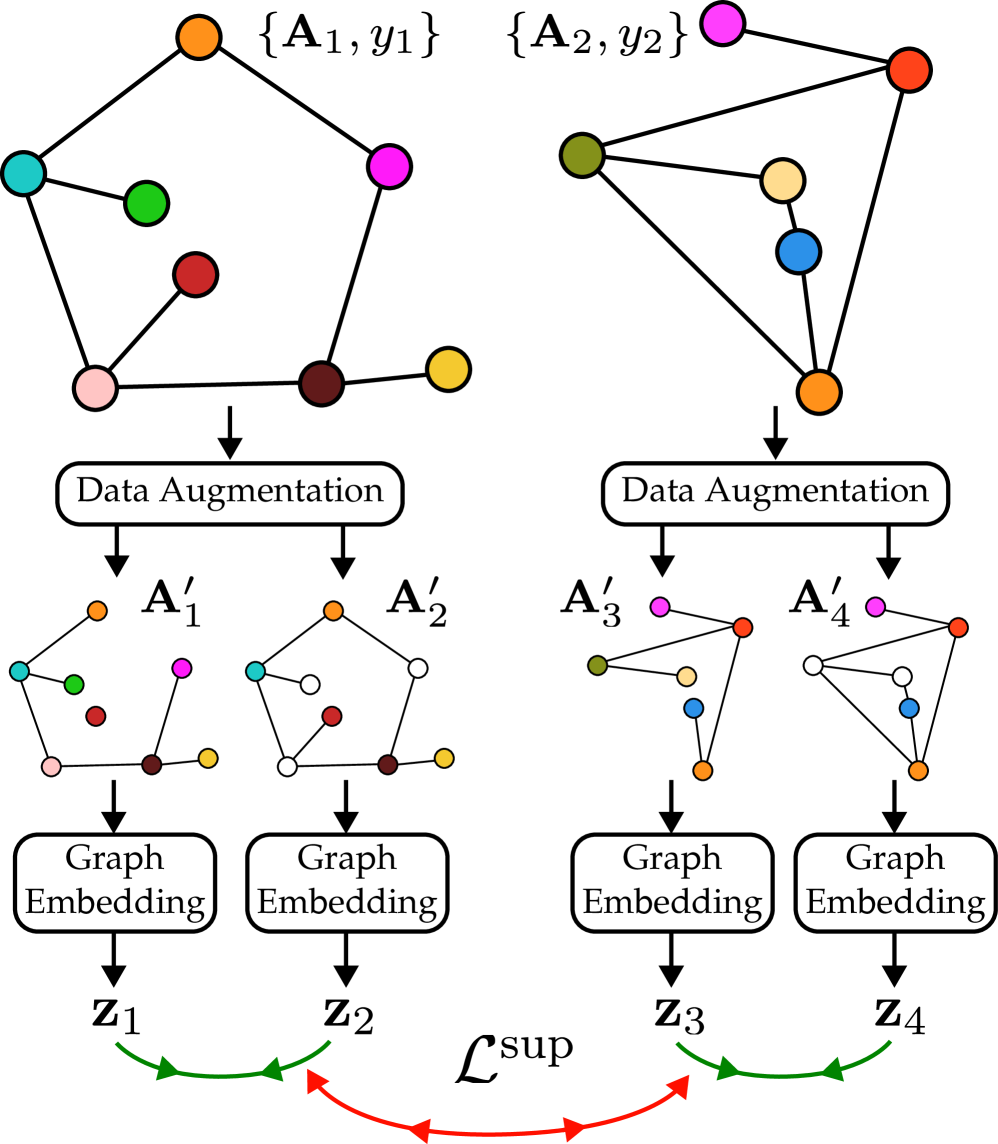
技术框架:整体框架包含以下几个主要模块:1) 图构建:基于MRI数据构建脑网络连接组图;2) 数据增强:对连接组图进行数据增强,生成不同的视图;3) Encoder:使用图神经网络对原始图和增强后的图进行编码,得到节点嵌入;4) Decoder:使用Decoder重构原始图,辅助Encoder学习;5) 对比学习:使用有监督的对比损失函数,优化Encoder,使得相同标签的样本嵌入更接近,不同标签的样本嵌入更远离。
关键创新:论文的关键创新在于将有监督的对比学习应用于脑网络连接组分类任务,并设计了一个联合考虑结构和功能连接的Encoder-Decoder架构。通过数据增强和对比学习,可以学习到更鲁棒和具有区分性的连接组表示。
关键设计:论文使用了图卷积网络(GCN)作为Encoder,并设计了一个图自编码器(GAE)作为Decoder。对比损失函数采用了InfoNCE loss的变体,并根据标签信息进行了调整。数据增强方法包括节点dropout、边dropout和属性扰动等。具体的网络结构和超参数设置在论文中有详细描述。
🖼️ 关键图片

📊 实验亮点
实验结果表明,该方法在Human Connectome Project数据集上的性别分类任务中取得了state-of-the-art的性能。与现有方法相比,该方法在分类准确率上取得了显著提升,证明了其有效性。具体的性能数据和对比基线在论文中有详细展示。
🎯 应用场景
该研究成果可应用于多种脑网络分析任务,例如疾病诊断、认知功能预测和个体特征识别。通过学习高质量的连接组表示,可以更好地理解大脑功能,并为神经退行性疾病的精准医疗和诊断提供支持。此外,该方法还可以推广到其他图结构数据的分类任务中。
📄 摘要(原文)
With recent advancements in non-invasive techniques for measuring brain activity, such as magnetic resonance imaging (MRI), the study of structural and functional brain networks through graph signal processing (GSP) has gained notable prominence. GSP stands as a key tool in unraveling the interplay between the brain's function and structure, enabling the analysis of graphs defined by the connections between regions of interest -- referred to as connectomes in this context. Our work represents a further step in this direction by exploring supervised contrastive learning methods within the realm of graph representation learning. The main objective of this approach is to generate subject-level (i.e., graph-level) vector representations that bring together subjects sharing the same label while separating those with different labels. These connectome embeddings are derived from a graph neural network Encoder-Decoder architecture, which jointly considers structural and functional connectivity. By leveraging data augmentation techniques, the proposed framework achieves state-of-the-art performance in a gender classification task using Human Connectome Project data. More broadly, our connectome-centric methodological advances support the promising prospect of using GSP to discover more about brain function, with potential impact to understanding heterogeneity in the neurodegeneration for precision medicine and diagnosis.