Multivariate Time Series Anomaly Detection by Capturing Coarse-Grained Intra- and Inter-Variate Dependencies
作者: Yongzheng Xie, Hongyu Zhang, Muhammad Ali Babar
分类: cs.LG, cs.AI
发布日期: 2025-01-22
备注: 9 pages, 3 figures, Accepted to TheWebConference 2025
💡 一句话要点
MtsCID:通过捕获粗粒度时序依赖关系进行多元时间序列异常检测
🎯 匹配领域: 支柱九:具身大模型 (Embodied Foundation Models)
关键词: 多元时间序列 异常检测 半监督学习 粗粒度依赖 注意力机制 卷积神经网络 Web应用运维
📋 核心要点
- 现有多元时间序列异常检测方法侧重于细粒度依赖关系,难以有效捕获时间序列中显著的时间和变量间依赖关系。
- MtsCID通过双网络架构,分别在多尺度变量内patches和变量间捕获粗粒度的时间依赖和变量间关系。
- 在七个数据集上的实验表明,MtsCID的性能与现有最佳方法相当或更优,验证了其有效性。
📝 摘要(中文)
多元时间序列异常检测对于Web应用程序运维中的故障管理至关重要。该任务通常被视为半监督学习问题,因为数据标注成本高昂且异常数据稀缺,模型训练只能使用正常数据。现有的半监督方法通常通过捕获变量内的时间依赖性和/或变量间的关系来学习正常模式,并将偏离这些模式的时间戳标记为异常。然而,这些方法往往由于过度关注细粒度而无法捕获显著的时间和变量间依赖关系,导致性能欠佳。本文提出了一种新的半监督多元时间序列异常检测方法MtsCID。MtsCID采用双网络架构:一个网络处理多尺度变量内patches的注意力图,用于粗粒度时间依赖学习;另一个网络处理变量,通过卷积和与正弦原型的交互来捕获粗粒度的变量间关系。这种设计增强了捕获变量内时间依赖性和变量间关系的能力,从而提高了性能。在七个广泛使用的数据集上的大量实验表明,MtsCID实现了与最先进的基准方法相当或更优越的性能。
🔬 方法详解
问题定义:多元时间序列异常检测旨在识别时间序列数据中与正常模式显著不同的异常点。现有方法主要通过学习变量内的时间依赖关系和变量间的关系来建立正常模式,但过度关注细粒度信息导致无法有效捕获关键的依赖关系,从而影响检测精度。
核心思路:MtsCID的核心思路是通过捕获粗粒度的变量内时间依赖和变量间关系来提升异常检测性能。通过关注更宏观的模式,模型可以更好地忽略噪声和细微变化,从而更准确地识别异常。
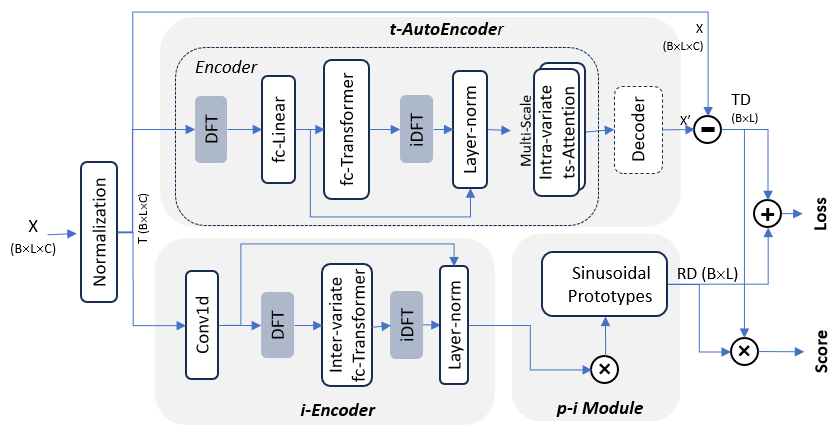
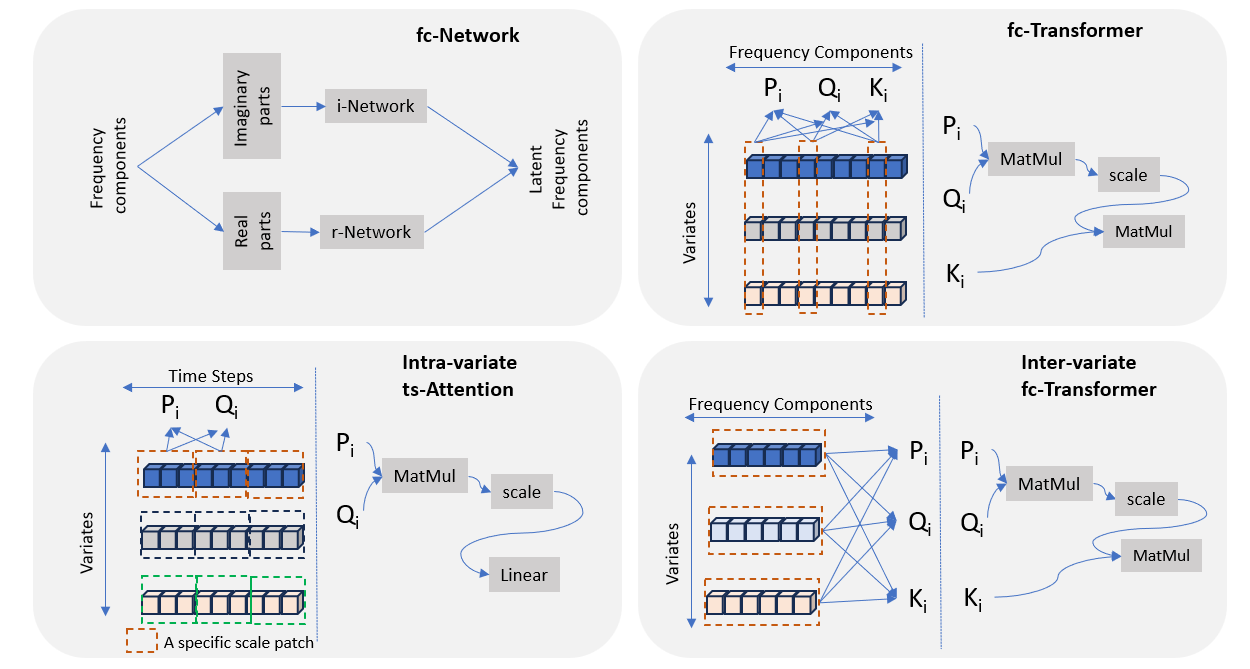
技术框架:MtsCID采用双网络架构。第一个网络专注于变量内的时间依赖关系,它将时间序列分割成多尺度patches,并利用注意力机制学习这些patches之间的关系。第二个网络专注于变量间的关系,它通过卷积操作和与正弦原型的交互来捕获变量之间的依赖关系。两个网络的输出被结合起来进行异常评分。
关键创新:MtsCID的关键创新在于其粗粒度的依赖关系捕获机制。与以往侧重于细粒度时间点或变量间直接关联的方法不同,MtsCID通过多尺度patches和正弦原型交互,关注时间序列的整体趋势和变量间的宏观关系。
关键设计:在变量内时间依赖学习中,使用了多尺度patches以捕获不同时间范围内的模式。正弦原型交互用于在变量间关系学习中引入先验知识,帮助模型更好地理解变量间的周期性关系。损失函数的设计目标是最小化正常数据的重构误差,并最大化异常数据的重构误差。
🖼️ 关键图片
📊 实验亮点
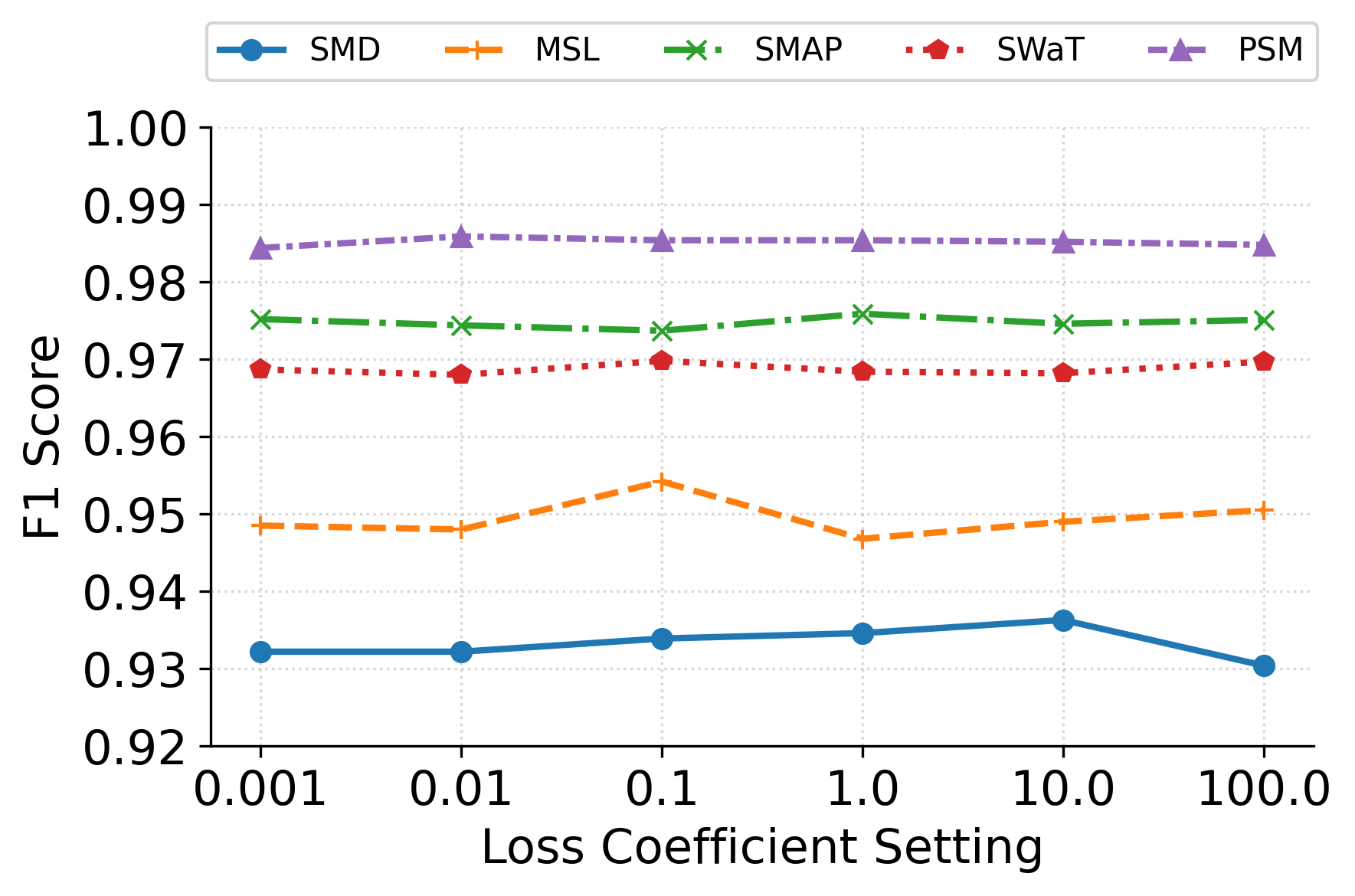
MtsCID在七个广泛使用的数据集上进行了评估,实验结果表明,MtsCID的性能与最先进的基准方法相当或更优。具体而言,在某些数据集上,MtsCID的F1-score比现有最佳方法提高了显著的百分比,证明了其有效性。
🎯 应用场景
MtsCID可广泛应用于Web应用程序运维、工业生产监控、金融风险管理等领域。通过及时检测异常,可以有效预防系统故障、提高生产效率、降低经济损失。该研究为构建更可靠、更智能的监控系统提供了新的思路。
📄 摘要(原文)
Multivariate time series anomaly detection is essential for failure management in web application operations, as it directly influences the effectiveness and timeliness of implementing remedial or preventive measures. This task is often framed as a semi-supervised learning problem, where only normal data are available for model training, primarily due to the labor-intensive nature of data labeling and the scarcity of anomalous data. Existing semi-supervised methods often detect anomalies by capturing intra-variate temporal dependencies and/or inter-variate relationships to learn normal patterns, flagging timestamps that deviate from these patterns as anomalies. However, these approaches often fail to capture salient intra-variate temporal and inter-variate dependencies in time series due to their focus on excessively fine granularity, leading to suboptimal performance. In this study, we introduce MtsCID, a novel semi-supervised multivariate time series anomaly detection method. MtsCID employs a dual network architecture: one network operates on the attention maps of multi-scale intra-variate patches for coarse-grained temporal dependency learning, while the other works on variates to capture coarse-grained inter-variate relationships through convolution and interaction with sinusoidal prototypes. This design enhances the ability to capture the patterns from both intra-variate temporal dependencies and inter-variate relationships, resulting in improved performance. Extensive experiments across seven widely used datasets demonstrate that MtsCID achieves performance comparable or superior to state-of-the-art benchmark methods.