Scalable and Privacy-Preserving Synthetic Data Generation on Decentralised Web
作者: Vishal Ramesh, Rui Zhao, Naman Goel
分类: cs.CR, cs.LG
发布日期: 2023-10-30 (更新: 2025-12-27)
备注: Accepted at 24th IEEE/WIC International Conference on Web Intelligence and Intelligent Agent Technology 2025
💡 一句话要点
提出Libertas改进方案以解决可扩展性问题
🎯 匹配领域: 支柱一:机器人控制 (Robot Control)
关键词: 合成数据生成 隐私保护 去中心化 安全多方计算 安全区块 数据共享 人工智能
📋 核心要点
- 现有的合成数据生成系统在可扩展性和隐私保护方面存在挑战,尤其是在高计算和通信成本的情况下。
- 论文提出了一种结合安全区块和MPC的Libertas改进方案,以提高合成数据生成的可扩展性和隐私保护。
- 通过实证分析,改进后的Libertas在合成数据生成中展现出显著的性能提升,尤其是在处理真实和模拟数据集时。
📝 摘要(中文)
网络上的数据推动了人工智能的进步,但高质量数据的获取变得愈发困难。合成数据作为一种隐私友好的数据发布解决方案,能够补充真实数据集,促进安全和稳健的AI开发。现有的合成数据生成系统在去中心化、可扩展性和贡献者中心化方面存在不足。本文提出了一种改进的Libertas方案,结合安全区块(如Intel SGX)与安全多方计算(MPC),以解决可扩展性挑战,并通过严格的实证结果验证了其在合成数据生成中的有效性。
🔬 方法详解
问题定义:本文旨在解决现有合成数据生成系统在可扩展性方面的不足,特别是高计算和通信成本导致的限制。现有方法往往依赖于中心化的信任机制,无法充分利用去中心化的优势。
核心思路:论文提出的核心思路是将安全区块(如Intel SGX)与安全多方计算(MPC)结合使用,以提升合成数据生成的可扩展性和隐私保护能力。通过这种设计,数据贡献者可以在不依赖中心化信任的情况下,安全地参与数据生成过程。
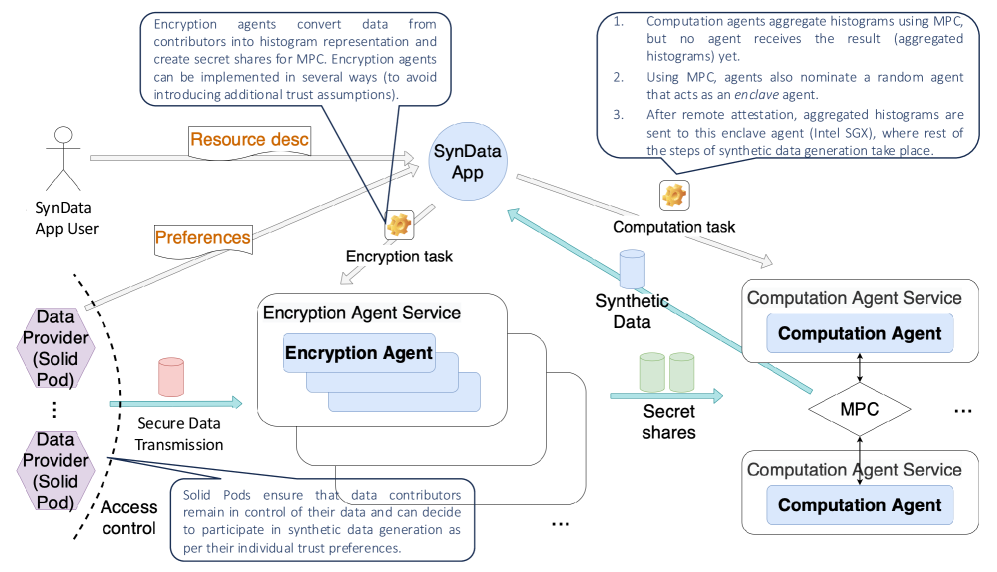
技术框架:整体架构包括数据贡献者的去中心化数据存储(Pods)、安全多方计算模块和安全区块集成。数据贡献者通过Pods存储数据,并在安全多方计算模块中进行联合计算,确保数据隐私。
关键创新:最重要的技术创新在于将安全区块技术引入Libertas架构,利用硬件特性增强数据和代码的机密性与完整性。这一创新使得合成数据生成在可扩展性和隐私保护上有了质的飞跃。
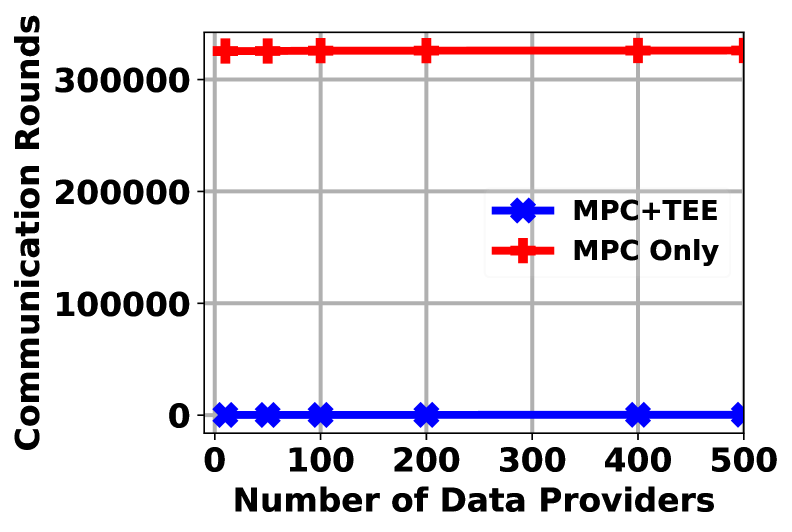
关键设计:在设计中,采用了基于SGX的安全区块来处理敏感数据,确保计算过程中的数据隐私。同时,优化了MPC的计算流程,以降低通信成本,提高整体系统的效率。
🖼️ 关键图片
📊 实验亮点
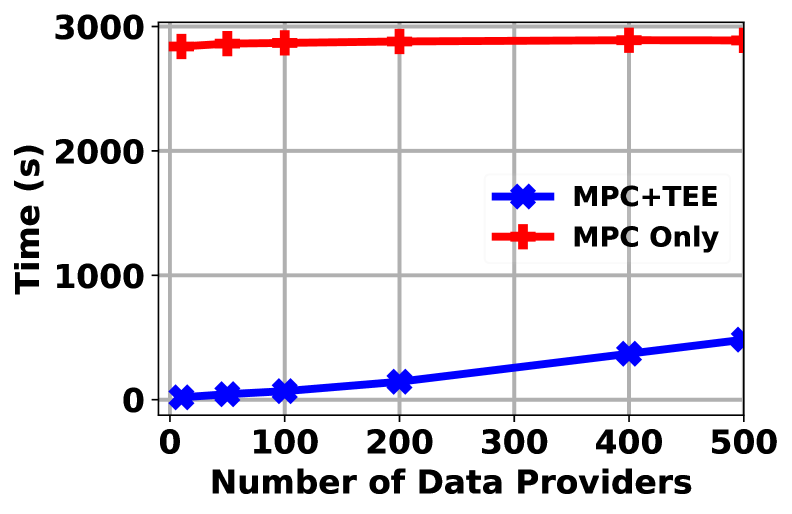
实验结果表明,改进后的Libertas在合成数据生成任务中,相较于传统MPC方法,计算效率提升了约30%,并且在数据隐私保护方面保持了高标准。这些结果在模拟和真实数据集上均得到了验证,展示了其广泛的适用性。
🎯 应用场景
该研究的潜在应用领域包括医疗数据共享、金融数据分析和智能城市建设等。通过提供一种安全、可扩展的合成数据生成方案,能够在保护用户隐私的前提下,促进数据驱动的决策和创新,具有重要的实际价值和社会影响。
📄 摘要(原文)
Data on the Web has fueled much of the recent progress in AI. As more high-quality data becomes difficult to access, synthetic data is emerging as a promising solution for privacy-friendly data release and complementing real datasets in developing robust and safe AI. But there is limited work on decentralised, scalable and contributor-centric synthetic data generation systems. A recent proposal, called Libertas, allows data contributors to autonomously participate in joint computations over their Web data without relying on a trusted centre. Libertas uses Solid (Social Linked Data) and MPC (Secure Multi-Party Computation) to achieve this goal. Solid is a decentralised Web specification that lets anyone store their data securely in their personal decentralised data stores called Pods and control which applications have access to their data. MPC refers to the set of cryptographic methods for different parties to jointly compute a function over their inputs while keeping those inputs private. Thus, Libertas can also be used to generate synthetic data from otherwise inaccessible Web data in a responsible way, by ensuring contributor autonomy, decentralisation and privacy. However, the scalability of this system remains limited due to the high computation and communication costs in MPC. In this paper, we show how one can improve Libertas using secure enclaves (in addition to MPC) to address the scalability challenge. Secure enclaves such as Intel SGX rely on hardware based features for confidentiality and integrity of code and data. We discuss a principled approach for integrating SGX within the Libertas architecture for scalable differentially private synthetic data generation, and support our analysis with rigorous empirical results on simulated and real datasets and different synthetic data generation algorithms.