Multi-Path Long-Term Vessel Trajectories Forecasting with Probabilistic Feature Fusion for Problem Shifting
作者: Gabriel Spadon, Jay Kumar, Derek Eden, Josh van Berkel, Tom Foster, Amilcar Soares, Ronan Fablet, Stan Matwin, Ronald Pelot
分类: cs.LG, cs.AI, cs.DM, math.PR
发布日期: 2023-10-29 (更新: 2024-07-10)
期刊: Ocean Engineering, 312, 119138, 2024
DOI: 10.1016/j.oceaneng.2024.119138
💡 一句话要点
提出多路径长时间船舶轨迹预测方法以解决AIS数据精度不足问题
🎯 匹配领域: 支柱八:物理动画 (Physics-based Animation)
关键词: 船舶轨迹预测 特征融合 深度学习 自动识别系统 决策支持系统 环境保护 机器学习
📋 核心要点
- 现有方法在多路径长时间船舶轨迹预测中存在精度不足的问题,尤其是在复杂航线和转向决策时。
- 本文提出了一种基于深度自编码器的特征融合方法,通过将AIS数据的时空特征与历史数据的概率特征结合,提升预测精度。
- 实验结果表明,模型在航线和目的地预测中F1分数分别达到85%和75%,R2分数超过98%,并且平均误差减少了25%。
📝 摘要(中文)
本文针对利用自动识别系统(AIS)数据进行多路径长时间船舶轨迹预测的精度提升挑战,提出了一种特征融合的方法。我们开发了一个深度自编码器模型和分阶段框架,利用1到3小时的AIS数据预测接下来的12小时轨迹。通过将AIS消息的时空特征与历史AIS数据中工程化的概率特征融合,减少了预测的不确定性。我们的模型在船舶航线和目的地预测中分别达到了约85%和75%的F1分数,R2分数超过98%。此外,模型在转向和航线选择中的复杂决策能力表现突出,平均和中位误差分别为11公里和6公里,相较于现有方法提升了25%。该模型已作为决策支持系统的一部分应用于保护鲸鱼,降低船舶与鲸鱼碰撞的风险。
🔬 方法详解
问题定义:本文旨在解决利用AIS数据进行多路径长时间船舶轨迹预测时的精度不足问题。现有方法在复杂航线和转向决策时表现不佳,导致预测不确定性较高。
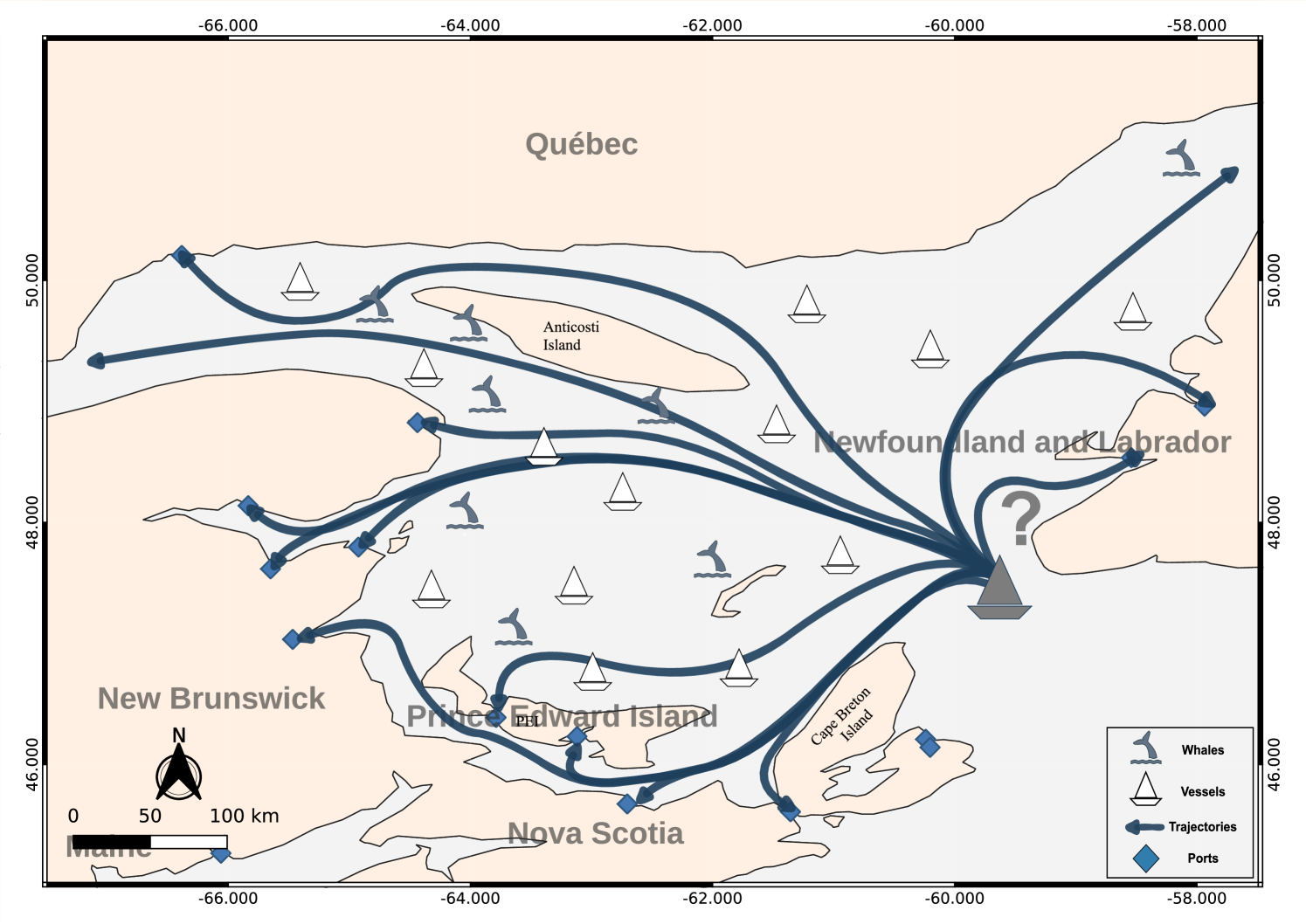
核心思路:我们提出通过特征融合来转变问题,将轨迹预测转化为轨迹重建问题。通过结合AIS消息的时空特征与历史数据中工程化的概率特征,显著提升了预测的准确性。
技术框架:整体架构包括数据预处理、特征提取、深度自编码器模型训练和预测阶段。首先,提取AIS数据的时空特征,然后与历史数据的概率特征进行融合,最后通过深度自编码器进行轨迹预测。
关键创新:本研究的关键创新在于将复杂的决策过程融入模型中,尤其是在转向和航线选择方面,显著提升了预测的准确性和可靠性。
关键设计:模型采用深度自编码器结构,损失函数设计为结合预测误差和概率特征的加权损失。通过不同层结构和特征组合的实验,优化了模型性能。
🖼️ 关键图片

📊 实验亮点
实验结果显示,模型在航线和目的地预测中F1分数分别达到85%和75%,R2分数超过98%。平均和中位误差分别为11公里和6公里,相较于现有最先进方法提高了25%。
🎯 应用场景
该研究的潜在应用领域包括海洋交通管理、环境保护和智能决策支持系统。通过提高船舶轨迹预测的准确性,可以有效降低船舶与鲸鱼等海洋生物的碰撞风险,推动可持续发展和生态保护。
📄 摘要(原文)
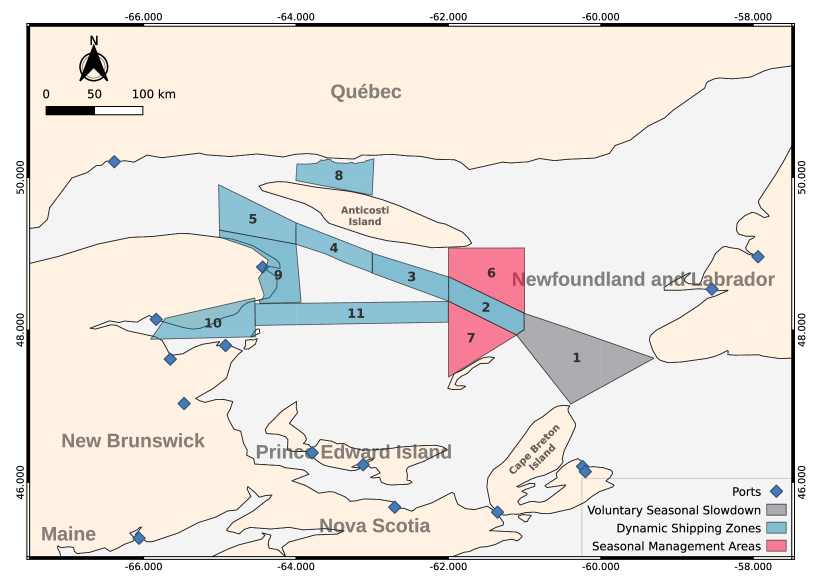
This paper addresses the challenge of boosting the precision of multi-path long-term vessel trajectory forecasting on engineered sequences of Automatic Identification System (AIS) data using feature fusion for problem shifting. We have developed a deep auto-encoder model and a phased framework approach to predict the next 12 hours of vessel trajectories using 1 to 3 hours of AIS data as input. To this end, we fuse the spatiotemporal features from the AIS messages with probabilistic features engineered from historical AIS data referring to potential routes and destinations. As a result, we reduce the forecasting uncertainty by shifting the problem into a trajectory reconstruction problem. The probabilistic features have an F1-Score of approximately 85% and 75% for the vessel route and destination prediction, respectively. Under such circumstances, we achieved an R2 Score of over 98% with different layer structures and varying feature combinations; the high R2 Score is a natural outcome of the well-defined shipping lanes in the study region. However, our proposal stands out among competing approaches as it demonstrates the capability of complex decision-making during turnings and route selection. Furthermore, we have shown that our model achieves more accurate forecasting with average and median errors of 11km and 6km, respectively, a 25% improvement from the current state-of-the-art approaches. The resulting model from this proposal is deployed as part of a broader Decision Support System to safeguard whales by preventing the risk of vessel-whale collisions under the smartWhales initiative and acting on the Gulf of St. Lawrence in Atlantic Canada.