Causal disentanglement of multimodal data
作者: Elise Walker, Jonas A. Actor, Carianne Martinez, Nathaniel Trask
分类: cs.LG, cs.AI, stat.ML
发布日期: 2023-10-27 (更新: 2023-11-08)
💡 一句话要点
提出causalPIMA以解决多模态数据因果表示学习问题
🎯 匹配领域: 支柱二:RL算法与架构 (RL & Architecture) 支柱九:具身大模型 (Embodied Foundation Models)
关键词: 因果表示学习 多模态数据 变分自编码器 无监督学习 高斯混合模型 科学数据分析 特征发现
📋 核心要点
- 现有因果表示学习算法在缺乏先验信息的情况下,难以有效地进行因果关系的探索与解释。
- 本文提出的causalPIMA算法利用多模态数据和物理知识,通过新的可微参数化方法来学习因果关系。
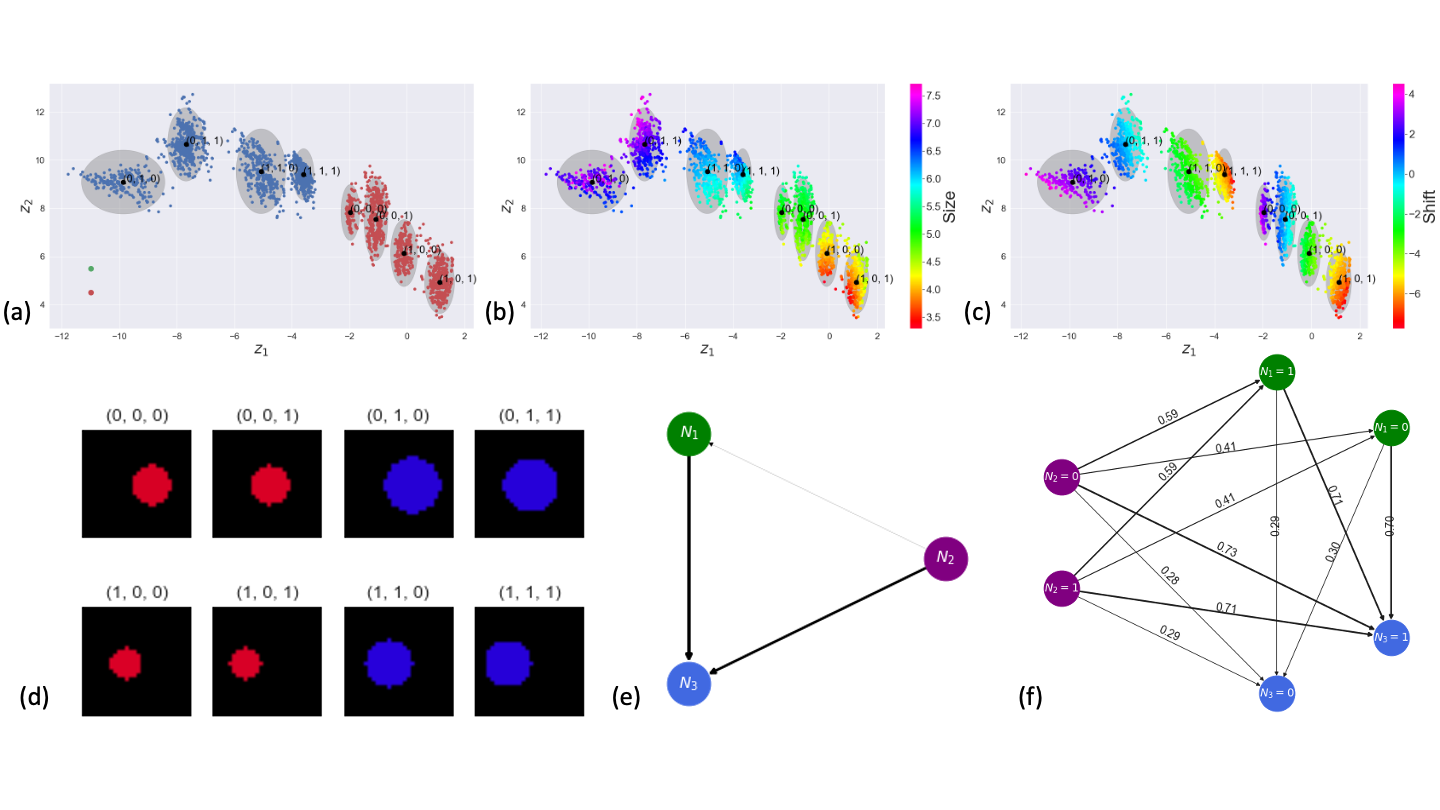
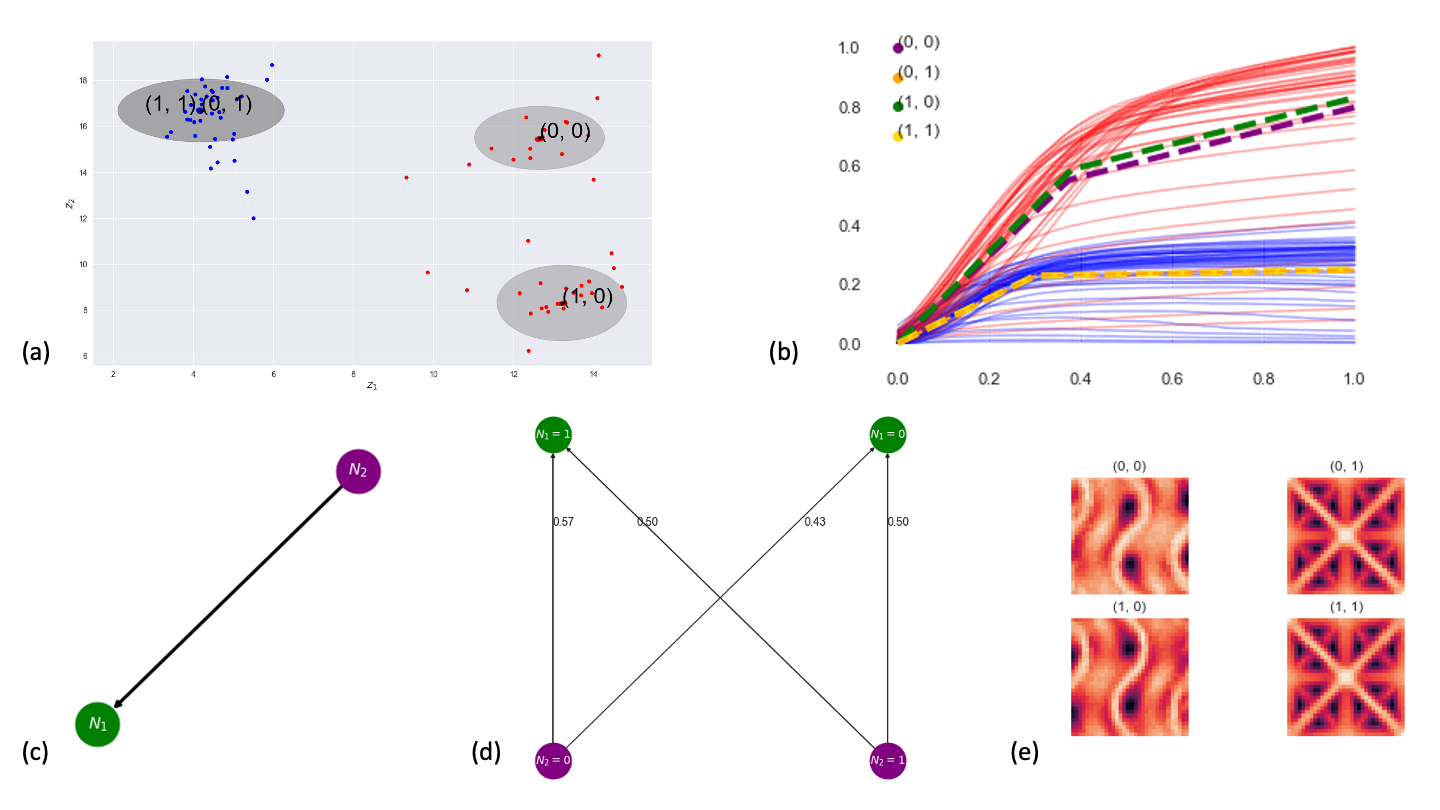
- 在合成数据集和科学数据集上的实验结果显示,该算法能够在无监督环境中学习可解释的因果结构,且发现关键特征。
📝 摘要(中文)
因果表示学习算法旨在发现数据的低维表示,以便对因果关系进行可解读的解释。然而,现有方法在探索性因果表示学习中常常缺乏必要的先验信息。为此,本文提出了一种新的因果表示学习算法causalPIMA,能够利用多模态数据和已知物理知识,发现具有因果关系的重要特征。该算法采用新的可微参数化方法,在一个端到端的可微框架中,通过单一的可处理证据下界损失函数学习有向无环图(DAG)及变分自编码器的潜在空间。实验结果表明,该方法在完全无监督的设置下,能够学习可解释的因果结构,并同时发现关键特征。
🔬 方法详解
问题定义:本文旨在解决在缺乏先验信息的情况下,如何有效进行因果表示学习的问题。现有方法往往依赖于线性结构因果模型或干预数据,限制了其在探索性学习中的应用。
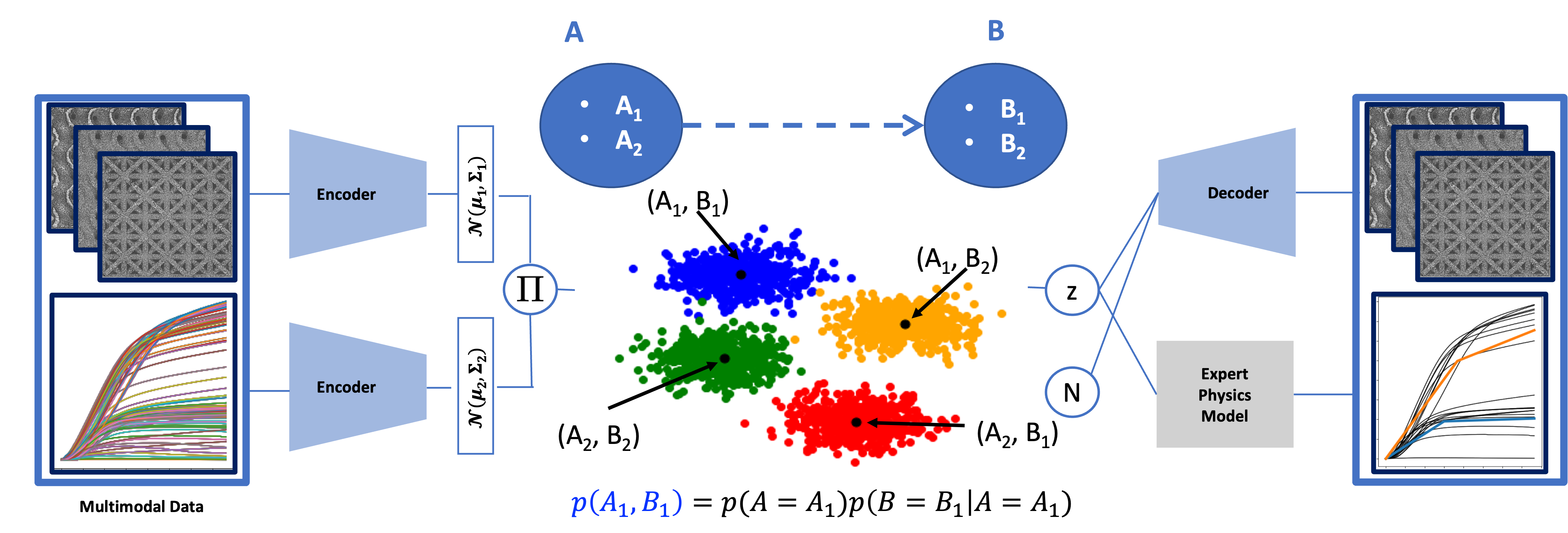
核心思路:论文提出的causalPIMA算法通过结合多模态数据和已知物理知识,利用新的可微参数化方法来学习因果关系。这种设计使得算法在无监督环境下仍能有效发现潜在特征。
技术框架:整体架构包括两个主要模块:一是学习有向无环图(DAG),二是构建变分自编码器的潜在空间。通过单一的可处理证据下界损失函数,两个模块在端到端的可微框架中协同工作。
关键创新:最重要的技术创新在于将高斯混合先验应用于潜在空间,并将每个混合成分与DAG节点的结果相对应。这一新颖的识别方式使得因果特征的发现成为可能。
关键设计:算法中采用的损失函数为可处理的证据下界,确保了学习过程的稳定性和有效性。此外,网络结构设计上,潜在空间的高斯混合先验为特征发现提供了强有力的支持。
🖼️ 关键图片
📊 实验亮点
在合成数据集和科学数据集上的实验结果表明,causalPIMA算法能够在完全无监督的设置下,成功学习到可解释的因果结构,并发现关键特征。与基线方法相比,该算法在特征发现的准确性上有显著提升,具体性能数据尚未披露。
🎯 应用场景
该研究的潜在应用领域包括科学数据分析、医疗诊断、经济模型构建等。通过有效的因果关系学习,causalPIMA能够帮助研究人员更好地理解复杂系统中的因果机制,从而推动科学研究和技术创新。未来,该算法有望在更多领域中得到应用,提升数据分析的深度和广度。
📄 摘要(原文)
Causal representation learning algorithms discover lower-dimensional representations of data that admit a decipherable interpretation of cause and effect; as achieving such interpretable representations is challenging, many causal learning algorithms utilize elements indicating prior information, such as (linear) structural causal models, interventional data, or weak supervision. Unfortunately, in exploratory causal representation learning, such elements and prior information may not be available or warranted. Alternatively, scientific datasets often have multiple modalities or physics-based constraints, and the use of such scientific, multimodal data has been shown to improve disentanglement in fully unsupervised settings. Consequently, we introduce a causal representation learning algorithm (causalPIMA) that can use multimodal data and known physics to discover important features with causal relationships. Our innovative algorithm utilizes a new differentiable parametrization to learn a directed acyclic graph (DAG) together with a latent space of a variational autoencoder in an end-to-end differentiable framework via a single, tractable evidence lower bound loss function. We place a Gaussian mixture prior on the latent space and identify each of the mixtures with an outcome of the DAG nodes; this novel identification enables feature discovery with causal relationships. Tested against a synthetic and a scientific dataset, our results demonstrate the capability of learning an interpretable causal structure while simultaneously discovering key features in a fully unsupervised setting.