KITAB: Evaluating LLMs on Constraint Satisfaction for Information Retrieval
作者: Marah I Abdin, Suriya Gunasekar, Varun Chandrasekaran, Jerry Li, Mert Yuksekgonul, Rahee Ghosh Peshawaria, Ranjita Naik, Besmira Nushi
分类: cs.LG, cs.AI, cs.CL, cs.IR
发布日期: 2023-10-24
备注: 23 pages
💡 一句话要点
提出KITAB以评估LLMs在信息检索中的约束满足能力
🎯 匹配领域: 支柱九:具身大模型 (Embodied Foundation Models)
关键词: 约束满足 信息检索 大型语言模型 数据集构建 模型评估 实验研究
📋 核心要点
- 现有的检索基准无法有效测量约束满足能力,且LLMs在此类查询中表现出明显的局限性。
- 提出KITAB数据集,专注于评估语言模型在约束满足查询中的表现,包含丰富的书籍相关数据。
- 实验结果显示,缺乏上下文时模型表现不佳,信息流行度降低时错误率显著上升,揭示了约束满足的基本障碍。
📝 摘要(中文)
本研究探讨了先进模型在信息检索中回答约束满足查询的能力,例如'在圣地亚哥的冰淇淋店列表'。过去,这类查询被认为只能通过网络搜索或知识库解决。近期,大型语言模型(LLMs)在此任务中展现出初步的能力。然而,许多现有的检索基准要么已饱和,要么未能有效测量约束满足能力。为应对LLMs的事实错误和幻觉问题,本文提出了KITAB,一个用于测量语言模型约束满足能力的新数据集。KITAB包含来自600多位作者的书籍相关数据和13,000个查询,并提供了一种动态数据收集和约束验证的方法,以获取其他作者的类似测试数据。我们对GPT4和GPT3.5的扩展实验揭示了信息流行度、约束类型和上下文可用性等维度的常见失败模式。
🔬 方法详解
问题定义:本论文旨在解决大型语言模型在信息检索中对约束满足查询的能力不足,现有方法未能有效评估这一能力,导致模型在实际应用中表现不佳。
核心思路:通过构建KITAB数据集,论文提供了一种新的评估框架,专注于约束满足能力的测量,旨在揭示模型在处理此类查询时的潜在缺陷。
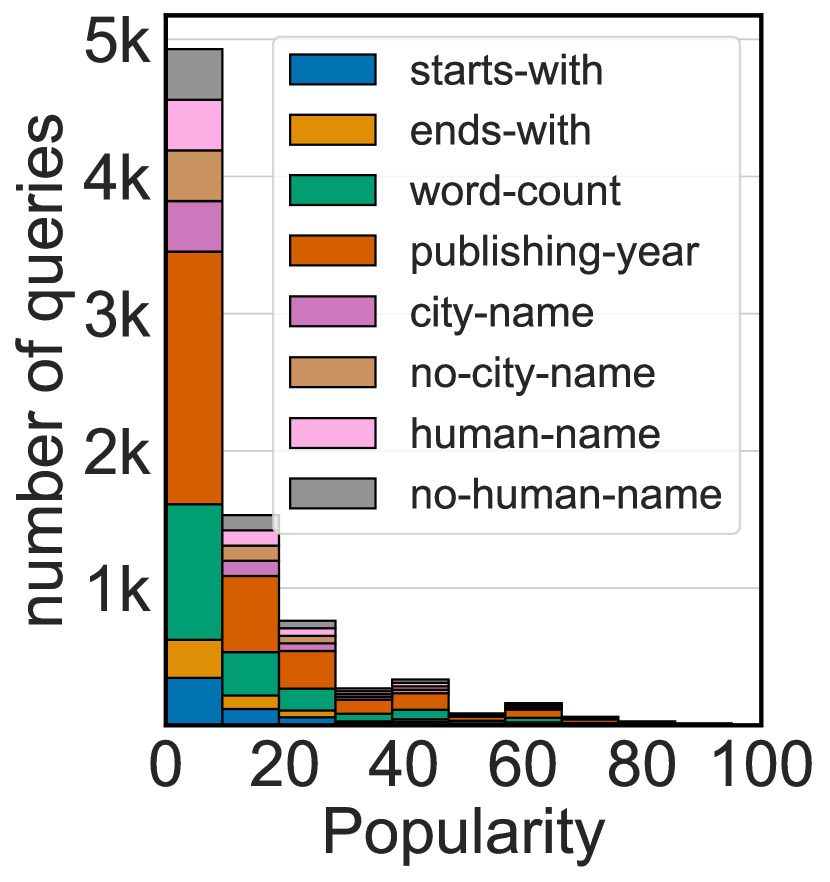
技术框架:KITAB数据集包含来自600多位作者的书籍数据和13,000个查询,结合动态数据收集和约束验证方法,形成一个完整的评估体系。
关键创新:KITAB数据集的构建及其动态数据收集方法是本研究的核心创新,填补了现有检索基准的空白,提供了针对约束满足能力的专门评估工具。
关键设计:在实验中,采用了GPT4和GPT3.5模型,评估了不同上下文可用性和信息流行度对模型表现的影响,揭示了模型在约束满足方面的具体失败模式。
🖼️ 关键图片
📊 实验亮点
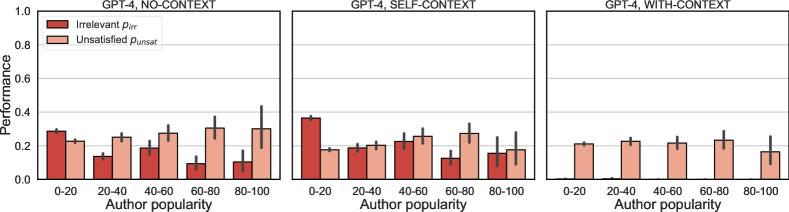
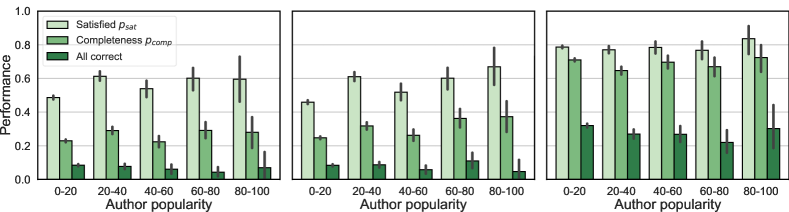
实验结果表明,在缺乏上下文的情况下,模型的表现受到严重限制,出现了大量无关信息和事实错误。随着信息流行度的降低,模型的错误率显著上升,揭示了约束满足的基本障碍。这些发现为未来模型的改进提供了重要的方向。
🎯 应用场景
该研究的潜在应用领域包括智能搜索引擎、问答系统和推荐系统等,能够帮助提升模型在处理复杂查询时的准确性和可靠性。未来,KITAB数据集的开源将促进相关领域的进一步研究,推动约束满足能力的提升。
📄 摘要(原文)
We study the ability of state-of-the art models to answer constraint satisfaction queries for information retrieval (e.g., 'a list of ice cream shops in San Diego'). In the past, such queries were considered to be tasks that could only be solved via web-search or knowledge bases. More recently, large language models (LLMs) have demonstrated initial emergent abilities in this task. However, many current retrieval benchmarks are either saturated or do not measure constraint satisfaction. Motivated by rising concerns around factual incorrectness and hallucinations of LLMs, we present KITAB, a new dataset for measuring constraint satisfaction abilities of language models. KITAB consists of book-related data across more than 600 authors and 13,000 queries, and also offers an associated dynamic data collection and constraint verification approach for acquiring similar test data for other authors. Our extended experiments on GPT4 and GPT3.5 characterize and decouple common failure modes across dimensions such as information popularity, constraint types, and context availability. Results show that in the absence of context, models exhibit severe limitations as measured by irrelevant information, factual errors, and incompleteness, many of which exacerbate as information popularity decreases. While context availability mitigates irrelevant information, it is not helpful for satisfying constraints, identifying fundamental barriers to constraint satisfaction. We open source our contributions to foster further research on improving constraint satisfaction abilities of future models.