Probabilistic Modeling of Human Teams to Infer False Beliefs
作者: Paulo Soares, Adarsh Pyarelal, Kobus Barnard
分类: cs.LG
发布日期: 2023-10-19
备注: 8 pages, 7 figures, presented in the 2021 AAAI Fall Symposium
💡 一句话要点
提出概率图模型以推断人类团队的错误信念
🎯 匹配领域: 支柱一:机器人控制 (Robot Control)
关键词: 概率图模型 人工智能 人类信念推断 城市搜索与救援 团队协作 Minecraft环境 心理状态推断
📋 核心要点
- 现有方法在推断人类信念时缺乏对可观察状态和行动的明确建模,导致推断准确性不足。
- 论文提出了一种基于概率图模型的解决方案,能够明确表示信念、意图及其与证据的关系,从而提高推断能力。
- 实验结果表明,ToMCAT能够准确推断玩家的错误信念,其推断准确性显著高于随机猜测,并与人类观察者的推断相当。
📝 摘要(中文)
本文开发了一种概率图模型(PGM),用于人工智能(AI)代理在模拟城市搜索与救援(USAR)场景中推断人类信念。该模型明确了可观察的状态和行动,以及基于玩家所见和所做的证据所构建的信念和意图。通过对玩家知识的操控,实验展示了AI代理如何推断干预的效果,进而帮助人类团队。参与者使用标记块向队友传达房间内是否存在受害者的信息,其中一名成员的标记含义与其他两人不同,可能导致他们持有错误信念。通过引入ToMCAT这一AI代理,研究发现玩家行为受到其视野内所见、对标记意义的信念及团队决定的影响。ToMCAT能够准确推断错误信念,其表现显著优于随机猜测,并与人类观察者的推断相当。
🔬 方法详解
问题定义:本文旨在解决人工智能代理在复杂团队环境中推断人类信念的挑战。现有方法缺乏对信念和意图的系统建模,导致推断结果不够准确。
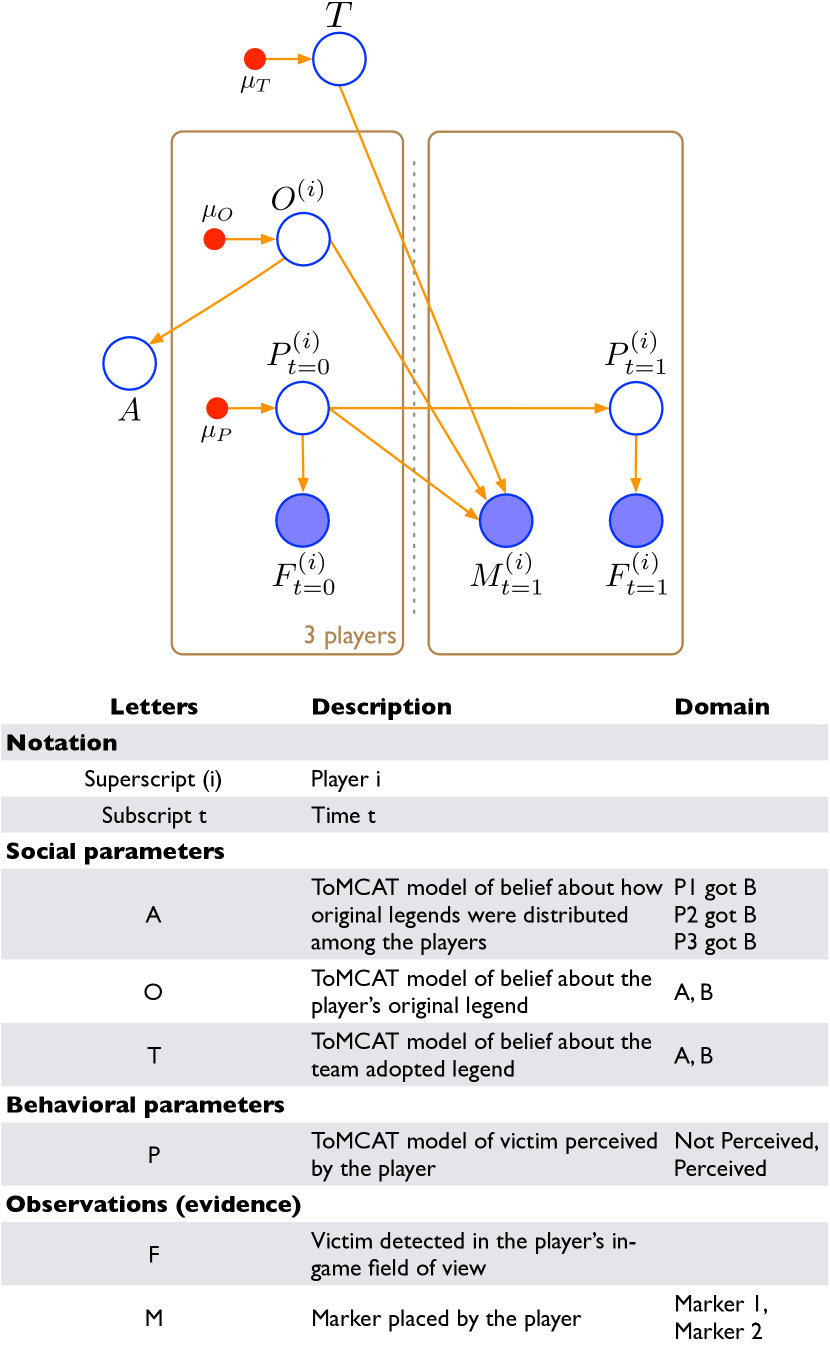
核心思路:论文提出了一种概率图模型(PGM),通过明确建模可观察的状态、行动及信念,帮助AI代理更好地理解和推断人类的心理状态。该设计使得AI能够基于玩家的行为和环境信息进行推断。
技术框架:整体架构包括数据采集、信念建模和推断模块。数据采集阶段通过Minecraft环境收集玩家的行为和视野信息,信念建模阶段构建PGM,推断模块则利用模型进行信念推断和干预效果分析。
关键创新:最重要的技术创新在于引入ToMCAT这一AI代理,能够同时推断个体和共享的心理状态,显著提升了推断的准确性和有效性。与现有方法相比,ToMCAT在处理复杂信念交互方面具有更强的能力。
关键设计:在模型设计中,采用了特定的损失函数来优化信念推断的准确性,并通过标记块的不同含义设置了实验条件,以模拟真实的团队信念交互场景。
🖼️ 关键图片
📊 实验亮点
实验结果显示,ToMCAT在推断玩家错误信念方面的准确性显著高于随机猜测,且与人类观察者的推断结果相当。这表明该模型在理解和推断人类信念方面具有较强的实用性和有效性,能够为AI在复杂团队环境中的应用提供有力支持。
🎯 应用场景
该研究的潜在应用领域包括人机协作、智能救援系统和虚拟团队训练等。通过提高AI对人类信念的理解能力,能够更有效地支持人类团队的决策和行动,提升整体任务执行效率。未来,该技术可能在多种复杂环境中得到广泛应用,推动智能系统的进一步发展。
📄 摘要(原文)
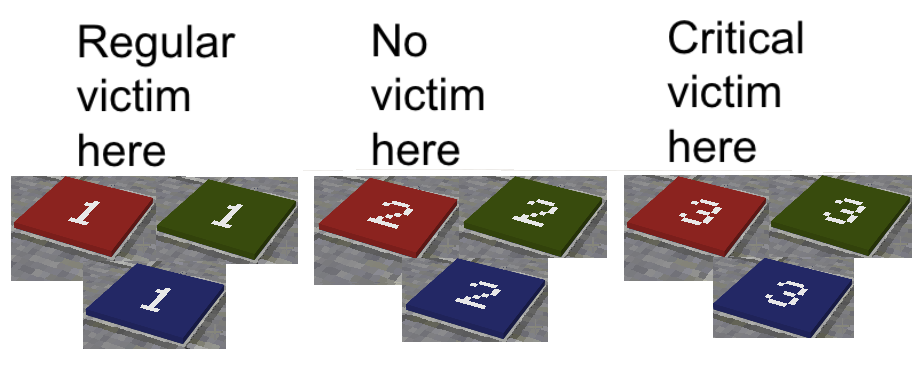
We develop a probabilistic graphical model (PGM) for artificially intelligent (AI) agents to infer human beliefs during a simulated urban search and rescue (USAR) scenario executed in a Minecraft environment with a team of three players. The PGM approach makes observable states and actions explicit, as well as beliefs and intentions grounded by evidence about what players see and do over time. This approach also supports inferring the effect of interventions, which are vital if AI agents are to assist human teams. The experiment incorporates manipulations of players' knowledge, and the virtual Minecraft-based testbed provides access to several streams of information, including the objects in the players' field of view. The participants are equipped with a set of marker blocks that can be placed near room entrances to signal the presence or absence of victims in the rooms to their teammates. In each team, one of the members is given a different legend for the markers than the other two, which may mislead them about the state of the rooms; that is, they will hold a false belief. We extend previous works in this field by introducing ToMCAT, an AI agent that can reason about individual and shared mental states. We find that the players' behaviors are affected by what they see in their in-game field of view, their beliefs about the meaning of the markers, and their beliefs about which meaning the team decided to adopt. In addition, we show that ToMCAT's beliefs are consistent with the players' actions and that it can infer false beliefs with accuracy significantly better than chance and comparable to inferences made by human observers.