Feature Pyramid biLSTM: Using Smartphone Sensors for Transportation Mode Detection
作者: Qinrui Tang, Hao Cheng
分类: cs.LG, cs.AI, eess.SP
发布日期: 2023-10-17
💡 一句话要点
提出Feature Pyramid biLSTM以解决交通模式检测问题
🎯 匹配领域: 支柱一:机器人控制 (Robot Control)
关键词: 交通模式检测 智能手机传感器 特征金字塔网络 双向LSTM 数据处理效率 惯性测量单元 深度学习
📋 核心要点
- 现有的交通模式检测方法通常依赖于大量传感器数据,导致处理复杂且效率低下。
- FPbiLSTM通过结合特征金字塔网络和双向长短期记忆网络,减少所需传感器数量,提高检测效率。
- 在SHL挑战数据集中,FPbiLSTM仅使用三种传感器数据,准确率达到95.1%,显著提升了检测性能。
📝 摘要(中文)
随着智能手机的广泛使用,惯性测量单元(IMU)提供了丰富的传感数据,这些数据对于交通模式检测具有重要价值。本研究提出了一种新颖的端到端方法,称为Feature Pyramid biLSTM(FPbiLSTM),旨在有效利用从智能手机收集的少量传感数据,实现日常出行活动中的准确模式检测。FPbiLSTM通过结合特征金字塔网络(FPN)和现有的CNN biLSTM模型,充分利用浅层特征的丰富性和深层特征的鲁棒性,捕捉各种交通模式中的时间移动模式。该方法在2018年Sussex-Huawei Locomotion(SHL)挑战数据集中,仅使用三种传感器(加速度计、陀螺仪和磁力计)就达到了95.1%的准确率和94.7%的F1-score,表现优异。
🔬 方法详解
问题定义:本论文旨在解决交通模式检测中对大量传感器数据的依赖问题,现有方法在处理效率和准确性上存在不足。
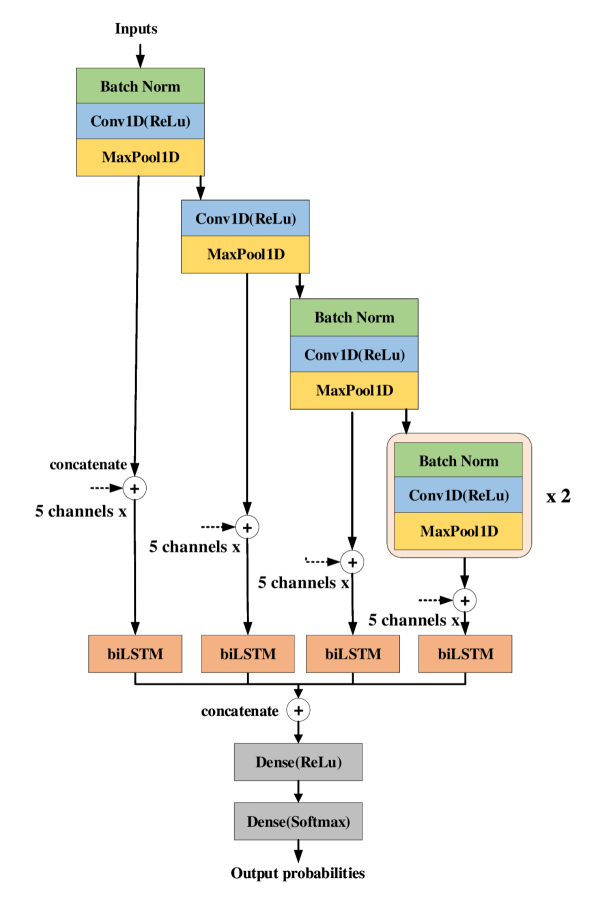
核心思路:FPbiLSTM通过结合特征金字塔网络和双向长短期记忆网络,利用少量传感器数据实现高效的交通模式检测,设计上强调了特征层次的丰富性与鲁棒性。
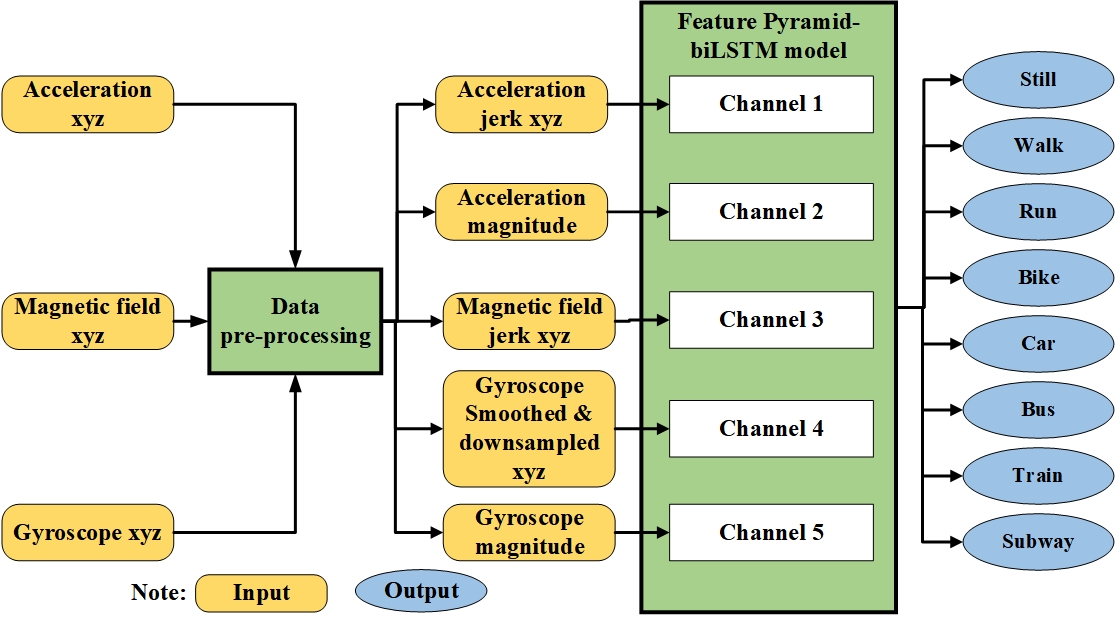
技术框架:FPbiLSTM的整体架构包括数据采集模块、特征提取模块(特征金字塔网络)、双向LSTM模块和输出分类模块,形成一个端到端的检测流程。
关键创新:FPbiLSTM的核心创新在于引入特征金字塔网络,增强了模型对时间序列数据的特征提取能力,与传统方法相比,显著减少了对传感器数量的依赖。
关键设计:在模型设计中,选择了加速度计、陀螺仪和磁力计三种传感器,采用交叉熵作为损失函数,网络结构结合了CNN和LSTM的优势,确保了高效的特征学习和模式识别。
🖼️ 关键图片
📊 实验亮点
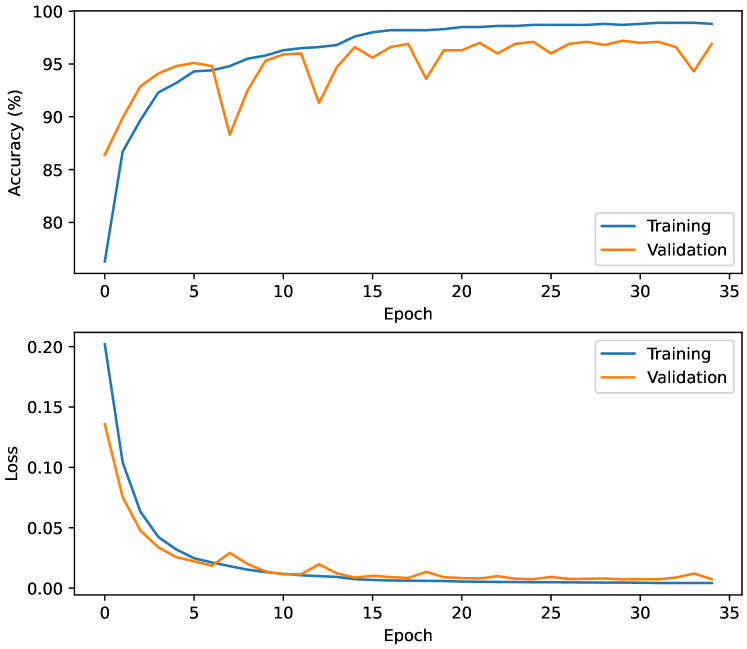
FPbiLSTM在SHL挑战数据集中表现出色,仅使用三种传感器数据,准确率达到95.1%,F1-score为94.7%。与现有方法相比,该模型在传感器数量和处理效率上均有显著提升,展示了其在交通模式检测中的优越性。
🎯 应用场景
该研究的潜在应用领域包括智能交通系统、移动健康监测和智能城市建设等。通过高效的交通模式检测,能够为出行方式优化、交通流量管理和个性化服务提供数据支持,具有重要的实际价值和社会影响。
📄 摘要(原文)
The widespread utilization of smartphones has provided extensive availability to Inertial Measurement Units, providing a wide range of sensory data that can be advantageous for the detection of transportation modes. The objective of this study is to propose a novel end-to-end approach to effectively explore a reduced amount of sensory data collected from a smartphone to achieve accurate mode detection in common daily traveling activities. Our approach, called Feature Pyramid biLSTM (FPbiLSTM), is characterized by its ability to reduce the number of sensors required and processing demands, resulting in a more efficient modeling process without sacrificing the quality of the outcomes than the other current models. FPbiLSTM extends an existing CNN biLSTM model with the Feature Pyramid Network, leveraging the advantages of both shallow layer richness and deeper layer feature resilience for capturing temporal moving patterns in various transportation modes. It exhibits an excellent performance by employing the data collected from only three out of seven sensors, i.e. accelerometers, gyroscopes, and magnetometers, in the 2018 Sussex-Huawei Locomotion (SHL) challenge dataset, attaining a noteworthy accuracy of 95.1% and an F1-score of 94.7% in detecting eight different transportation modes.