FedMFS: Federated Multimodal Fusion Learning with Selective Modality Communication
作者: Liangqi Yuan, Dong-Jun Han, Vishnu Pandi Chellapandi, Stanislaw H. Żak, Christopher G. Brinton
分类: cs.LG, cs.DC, cs.NI
发布日期: 2023-10-10 (更新: 2024-08-20)
备注: ICC 2024
💡 一句话要点
提出FedMFS以解决多模态联邦学习中的通信挑战
🎯 匹配领域: 支柱九:具身大模型 (Embodied Foundation Models)
关键词: 多模态学习 联邦学习 模态选择 通信优化 Shapley值 智能设备 物联网
📋 核心要点
- 核心问题:现有多模态联邦学习方法在异构网络环境中面临模态多样性和通信限制的挑战。
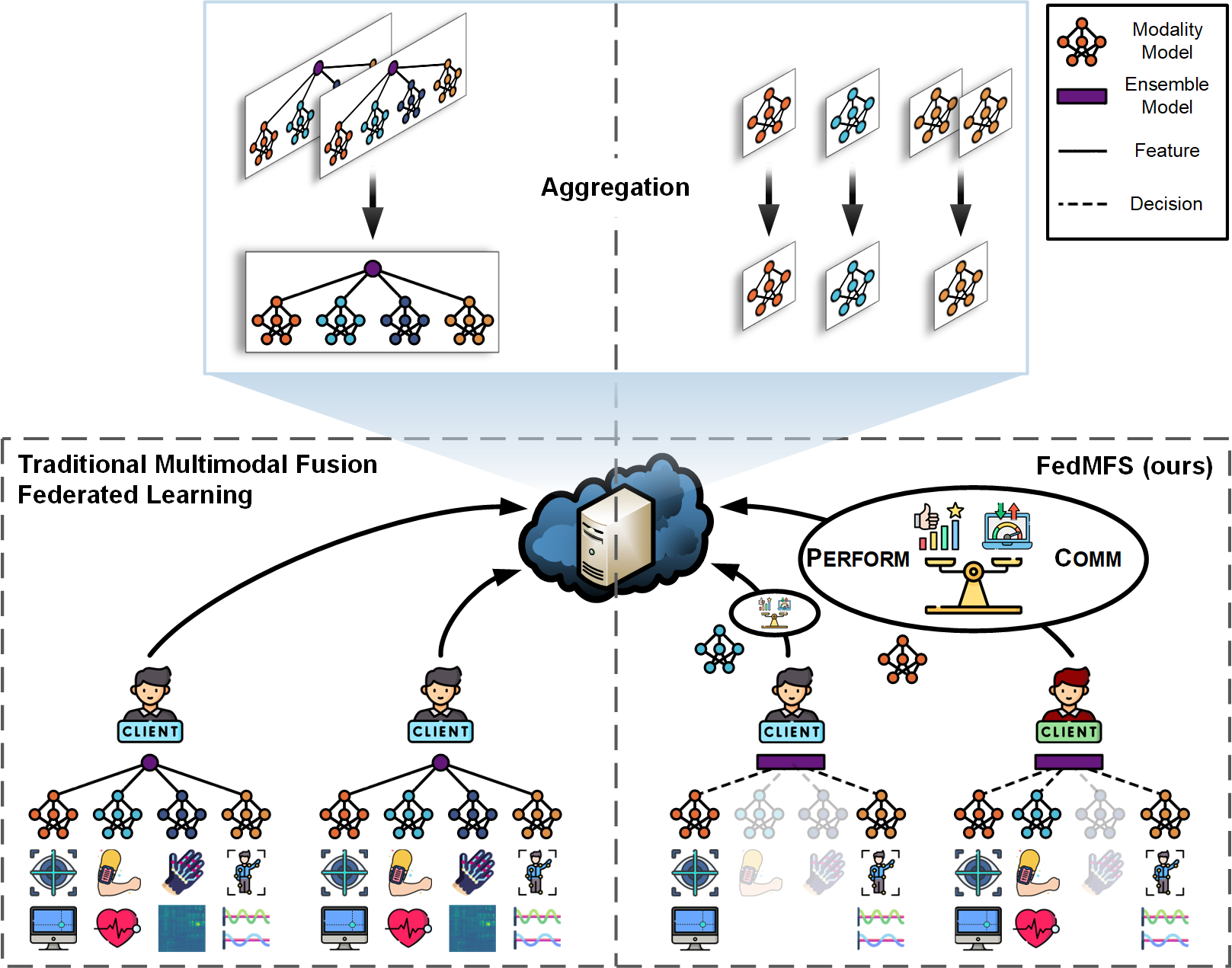
- 方法要点:FedMFS通过模态选择标准,综合考虑模态影响与通信开销,灵活平衡性能与资源约束。
- 实验或效果:在ActionSense数据集上,FedMFS实现了与基线相当的准确性,同时通信开销减少超过4倍。
📝 摘要(中文)
多模态联邦学习旨在丰富在多个模态(如压力、运动等传感器数据)下的模型训练。然而,在异构网络环境中,现有方法面临诸多挑战,包括设备收集的模态多样性和通信限制。本文提出了选择性模态通信的联邦多模态融合学习方法(FedMFS),通过引入模态选择标准,平衡模态影响与通信开销,从而应对上述挑战。实验结果表明,FedMFS在真实的ActionSense数据集上实现了与多个基线相当的准确性,同时通信开销减少超过4倍。
🔬 方法详解
问题定义:本文旨在解决多模态联邦学习中的通信挑战,尤其是在异构网络环境下,设备收集的模态多样性和通信限制使得现有方法难以有效应用。
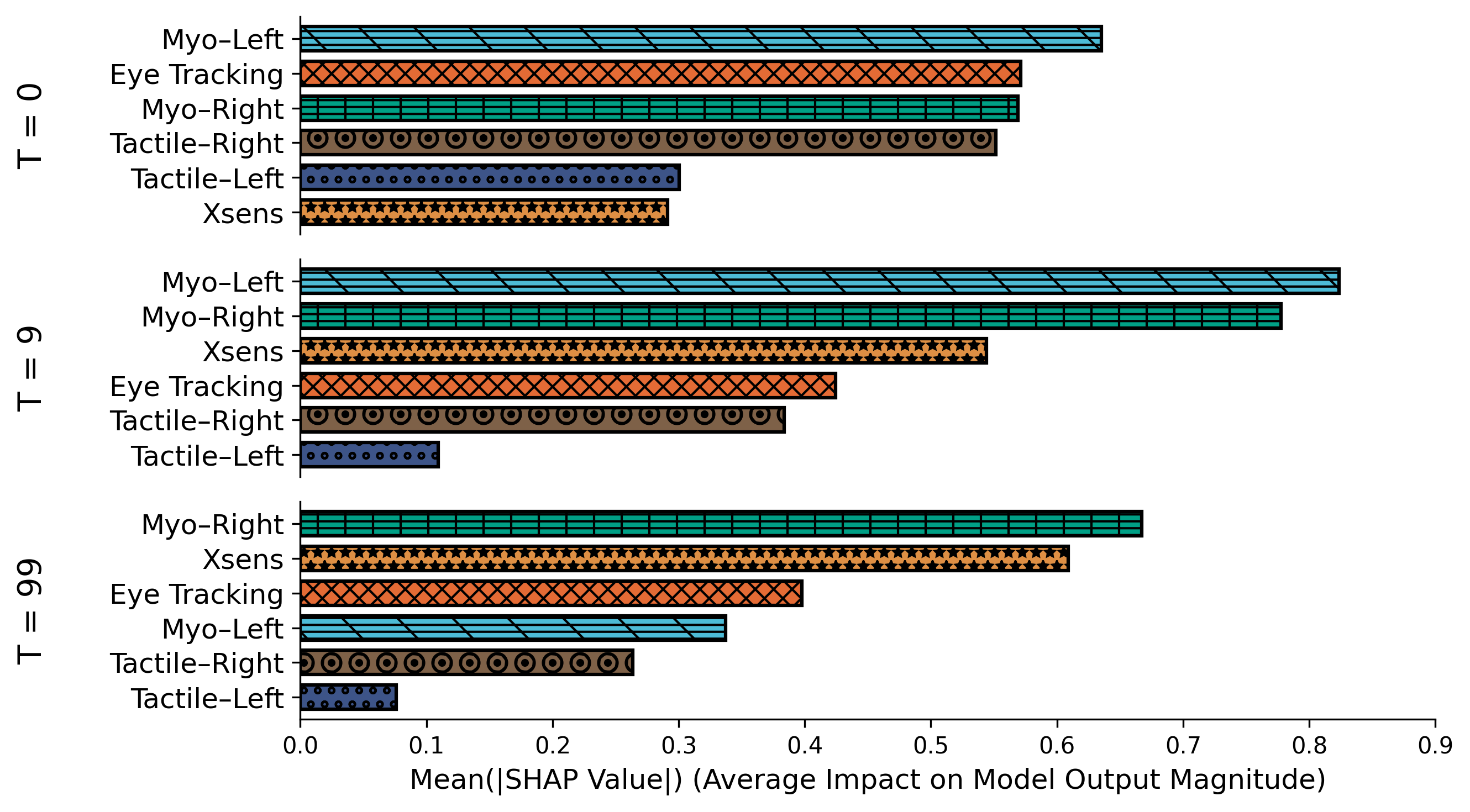
核心思路:FedMFS的核心思路是引入模态选择标准,通过Shapley值分析评估每个模态的影响力,并与模态模型大小进行权衡,从而选择最优模态进行通信。
技术框架:FedMFS的整体架构包括模态选择模块、模型训练模块和通信模块。每个设备根据选择标准决定上传的模态模型,服务器则整合来自不同设备的模态信息进行全局模型更新。
关键创新:FedMFS的主要创新在于模态选择标准的引入,使得模型训练能够在保证性能的同时显著降低通信开销。这一设计与传统的全模态上传方法形成鲜明对比。
关键设计:在关键设计上,FedMFS使用Shapley值作为模态影响力的评估标准,结合模态模型的大小,确保在资源有限的情况下实现最佳的通信效率。
🖼️ 关键图片

📊 实验亮点
实验结果显示,FedMFS在ActionSense数据集上实现了与多个基线模型相当的准确性,同时通信开销减少超过4倍,显著提升了多模态联邦学习的效率和实用性。
🎯 应用场景
FedMFS在智能设备、物联网和边缘计算等领域具有广泛的应用潜力。通过优化多模态数据的通信,能够提高模型训练效率,降低带宽消耗,适应资源受限的环境,推动智能系统的普及与发展。
📄 摘要(原文)
Multimodal federated learning (FL) aims to enrich model training in FL settings where devices are collecting measurements across multiple modalities (e.g., sensors measuring pressure, motion, and other types of data). However, key challenges to multimodal FL remain unaddressed, particularly in heterogeneous network settings: (i) the set of modalities collected by each device will be diverse, and (ii) communication limitations prevent devices from uploading all their locally trained modality models to the server. In this paper, we propose Federated Multimodal Fusion learning with Selective modality communication (FedMFS), a new multimodal fusion FL methodology that can tackle the above mentioned challenges. The key idea is the introduction of a modality selection criterion for each device, which weighs (i) the impact of the modality, gauged by Shapley value analysis, against (ii) the modality model size as a gauge for communication overhead. This enables FedMFS to flexibly balance performance against communication costs, depending on resource constraints and application requirements. Experiments on the real-world ActionSense dataset demonstrate the ability of FedMFS to achieve comparable accuracy to several baselines while reducing the communication overhead by over 4x.