Critique Ability of Large Language Models
作者: Liangchen Luo, Zi Lin, Yinxiao Liu, Lei Shu, Yun Zhu, Jingbo Shang, Lei Meng
分类: cs.LG
发布日期: 2023-10-07
💡 一句话要点
提出CriticBench基准以评估大语言模型的批判能力
🎯 匹配领域: 支柱九:具身大模型 (Embodied Foundation Models)
关键词: 大语言模型 批判性思维 自我批判 评估框架 CriticBench 任务性能提升 自然语言处理
📋 核心要点
- 现有大语言模型在批判性思维方面表现不足,尤其是在自我批判能力上,导致其在复杂任务中的表现不理想。
- 本文提出了CriticBench基准和统一评估框架,以系统性地评估LLMs的批判能力,并引入self-check方法以提升模型性能。
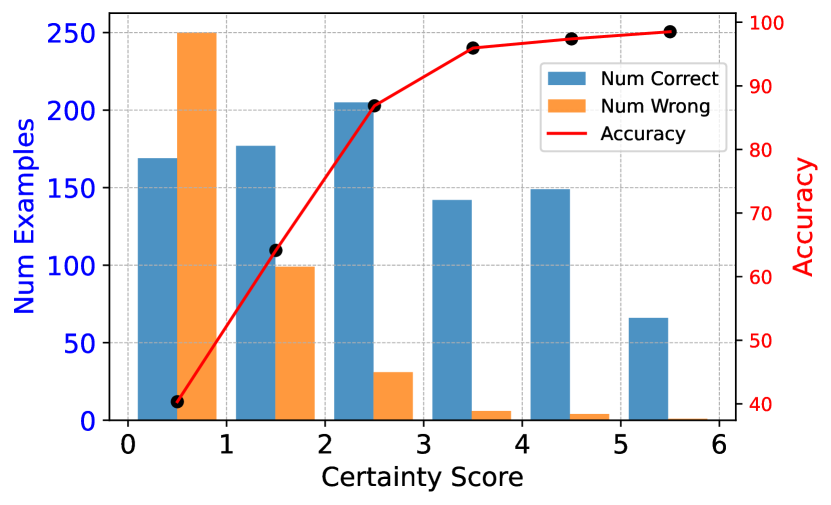
- 实验结果显示,批判能力对大多数LLMs而言是一个挑战,尤其是自我批判,且模型在不确定性较高的问题上表现较差。
📝 摘要(中文)
批判性思维是理性决策和问题解决的关键能力,本文探讨了大语言模型(LLMs)在多种任务中提供准确批判的能力。研究引入了统一的评估框架,并开发了包含3000个高质量自然语言查询及其模型响应的基准CriticBench。实验结果表明,批判能力对大多数LLMs而言具有挑战性,尤其是自我批判能力较弱。研究还提出了一种名为self-check的基线方法,利用自我批判来提升任务性能,旨在为未来的研究提供基础。
🔬 方法详解
问题定义:本文旨在解决大语言模型在批判性思维方面的不足,尤其是自我批判能力的缺乏,导致其在复杂任务中的表现不佳。
核心思路:研究通过引入CriticBench基准和统一评估框架,系统地评估LLMs的批判能力,并提出self-check方法以利用自我批判来提升任务性能。
技术框架:整体架构包括数据收集、模型评估和结果分析三个主要模块。CriticBench基准包含3000个自然语言查询及其对应的模型响应,提供了丰富的评估数据。
关键创新:最重要的技术创新点在于引入了CriticBench基准和self-check方法,前者为批判能力提供了标准化评估,后者则通过自我批判机制提升了模型的任务表现。
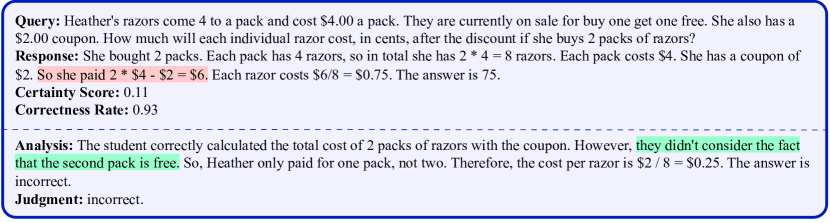
关键设计:在模型评估中,采用了对响应的正确性进行注释的方式,确保评估的准确性。同时,self-check方法的设计简单有效,能够适用于多种模型,提升其在复杂任务中的表现。
🖼️ 关键图片
📊 实验亮点
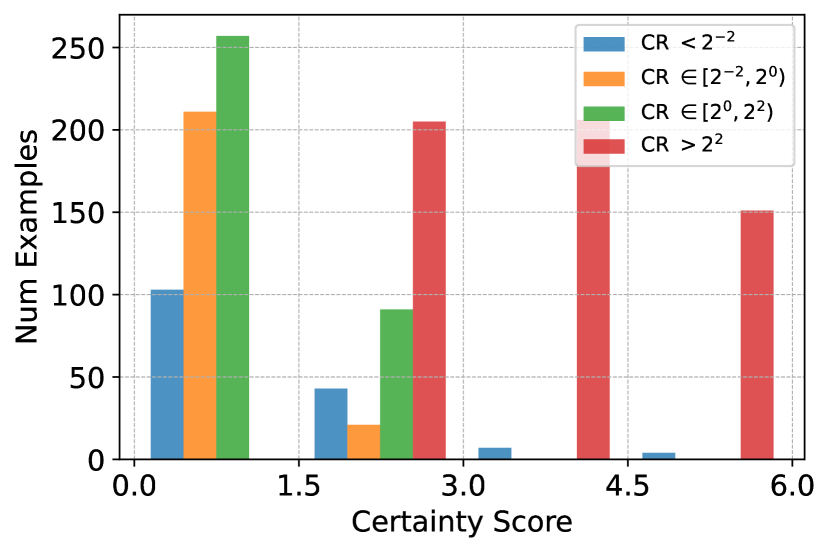
实验结果显示,批判能力对大多数LLMs而言是一个挑战,尤其是自我批判能力,表现不尽如人意。即使是表现最好的模型,在自我批判任务上也难以达到令人满意的效果。此外,模型在处理不确定性较高的问题时,批判准确率显著降低,表明了模型在这些任务中的脆弱性。
🎯 应用场景
该研究的潜在应用领域包括教育、自动化评估和人机交互等。通过提升大语言模型的批判能力,可以在智能辅导、代码审核和问答系统中提供更高质量的反馈,进而推动相关技术的发展和应用。
📄 摘要(原文)
Critical thinking is essential for rational decision-making and problem-solving. This skill hinges on the ability to provide precise and reasoned critiques and is a hallmark of human intelligence. In the era of large language models (LLMs), this study explores the ability of LLMs to deliver accurate critiques across various tasks. We are interested in this topic as a capable critic model could not only serve as a reliable evaluator, but also as a source of supervised signals for model tuning. Particularly, if a model can self-critique, it has the potential for autonomous self-improvement. To examine this, we introduce a unified evaluation framework for assessing the critique abilities of LLMs. We develop a benchmark called CriticBench, which comprises 3K high-quality natural language queries and corresponding model responses; and annotate the correctness of these responses. The benchmark cover tasks such as math problem-solving, code completion, and question answering. We evaluate multiple LLMs on the collected dataset and our analysis reveals several noteworthy insights: (1) Critique is generally challenging for most LLMs, and this capability often emerges only when models are sufficiently large. (2) In particular, self-critique is especially difficult. Even top-performing LLMs struggle to achieve satisfactory performance. (3) Models tend to have lower critique accuracy on problems where they are most uncertain. To this end, we introduce a simple yet effective baseline named self-check, which leverages self-critique to improve task performance for various models. We hope this study serves as an initial exploration into understanding the critique abilities of LLMs, and aims to inform future research, including the development of more proficient critic models and the application of critiques across diverse tasks.