Federated Fine-Tuning of LLMs on the Very Edge: The Good, the Bad, the Ugly
作者: Herbert Woisetschläger, Alexander Isenko, Shiqiang Wang, Ruben Mayer, Hans-Arno Jacobsen
分类: cs.LG, cs.DC, cs.PF
发布日期: 2023-10-04 (更新: 2024-05-02)
备注: Camera-ready version for DEEM'24. Please cite the official ACM paper via https://doi.org/10.1145/3650203.3663331
💡 一句话要点
提出边缘计算下的联邦微调方法以提升LLM性能
🎯 匹配领域: 支柱九:具身大模型 (Embodied Foundation Models)
关键词: 联邦学习 边缘计算 大型语言模型 模型微调 文本摘要 计算效率 数据隐私
📋 核心要点
- 现有的LLM训练和微调方法面临数据获取困难和计算资源限制等挑战。
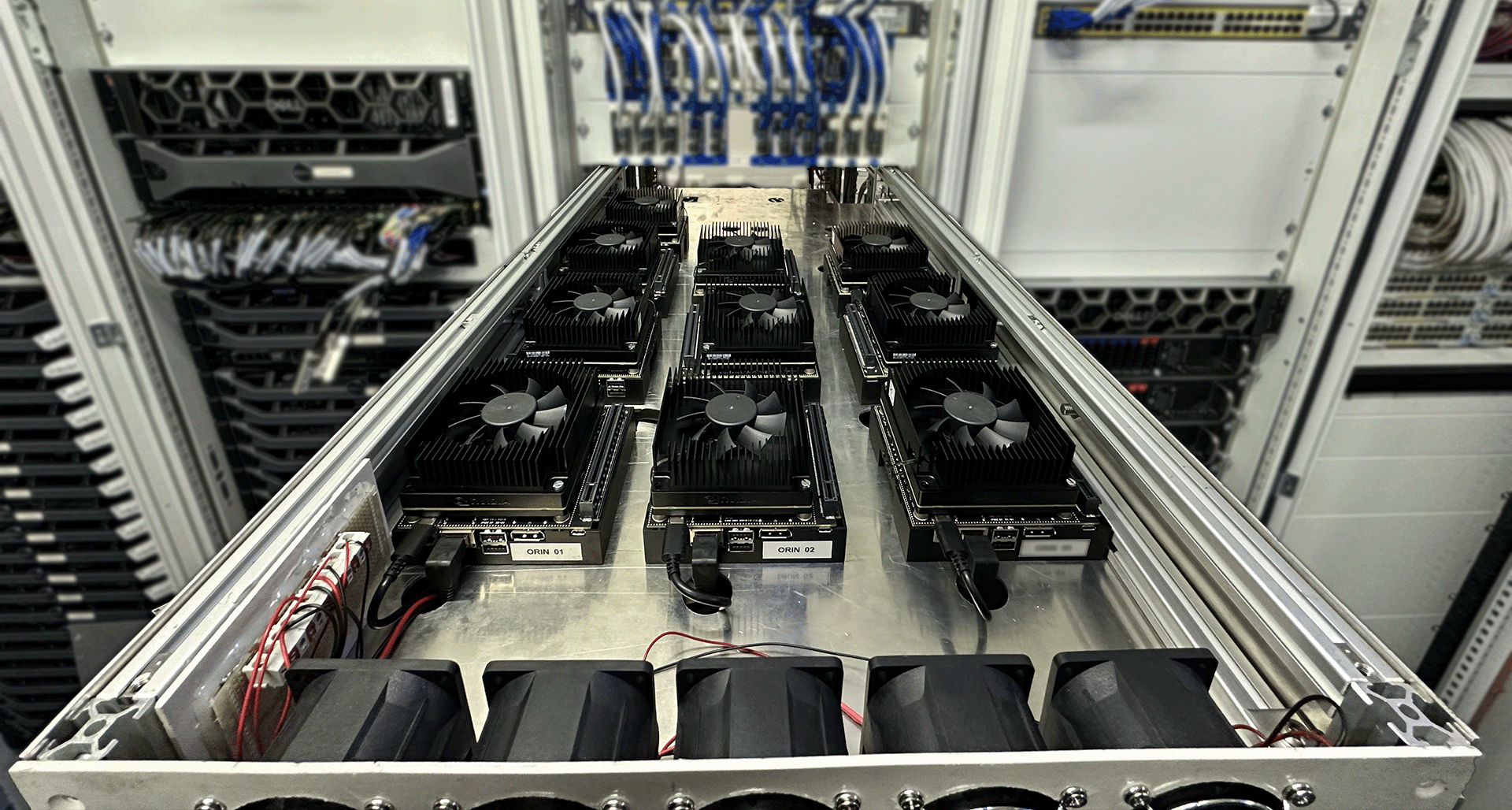
- 本文通过联邦学习方法,探索在边缘计算系统上微调LLM的可行性,特别是针对文本摘要任务。
- 实验结果表明,边缘计算系统在LLM微调任务中具有潜在的计算效率提升,与数据中心GPU相比展现出改进空间。
📝 摘要(中文)
大型语言模型(LLM)和基础模型因其在自然语言处理、数据交互和信息检索方面的潜力而受到广泛关注。然而,训练或微调LLM需要大量数据,这在法律或技术上可能面临挑战,并且通常需要私有计算资源。联邦学习(FL)是一种旨在克服这些挑战的解决方案,扩展深度学习应用的数据访问。本文采用硬件中心的方法,探讨如何将LLM引入现代边缘计算系统。我们对FLAN-T5模型系列进行了微调,范围从8000万到30亿参数,应用于文本摘要任务。我们提供了微观级别的硬件基准,比较了模型的FLOP利用率与最先进的数据中心GPU,并研究了在现实条件下的网络利用率。
🔬 方法详解
问题定义:本文旨在解决在边缘计算环境中微调大型语言模型(LLM)时面临的数据获取和计算资源限制问题。现有方法通常依赖于集中式数据中心,难以满足边缘设备的需求。
核心思路:论文提出通过联邦学习(FL)在边缘设备上微调FLAN-T5模型,利用分布式数据处理来克服数据隐私和访问限制,从而实现高效的模型训练。
技术框架:整体架构包括数据收集、模型微调和性能评估三个主要模块。首先,在边缘设备上收集本地数据,然后应用FL对模型进行微调,最后通过基准测试评估模型性能。
关键创新:最重要的技术创新在于将联邦学习与边缘计算结合,首次系统性地评估边缘设备在LLM微调任务中的能力,展示了边缘计算的潜力与数据中心的比较。
关键设计:在模型微调过程中,采用了适应性的学习率调整和特定的损失函数设计,以优化模型在边缘设备上的性能,同时考虑了计算资源的限制。
🖼️ 关键图片


📊 实验亮点
实验结果显示,边缘计算系统在文本摘要任务中的FLOP利用率与数据中心GPU相比有显著提升,尤其在资源受限的环境下,边缘设备能够有效完成LLM微调任务,展示出良好的计算效率。
🎯 应用场景
该研究的潜在应用领域包括智能手机、物联网设备和边缘服务器等场景,能够在保护用户隐私的同时,实现高效的自然语言处理任务。未来,随着边缘计算技术的进步,该方法有望在更多实际应用中推广,提升用户体验。
📄 摘要(原文)
Large Language Models (LLM) and foundation models are popular as they offer new opportunities for individuals and businesses to improve natural language processing, interact with data, and retrieve information faster. However, training or fine-tuning LLMs requires a vast amount of data, which can be challenging to access due to legal or technical restrictions and may require private computing resources. Federated Learning (FL) is a solution designed to overcome these challenges and expand data access for deep learning applications. This paper takes a hardware-centric approach to explore how LLMs can be brought to modern edge computing systems. Our study fine-tunes the FLAN-T5 model family, ranging from 80M to 3B parameters, using FL for a text summarization task. We provide a micro-level hardware benchmark, compare the model FLOP utilization to a state-of-the-art data center GPU, and study the network utilization in realistic conditions. Our contribution is twofold: First, we evaluate the current capabilities of edge computing systems and their potential for LLM FL workloads. Second, by comparing these systems with a data-center GPU, we demonstrate the potential for improvement and the next steps toward achieving greater computational efficiency at the edge.