SmartPlay: A Benchmark for LLMs as Intelligent Agents
作者: Yue Wu, Xuan Tang, Tom M. Mitchell, Yuanzhi Li
分类: cs.LG, cs.AI
发布日期: 2023-10-02 (更新: 2024-03-17)
💡 一句话要点
提出SmartPlay基准以评估大型语言模型作为智能代理的能力
🎯 匹配领域: 支柱九:具身大模型 (Embodied Foundation Models)
关键词: 大型语言模型 智能代理 评估基准 游戏设计 能力分析 自动化决策 系统评估
📋 核心要点
- 现有方法缺乏系统性基准,无法全面评估大型语言模型作为智能代理的能力。
- SmartPlay通过设计六种不同的游戏,提供多种评估设置,系统性地评估LLMs的智能代理能力。
- SmartPlay的发布为研究者提供了一个严格的测试平台,帮助识别当前方法论的不足之处。
📝 摘要(中文)
近年来,大型语言模型(LLMs)在智能代理和下一代自动化方面展现出巨大潜力,但缺乏系统性基准来评估其作为代理的能力。本文介绍了SmartPlay,一个既具挑战性的基准又是一种评估LLMs作为代理的方法论。SmartPlay包含六种不同的游戏,如石头剪刀布、汉诺塔和Minecraft,每个游戏具有独特的设置,提供多达20种评估设置和无限的环境变体。每个游戏独特地挑战了智能LLM代理的九种重要能力,包括对象依赖推理、前瞻性规划、空间推理、历史学习和随机性理解。SmartPlay不仅是评估LLM代理整体性能的严格测试平台,也是识别当前方法论差距的路线图。我们将在github.com/Microsoft/SmartPlay上发布我们的基准。
🔬 方法详解
问题定义:本文旨在解决缺乏系统性基准的问题,以评估大型语言模型作为智能代理的能力。现有方法未能全面覆盖LLMs的多种能力,导致评估结果不够准确。
核心思路:论文提出SmartPlay基准,通过设计六种不同的游戏,针对LLMs的九种关键能力进行系统评估。每个游戏的独特设置使得评估更具针对性和多样性。
技术框架:SmartPlay的整体架构包括六种游戏,每种游戏提供多达20种评估设置。每个游戏针对特定能力进行测试,形成一个多层次的评估体系。
关键创新:SmartPlay的主要创新在于其系统性和多样性,能够独立分析每种能力的表现。这与现有方法的单一评估方式形成鲜明对比。
关键设计:在设计中,SmartPlay考虑了游戏的多样性和复杂性,确保每个游戏都能有效挑战LLMs的特定能力。具体的参数设置和评估标准在论文中详细描述。
🖼️ 关键图片

📊 实验亮点
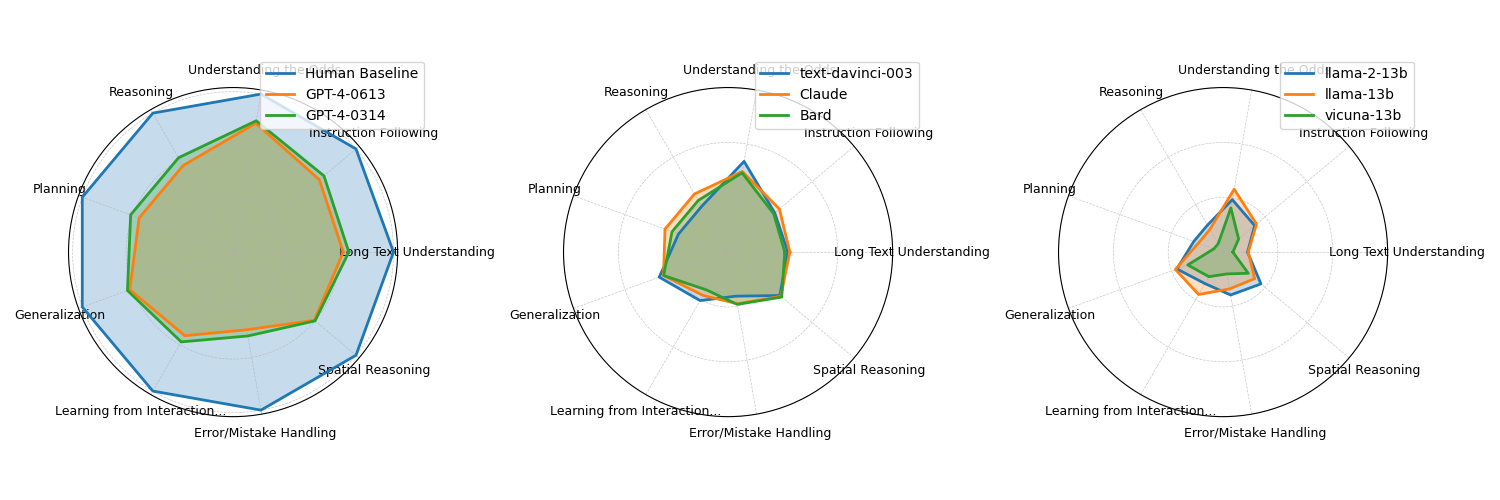
SmartPlay基准的实验结果显示,LLMs在不同游戏中的表现差异明显,能够有效识别出模型在特定能力上的优势和不足。这为后续的模型改进提供了重要依据。
🎯 应用场景
SmartPlay的潜在应用场景包括智能助手、游戏AI、自动化决策系统等领域。通过系统评估LLMs的能力,研究者可以更好地理解和改进智能代理的设计,从而推动相关技术的发展和应用。
📄 摘要(原文)
Recent large language models (LLMs) have demonstrated great potential toward intelligent agents and next-gen automation, but there currently lacks a systematic benchmark for evaluating LLMs' abilities as agents. We introduce SmartPlay: both a challenging benchmark and a methodology for evaluating LLMs as agents. SmartPlay consists of 6 different games, including Rock-Paper-Scissors, Tower of Hanoi, Minecraft. Each game features a unique setting, providing up to 20 evaluation settings and infinite environment variations. Each game in SmartPlay uniquely challenges a subset of 9 important capabilities of an intelligent LLM agent, including reasoning with object dependencies, planning ahead, spatial reasoning, learning from history, and understanding randomness. The distinction between the set of capabilities each game test allows us to analyze each capability separately. SmartPlay serves not only as a rigorous testing ground for evaluating the overall performance of LLM agents but also as a road-map for identifying gaps in current methodologies. We release our benchmark at github.com/Microsoft/SmartPlay