DirectL: Efficient Radiance Fields Rendering for 3D Light Field Displays
作者: Zongyuan Yang, Baolin Liu, Yingde Song, Yongping Xiong, Lan Yi, Zhaohe Zhang, Xunbo Yu
分类: cs.GR, cs.CV
发布日期: 2024-07-19
💡 一句话要点
DirectL:高效辐射场渲染,用于3D光场显示
🎯 匹配领域: 支柱三:空间感知与语义 (Perception & Semantics)
关键词: 光场显示 辐射场 神经辐射场 3D高斯溅射 实时渲染 子像素重用 DirectL
📋 核心要点
- 传统光场显示内容创建困难,需要大量多视角图像,实时渲染压力大,限制了其广泛应用。
- DirectL通过分析光线与子像素的映射关系,重用子像素,直接渲染光场图像,避免了传统的多视角渲染。
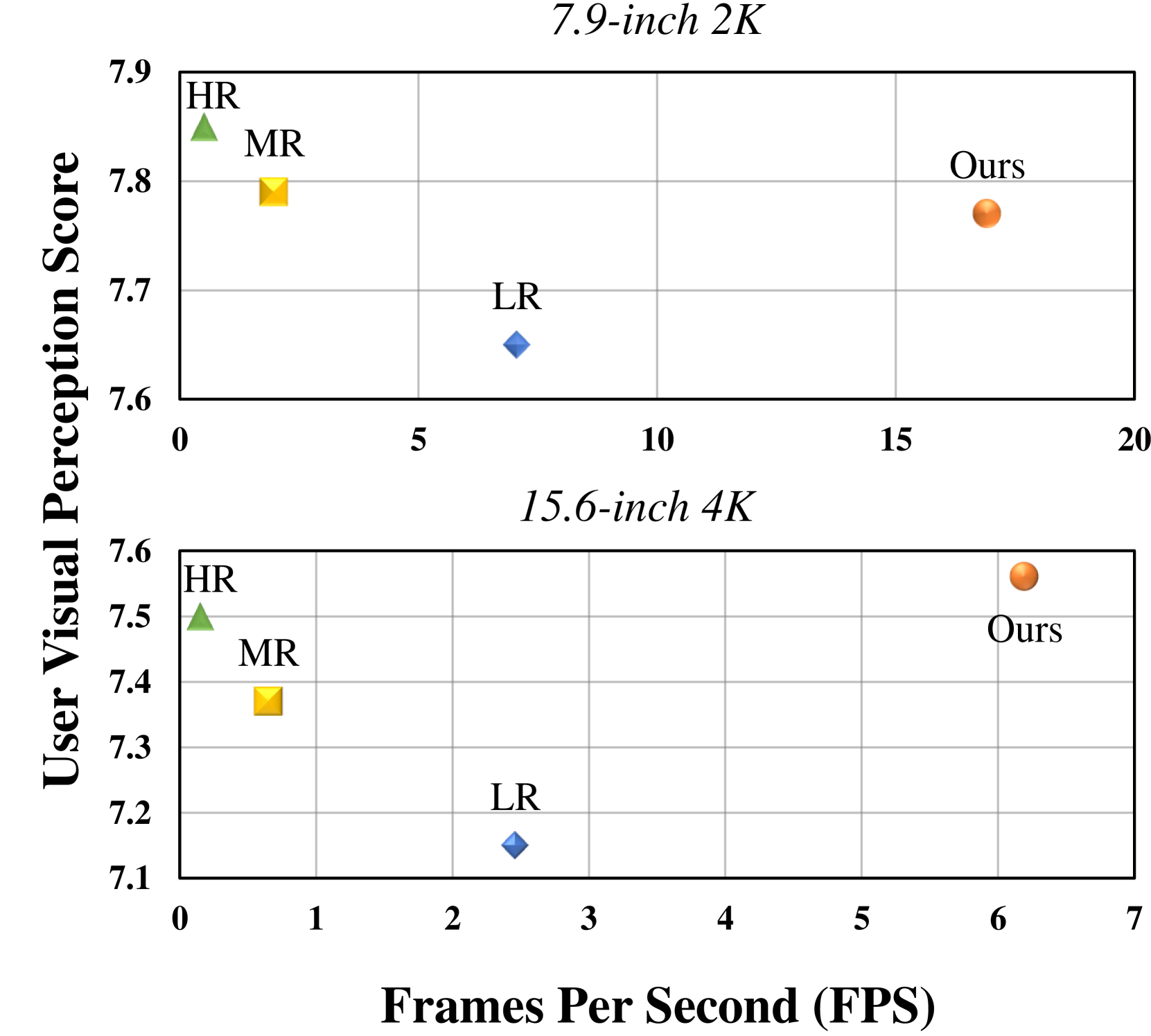
- 实验表明,DirectL在不损失视觉质量的前提下,渲染速度提升高达40倍,并可无缝集成到辐射场任务中。
📝 摘要(中文)
自立体显示技术发展数十年,但尚未广泛应用,主要原因是为非专业人士创建3D内容极具挑战。辐射场作为一种创新的3D表示方法,显著革新了3D重建和生成领域。该技术极大地简化了普通用户创建3D内容的过程,拓宽了光场显示器(LFD)的适用性。然而,这两个领域的结合在很大程度上仍未被探索。为基于视差的光场显示器创建最佳内容的标准范例要求以高分辨率渲染至少45个略微偏移的视图,这对实时渲染构成了巨大障碍。我们引入DirectL,一种用于3D显示器上辐射场的新型渲染范例。我们彻底分析了空间光线到屏幕子像素的交织映射,精确确定进入人眼的光线,并提出子像素重用来显著减少渲染所需的像素数量。针对两种主要的辐射场——神经辐射场(NeRF)和3D高斯溅射(3DGS),我们提出了相应的优化渲染管线,直接渲染光场图像,而不是多视图图像。广泛的实验和用户研究表明,与标准范例相比,DirectL将渲染速度提高了高达40倍,且不牺牲视觉质量。其仅修改渲染过程的特性使其能够无缝集成到后续的辐射场任务中。最后,我们将DirectL集成到各种应用中,展示了令人惊叹的视觉体验以及LFD和辐射场之间的协同作用,揭示了巨大的商业化应用潜力。
🔬 方法详解
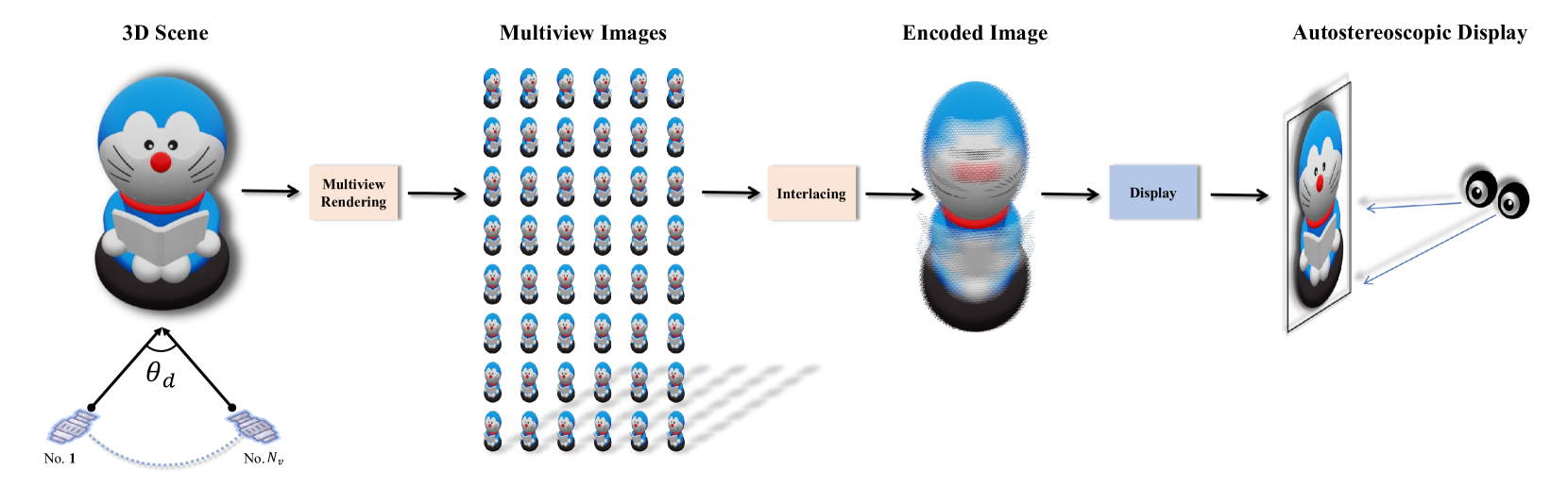
问题定义:论文旨在解决光场显示器(LFD)内容创建和实时渲染的难题。传统方法需要渲染大量多视角图像,计算量巨大,难以满足实时性要求,阻碍了LFD的普及。现有方法在渲染高质量光场内容时,计算复杂度高,难以实现实时交互。
核心思路:DirectL的核心思路是直接渲染光场图像,而非传统的多视角图像。通过分析空间光线与屏幕子像素之间的映射关系,精确计算进入人眼的光线,并利用子像素重用技术,显著减少渲染所需的像素数量,从而提高渲染效率。
技术框架:DirectL的整体框架包括以下几个主要步骤:1) 分析空间光线到屏幕子像素的映射关系;2) 确定进入人眼的光线;3) 提出子像素重用策略;4) 构建针对NeRF和3DGS的优化渲染管线,直接渲染光场图像。
关键创新:DirectL的关键创新在于其直接渲染光场图像的范式,避免了传统的多视角渲染。通过子像素重用技术,显著减少了渲染所需的像素数量,从而提高了渲染效率。此外,DirectL针对NeRF和3DGS提出了相应的优化渲染管线,进一步提高了渲染性能。
关键设计:DirectL的关键设计包括:1) 精确的光线追踪算法,用于计算空间光线与屏幕子像素之间的映射关系;2) 子像素重用策略,根据人眼感知特性,合理分配和重用子像素;3) 针对NeRF和3DGS的优化渲染管线,利用其特性进行加速。具体的参数设置和网络结构等细节未在摘要中详细描述。
🖼️ 关键图片

📊 实验亮点
实验结果表明,DirectL在各种显示器上,与标准范例相比,渲染速度提高了高达40倍,且不牺牲视觉质量。用户研究也证实了DirectL在视觉体验上的优势。此外,DirectL的渲染过程修改特性使其能够无缝集成到后续的辐射场任务中,例如场景编辑和光照调整。
🎯 应用场景
DirectL具有广泛的应用前景,包括但不限于:3D游戏、虚拟现实/增强现实(VR/AR)、数字标牌、医疗可视化、工业设计等领域。该技术能够显著降低光场显示内容的创建成本和渲染难度,提高用户体验,加速光场显示技术的商业化进程,并有望推动相关产业的发展。
📄 摘要(原文)
Autostereoscopic display, despite decades of development, has not achieved extensive application, primarily due to the daunting challenge of 3D content creation for non-specialists. The emergence of Radiance Field as an innovative 3D representation has markedly revolutionized the domains of 3D reconstruction and generation. This technology greatly simplifies 3D content creation for common users, broadening the applicability of Light Field Displays (LFDs). However, the combination of these two fields remains largely unexplored. The standard paradigm to create optimal content for parallax-based light field displays demands rendering at least 45 slightly shifted views preferably at high resolution per frame, a substantial hurdle for real-time rendering. We introduce DirectL, a novel rendering paradigm for Radiance Fields on 3D displays. We thoroughly analyze the interweaved mapping of spatial rays to screen subpixels, precisely determine the light rays entering the human eye, and propose subpixel repurposing to significantly reduce the pixel count required for rendering. Tailored for the two predominant radiance fields--Neural Radiance Fields (NeRFs) and 3D Gaussian Splatting (3DGS), we propose corresponding optimized rendering pipelines that directly render the light field images instead of multi-view images. Extensive experiments across various displays and user study demonstrate that DirectL accelerates rendering by up to 40 times compared to the standard paradigm without sacrificing visual quality. Its rendering process-only modification allows seamless integration into subsequent radiance field tasks. Finally, we integrate DirectL into diverse applications, showcasing the stunning visual experiences and the synergy between LFDs and Radiance Fields, which unveils tremendous potential for commercialization applications. \href{direct-l.github.io}{\textbf{Project Homepage}