Magnetic Resonance Simulation of Effective Transverse Relaxation (T2*)
作者: Hidenori Takeshima
分类: eess.IV, cs.CV, physics.med-ph
发布日期: 2026-01-27
💡 一句话要点
提出高效模拟横向弛豫时间T2*的新方法
🎯 匹配领域: 支柱八:物理动画 (Physics-based Animation)
关键词: 横向弛豫时间 磁共振成像 模拟技术 线性相位模型 洛伦兹函数 计算效率 生物医学
📋 核心要点
- 现有的$T_2^{ ext{'} }$模拟方法通常需要大量的等磁化体,导致计算复杂度高,效率低。
- 本文提出了一种基于线性相位模型的模拟方法,能够直接模拟洛伦兹函数,减少对等磁化体数量的依赖。
- 实验结果显示,使用新方法的$T_2^{ ext{'} }$模拟效果良好,计算时间大幅缩短,提升了模拟效率。
📝 摘要(中文)
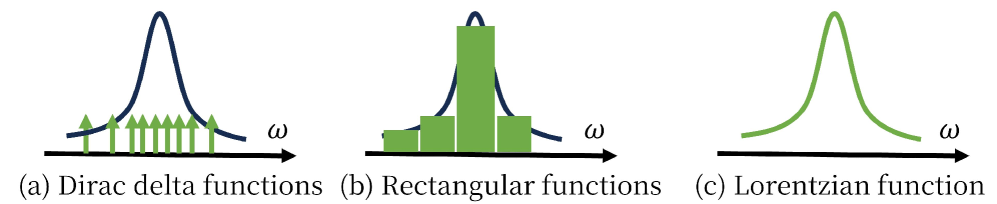
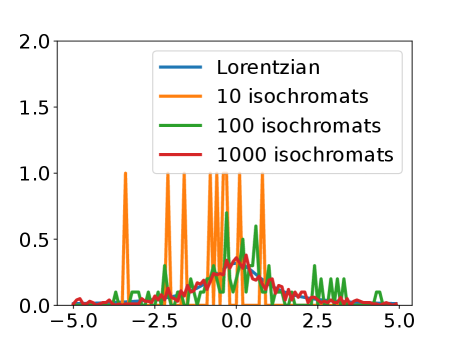
本研究旨在模拟有效的横向弛豫时间($T_2^*$),其由可逆成分($T_2^{ ext{'} }$)和不可逆成分($T_2$)组成。现有方法在模拟$T_2^{ ext{'} }$时面临挑战,通常需要100个以上的等磁化体。为此,本文提出了一种线性相位模型,能够直接模拟整个洛伦兹函数,避免了对大量等磁化体的需求。通过引入解析解和组合转移两种技术,显著加速了模拟过程。实验结果表明,$T_2^{ ext{'} }$的模拟效果良好,计算时间仅比不使用$T_2^{ ext{'} }$的情况长2.0至2.7倍,且在使用新技术后,模拟速度提升可达19倍和17倍。
🔬 方法详解
问题定义:本研究旨在解决有效横向弛豫时间$T_2^{*}$的模拟问题,特别是$T_2^{ ext{'} }$的模拟难度。现有方法需要100个以上的等磁化体,导致计算效率低下。
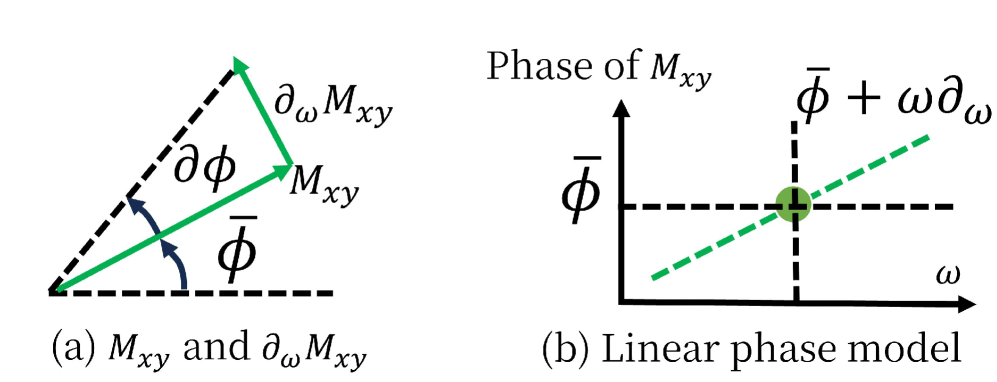
核心思路:论文提出了一种线性相位模型,能够直接模拟整个洛伦兹函数,从而避免了对大量等磁化体的需求。这种方法通过模拟频率轴上的部分导数来实现更高效的计算。
技术框架:整体方法包括两个主要模块:首先是线性相位模型的构建,其次是通过解析解和组合转移技术加速模拟过程。通过这两个模块,能够有效地实现$T_2^{ ext{'} }$的模拟。
关键创新:最重要的创新在于引入线性相位模型和解析解技术,这与传统方法的依赖大量等磁化体的方式有本质区别。通过这些创新,显著提高了模拟的效率和准确性。
关键设计:在技术细节上,论文通过模拟频率轴的部分导数来构建线性相位模型,并利用解析解和组合转移技术来加速计算,确保了在较少的计算资源下实现高效的$T_2^{ ext{'} }$模拟。
🖼️ 关键图片
📊 实验亮点
实验结果显示,使用新方法进行的单等磁化体模拟成功实现了$T_2^{ ext{'} }$的有效模拟。在多个实际脉冲序列的模拟中,$T_2^{ ext{'} }$的恢复效果符合预期,且计算时间仅比不使用$T_2^{ ext{'} }$的情况长2.0至2.7倍。利用解析解和组合转移技术,模拟速度分别提升了19倍和17倍,显示出显著的性能改进。
🎯 应用场景
该研究的潜在应用领域包括医学成像、磁共振成像(MRI)技术的优化以及相关的生物医学研究。通过提高$T_2^{ ext{'} }$的模拟效率,能够更好地理解生物组织的特性,从而在临床诊断和治疗中提供更准确的信息,具有重要的实际价值和未来影响。
📄 摘要(原文)
Purpose: To simulate effective transverse relaxation ($T_2^$) as a part of MR simulation. $T_2^$ consists of reversible ($T_2^{\prime}$) and irreversible ($T_2$) components. Whereas simulations of $T_2$ are easy, $T_2^{\prime}$ is not easily simulated if only magnetizations of individual isochromats are simulated. Theory and Methods: Efficient methods for simulating $T_2^{\prime}$ were proposed. To approximate the Lorentzian function of $T_2^{\prime}$ realistically, conventional simulators require 100+ isochromats. This approximation can be avoided by utilizing a linear phase model for simulating an entire Lorentzian function directly. To represent the linear phase model, the partial derivatives of the magnetizations with respect to the frequency axis were also simulated. To accelerate the simulations with these partial derivatives, the proposed methods introduced two techniques: analytic solutions, and combined transitions. For understanding the fundamental mechanism of the proposed method, a simple one-isochromat simulation was performed. For evaluating realistic cases, several pulse sequences were simulated using two phantoms with and without $T_2^{\prime}$ simulations. Results: The one-isochromat simulation demonstrated that $T_2^{\prime}$ simulations were possible. In the realistic cases, $T_2^{\prime}$ was recovered as expected without using 100+ isochromats for each point. The computational times with $T_2^{\prime}$ simulations were only 2.0 to 2.7 times longer than those without $T_2^{\prime}$ simulations. When the above-mentioned two techniques were utilized, the analytic solutions accelerated 19 times, and the combined transitions accelerated up to 17 times. Conclusion: Both theory and results showed that the proposed methods simulated $T_2^{\prime}$ efficiently by utilizing a linear model with a Lorentzian function, analytic solutions, and combined transitions.