HEIR: Learning Graph-Based Motion Hierarchies
作者: Cheng Zheng, William Koch, Baiang Li, Felix Heide
分类: cs.CV, cs.GR, cs.LG
发布日期: 2025-10-30
备注: Code link: https://github.com/princeton-computational-imaging/HEIR
期刊: Advances in Neural Information Processing Systems 38 (NeurIPS 2025)
💡 一句话要点
提出基于图的层次运动建模方法以解决运动动态建模问题
🎯 匹配领域: 支柱三:空间感知与语义 (Perception & Semantics)
关键词: 层次运动建模 图神经网络 运动动态 数据驱动 运动重建 计算机视觉 机器人技术
📋 核心要点
- 现有运动建模方法依赖于手动或启发式定义的固定层次,缺乏灵活性和通用性。
- 本文提出了一种基于图的层次运动建模方法,能够从数据中自动学习运动关系。
- 实验结果显示,该方法在1D和2D运动重建中表现优越,并在动态3D场景中实现了更真实的变形效果。
📝 摘要(中文)
运动的层次结构在计算机视觉、图形学和机器人等研究领域中普遍存在,复杂的动态通常源于简单运动组件之间的协调交互。现有方法通常依赖于手动定义或启发式层次结构,限制了其在不同任务中的通用性。本文提出了一种通用的层次运动建模方法,直接从数据中学习结构化、可解释的运动关系。我们的方法使用基于图的层次结构表示观察到的运动,明确地将全局绝对运动分解为父级继承模式和局部运动残差。通过图神经网络,我们将层次推断形式化为可微分的图学习问题。实验结果表明,我们的方法在1D和2D情况下重建了内在运动层次,并在动态3D高斯喷溅场景中相比基线产生了更真实和可解释的变形。
🔬 方法详解
问题定义:本文旨在解决现有运动建模方法的局限性,尤其是依赖于固定层次结构和手动定义的运动原语,导致其在不同任务中的适用性受限。
核心思路:我们提出了一种基于图的层次运动建模方法,通过从数据中学习运动关系,明确分解全局运动为父级模式和局部残差,以提高模型的灵活性和可解释性。
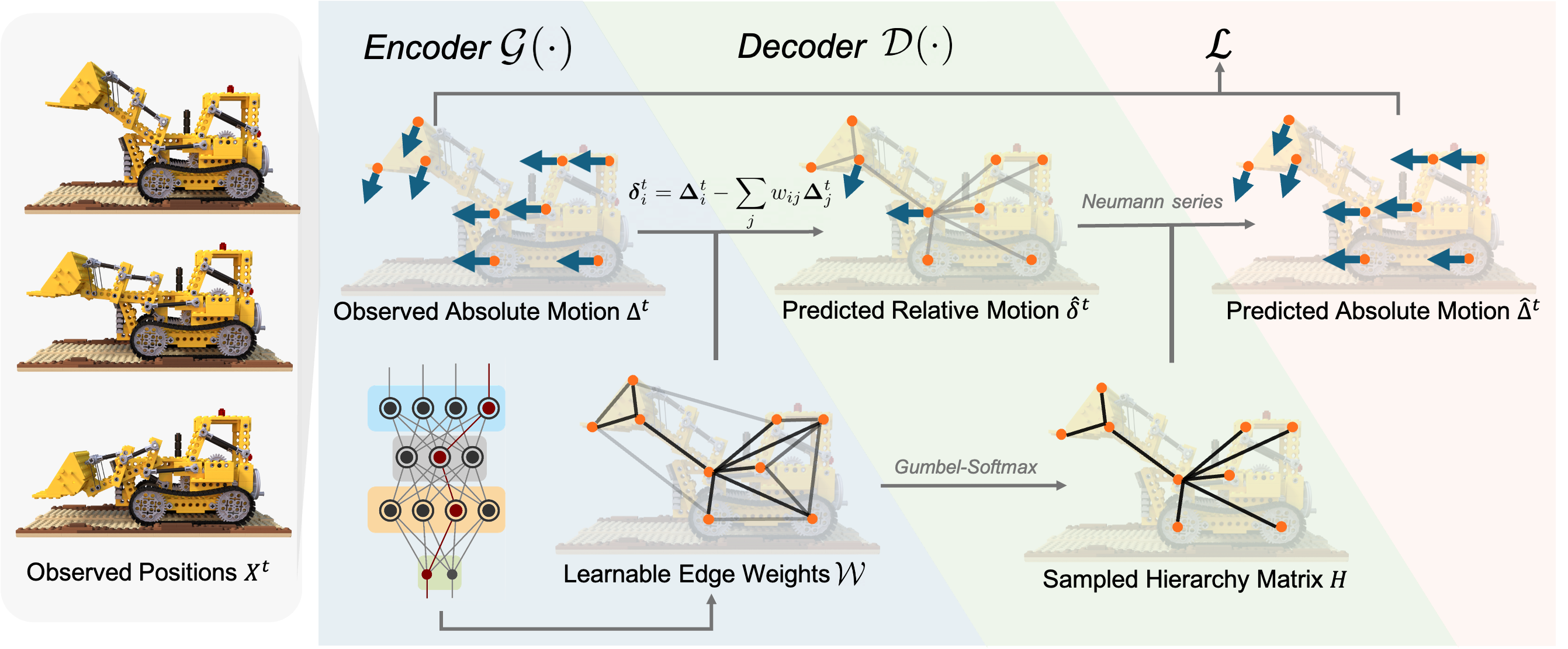
技术框架:整体架构包括数据输入、图结构构建、层次推断和运动重建四个主要模块。首先,输入运动数据,然后构建图结构,接着通过图神经网络进行层次推断,最后重建运动。
关键创新:本研究的关键创新在于将层次推断视为可微分的图学习问题,利用图神经网络捕捉运动之间的父子依赖关系,这一方法与传统的手动定义层次结构有本质区别。
关键设计:在技术细节上,我们设计了适应性损失函数以优化图结构,采用了特定的图神经网络架构来处理运动元素的关系,并通过实验验证了参数设置的有效性。
🖼️ 关键图片
📊 实验亮点
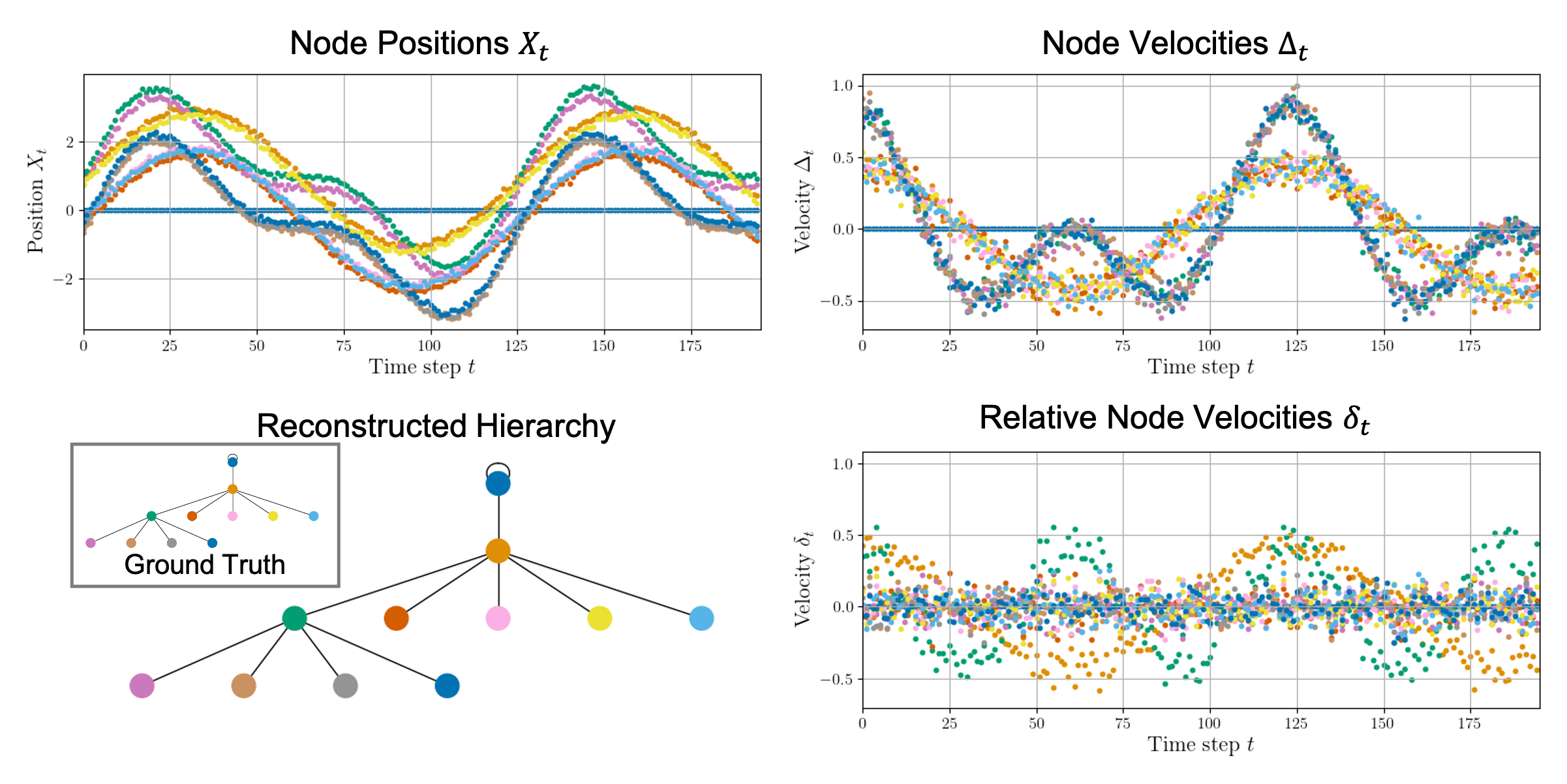
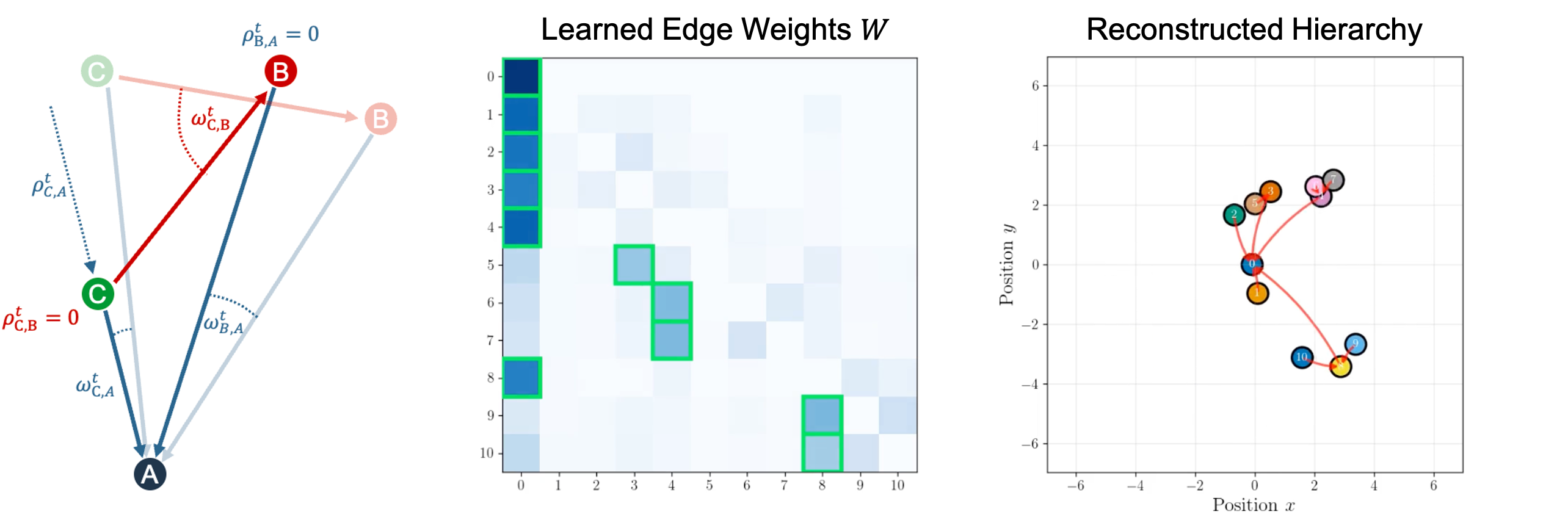
实验结果表明,本文方法在1D和2D运动重建中成功重建了内在运动层次,并在动态3D高斯喷溅场景中相比基线方法实现了更真实的变形,展示了显著的性能提升。
🎯 应用场景
该研究的潜在应用领域包括机器人运动规划、计算机动画生成和动态场景重建等。通过提供一种灵活的数据驱动层次建模范式,该方法能够在多种运动相关任务中发挥重要作用,提升系统的智能化水平和应用广度。
📄 摘要(原文)
Hierarchical structures of motion exist across research fields, including computer vision, graphics, and robotics, where complex dynamics typically arise from coordinated interactions among simpler motion components. Existing methods to model such dynamics typically rely on manually-defined or heuristic hierarchies with fixed motion primitives, limiting their generalizability across different tasks. In this work, we propose a general hierarchical motion modeling method that learns structured, interpretable motion relationships directly from data. Our method represents observed motions using graph-based hierarchies, explicitly decomposing global absolute motions into parent-inherited patterns and local motion residuals. We formulate hierarchy inference as a differentiable graph learning problem, where vertices represent elemental motions and directed edges capture learned parent-child dependencies through graph neural networks. We evaluate our hierarchical reconstruction approach on three examples: 1D translational motion, 2D rotational motion, and dynamic 3D scene deformation via Gaussian splatting. Experimental results show that our method reconstructs the intrinsic motion hierarchy in 1D and 2D cases, and produces more realistic and interpretable deformations compared to the baseline on dynamic 3D Gaussian splatting scenes. By providing an adaptable, data-driven hierarchical modeling paradigm, our method offers a formulation applicable to a broad range of motion-centric tasks. Project Page: https://light.princeton.edu/HEIR/