Deformable Beta Splatting
作者: Rong Liu, Dylan Sun, Meida Chen, Yue Wang, Andrew Feng
分类: cs.CV, cs.GR
发布日期: 2025-01-27 (更新: 2025-05-06)
备注: SIGGRAPH 2025
🔗 代码/项目: PROJECT_PAGE
💡 一句话要点
提出可变形Beta Splatting以解决3D辐射场重建问题
🎯 匹配领域: 支柱三:空间感知与语义 (Perception & Semantics)
关键词: 3D重建 实时渲染 可变形核 颜色编码 计算机图形学 马尔可夫链蒙特卡洛 视觉效果 深度学习
📋 核心要点
- 现有的3D Gaussian Splatting方法在几何体和颜色表示上存在局限,难以捕捉复杂的几何形状和多样的颜色信息。
- 本文提出的可变形Beta Splatting方法通过引入可变形Beta核,提升了几何体和颜色的表示能力,克服了传统方法的不足。
- 实验结果显示,DBS在视觉质量上达到最先进水平,同时参数使用量减少至45%,渲染速度提升至1.5倍,展现了显著的性能优势。
📝 摘要(中文)
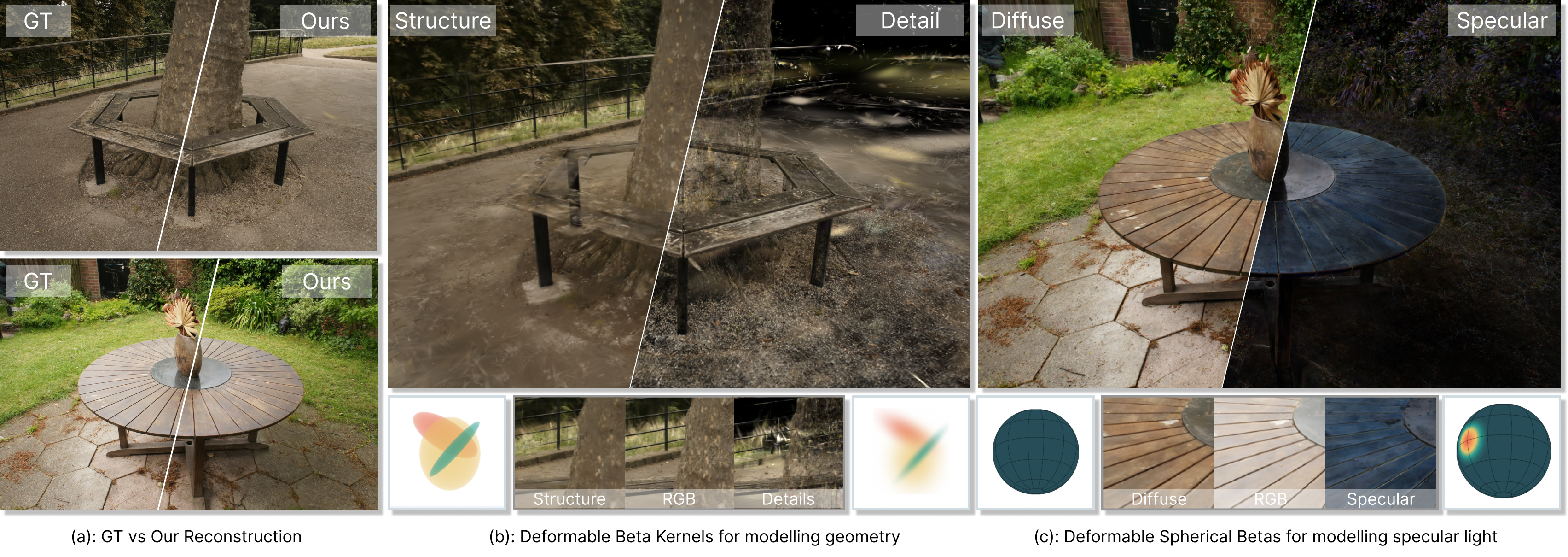
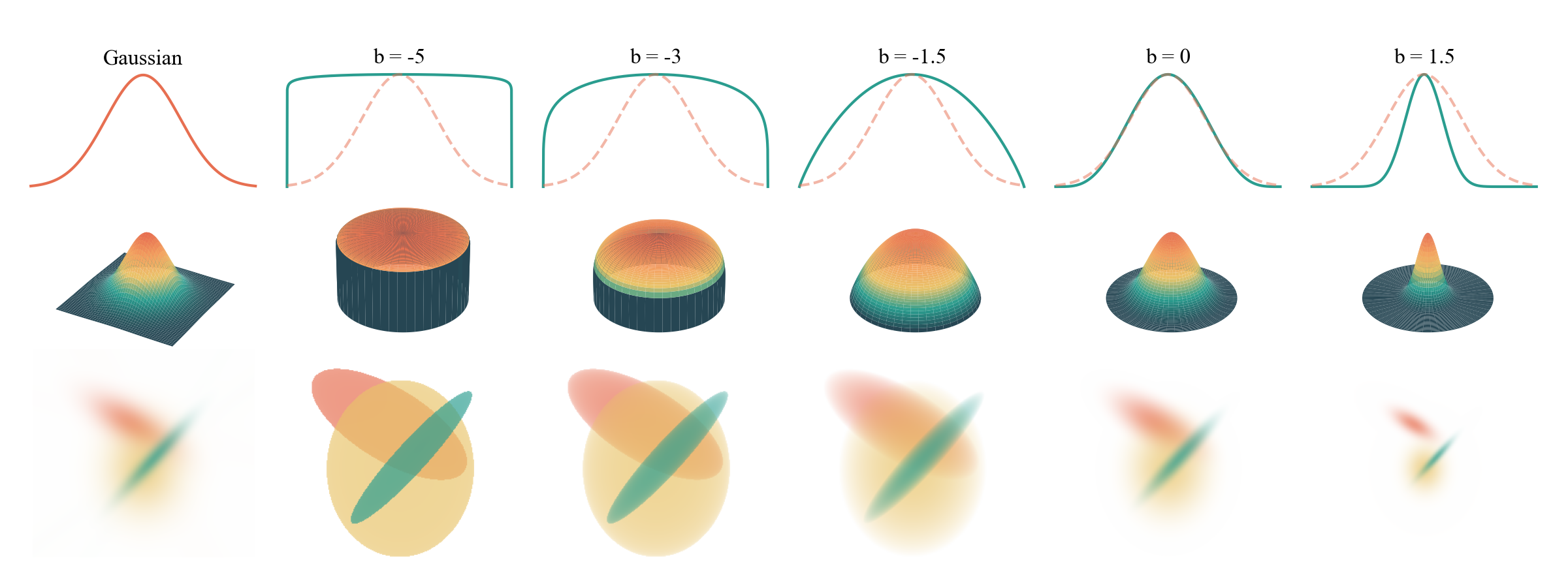
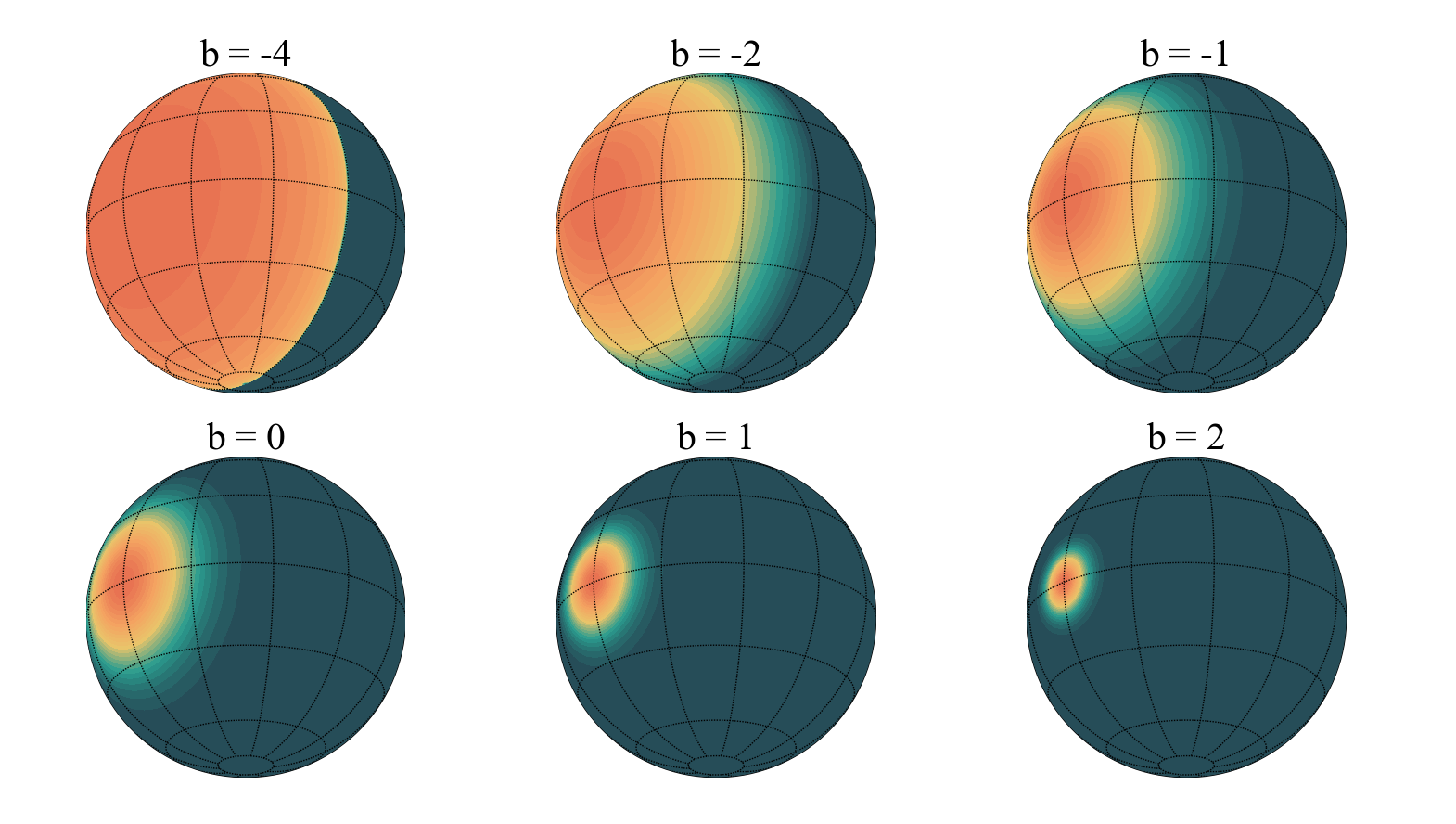
3D Gaussian Splatting(3DGS)通过实现实时渲染推动了辐射场重建的发展。然而,其对高斯核几何体和低阶球谐(SH)颜色编码的依赖限制了其捕捉复杂几何和多样颜色的能力。本文提出了可变形Beta Splatting(DBS),这是一种可变形且紧凑的方法,增强了几何体和颜色表示。DBS用可变形Beta核替代高斯核,提供了有界支持和自适应频率控制,以更高保真度捕捉细致的几何细节,同时实现更好的内存效率。此外,我们将Beta核扩展到颜色编码,改善了漫反射和镜面反射成分的表示,优于基于SH的方法。实验结果表明,DBS在仅使用45%参数的情况下,渲染速度比3DGS-MCMC快1.5倍,展现了其在实时辐射场渲染中的优越性能。
🔬 方法详解
问题定义:本文旨在解决3D Gaussian Splatting在几何体和颜色表示上的不足,尤其是在捕捉复杂几何和多样颜色方面的局限性。
核心思路:提出可变形Beta Splatting(DBS),通过使用可变形Beta核替代高斯核,提供更好的几何细节捕捉和颜色表示能力,尤其是在处理漫反射和镜面反射成分时。
技术框架:DBS的整体架构包括可变形Beta核的设计、颜色编码的扩展以及基于调整正则化不透明度的马尔可夫链蒙特卡洛(MCMC)方法,确保分布保持。
关键创新:DBS的主要创新在于引入了可变形Beta核,具有有界支持和自适应频率控制,显著提高了几何细节的捕捉能力,并且在颜色表示上优于传统的SH方法。
关键设计:在设计中,DBS采用了正则化不透明度的调整策略,确保了与核类型无关的分布保持,同时在参数设置和损失函数上进行了优化,以实现更高的渲染效率和质量。
🖼️ 关键图片
📊 实验亮点
实验结果表明,DBS在视觉质量上达到了最先进的水平,使用的参数量仅为传统方法的45%,并且渲染速度提升至1.5倍,显示出其在实时辐射场渲染中的显著优势。
🎯 应用场景
该研究的潜在应用领域包括虚拟现实、游戏开发和计算机图形学等领域,能够为实时渲染提供更高质量的视觉效果。未来,DBS方法有望在更复杂的场景中得到应用,推动相关技术的发展。
📄 摘要(原文)
3D Gaussian Splatting (3DGS) has advanced radiance field reconstruction by enabling real-time rendering. However, its reliance on Gaussian kernels for geometry and low-order Spherical Harmonics (SH) for color encoding limits its ability to capture complex geometries and diverse colors. We introduce Deformable Beta Splatting (DBS), a deformable and compact approach that enhances both geometry and color representation. DBS replaces Gaussian kernels with deformable Beta Kernels, which offer bounded support and adaptive frequency control to capture fine geometric details with higher fidelity while achieving better memory efficiency. In addition, we extended the Beta Kernel to color encoding, which facilitates improved representation of diffuse and specular components, yielding superior results compared to SH-based methods. Furthermore, Unlike prior densification techniques that depend on Gaussian properties, we mathematically prove that adjusting regularized opacity alone ensures distribution-preserved Markov chain Monte Carlo (MCMC), independent of the splatting kernel type. Experimental results demonstrate that DBS achieves state-of-the-art visual quality while utilizing only 45% of the parameters and rendering 1.5x faster than 3DGS-MCMC, highlighting the superior performance of DBS for real-time radiance field rendering. Interactive demonstrations and source code are available on our project website: https://rongliu-leo.github.io/beta-splatting/.