MetaMorph: Multimodal Understanding and Generation via Instruction Tuning
作者: Shengbang Tong, David Fan, Jiachen Zhu, Yunyang Xiong, Xinlei Chen, Koustuv Sinha, Michael Rabbat, Yann LeCun, Saining Xie, Zhuang Liu
分类: cs.CV
发布日期: 2024-12-18
备注: Project page at tsb0601.github.io/metamorph
💡 一句话要点
提出Visual-Predictive Instruction Tuning以提升多模态理解与生成能力
🎯 匹配领域: 支柱九:具身大模型 (Embodied Foundation Models)
关键词: 多模态理解 视觉生成 指令调优 大型语言模型 视觉理解 生成模型 知识迁移
📋 核心要点
- 现有的多模态模型在视觉理解与生成之间的协同能力不足,导致生成效果不佳。
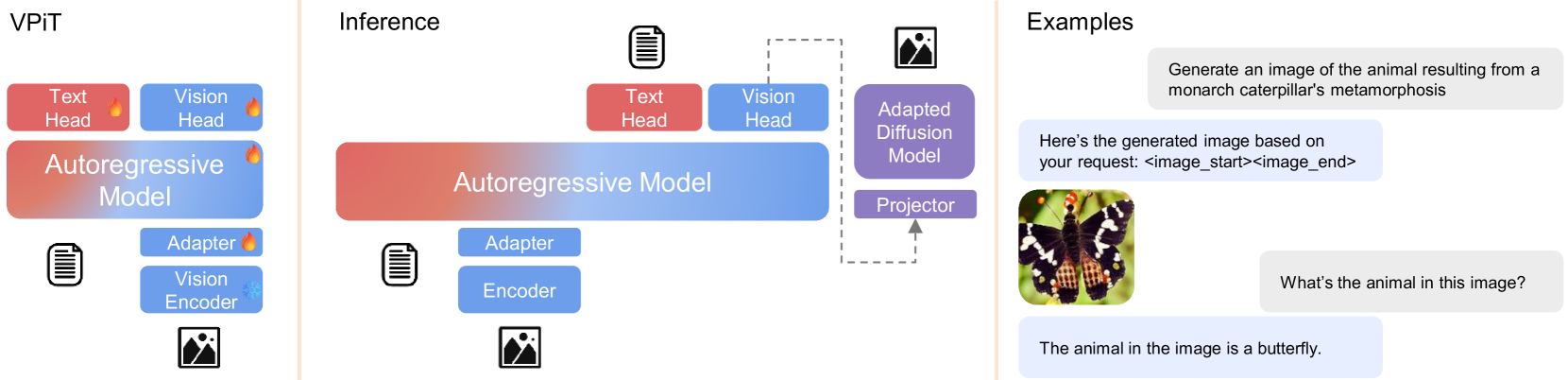
- 提出VPiT方法,通过视觉指令调优,使LLM能够同时处理文本和视觉信息,提升生成能力。
- MetaMorph模型在视觉理解和生成任务上表现出色,能够有效利用LLM的知识和推理能力。
📝 摘要(中文)
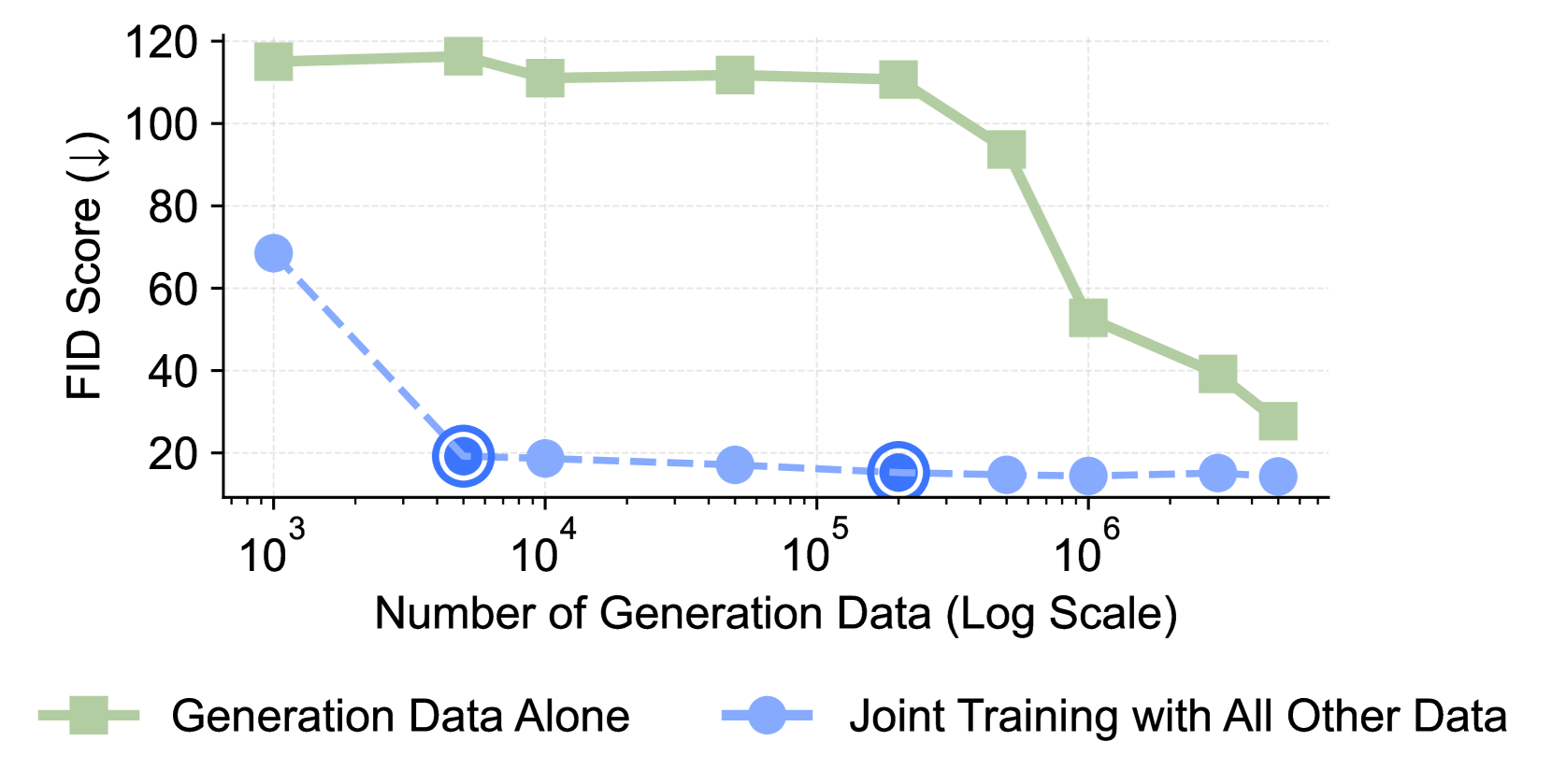
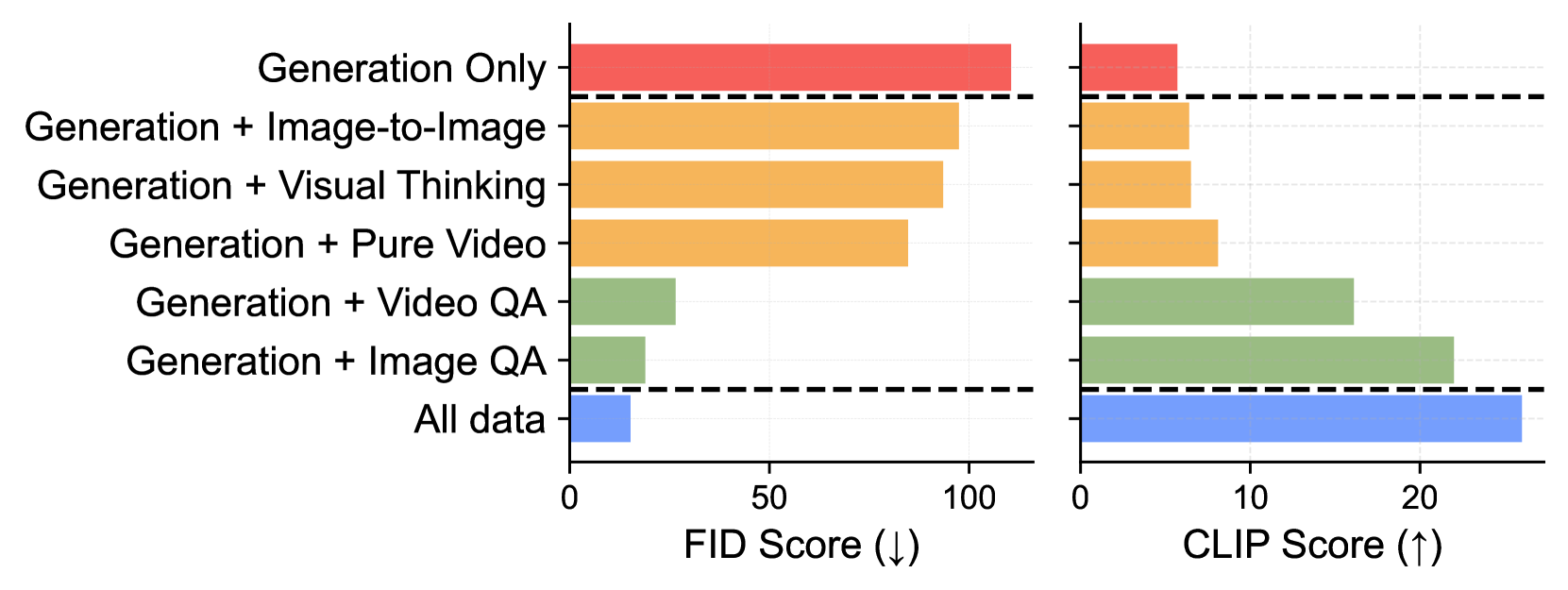
本研究提出了一种名为Visual-Predictive Instruction Tuning (VPiT) 的方法,旨在通过视觉指令调优,使预训练的大型语言模型(LLM)能够快速转变为一个统一的自回归模型,生成文本和视觉标记。VPiT教会LLM从任何图像和文本数据的输入序列中预测离散文本标记和连续视觉标记。实证研究表明,VPiT的几个有趣特性:视觉生成能力作为改善视觉理解的自然副产品出现,并且可以通过少量生成数据高效解锁;理解和生成互为有益,但理解数据对两者的贡献更为显著。基于这些发现,我们训练了MetaMorph模型,在视觉理解和生成方面取得了竞争力的表现。
🔬 方法详解
问题定义:本论文旨在解决现有多模态模型在视觉理解与生成之间的协同不足,尤其是在生成质量和效率方面的挑战。现有方法往往无法有效利用预训练的知识,导致生成效果不理想。
核心思路:论文提出的VPiT方法通过视觉指令调优,使得预训练的LLM能够同时预测文本和视觉标记,从而提升模型的多模态理解与生成能力。这样的设计旨在通过简单的指令调优过程,快速适应多模态任务。
技术框架:整体架构包括输入图像和文本数据的处理模块,VPiT调优模块,以及生成模块。首先,模型接收图像和文本输入,然后通过VPiT进行调优,最后生成相应的文本和视觉输出。
关键创新:最重要的技术创新在于VPiT的设计,使得视觉生成能力成为视觉理解的自然副产品,并且通过少量生成数据即可高效解锁这一能力。这与传统方法依赖大量生成数据的方式有本质区别。
关键设计:在模型训练中,采用了特定的损失函数来平衡文本和视觉标记的生成,同时设置了适当的超参数,以确保模型在理解和生成任务上的性能最优化。
🖼️ 关键图片
📊 实验亮点
实验结果表明,MetaMorph在视觉理解和生成任务上表现出色,能够有效利用预训练的知识,克服其他生成模型常见的失败模式。具体性能数据表明,MetaMorph在多个基准测试中均取得了显著提升,尤其是在视觉生成任务上,表现优于现有的主流模型。
🎯 应用场景
该研究的潜在应用领域包括智能助手、自动内容生成、教育和娱乐等多个领域。通过提升多模态理解与生成能力,MetaMorph模型能够在更复杂的场景中提供更为精准和丰富的交互体验,具有广泛的实际价值和未来影响。
📄 摘要(原文)
In this work, we propose Visual-Predictive Instruction Tuning (VPiT) - a simple and effective extension to visual instruction tuning that enables a pretrained LLM to quickly morph into an unified autoregressive model capable of generating both text and visual tokens. VPiT teaches an LLM to predict discrete text tokens and continuous visual tokens from any input sequence of image and text data curated in an instruction-following format. Our empirical investigation reveals several intriguing properties of VPiT: (1) visual generation ability emerges as a natural byproduct of improved visual understanding, and can be unlocked efficiently with a small amount of generation data; (2) while we find understanding and generation to be mutually beneficial, understanding data contributes to both capabilities more effectively than generation data. Building upon these findings, we train our MetaMorph model and achieve competitive performance on both visual understanding and generation. In visual generation, MetaMorph can leverage the world knowledge and reasoning abilities gained from LLM pretraining, and overcome common failure modes exhibited by other generation models. Our results suggest that LLMs may have strong "prior" vision capabilities that can be efficiently adapted to both visual understanding and generation with a relatively simple instruction tuning process.