LCM: Log Conformal Maps for Robust Representation Learning to Mitigate Perspective Distortion
作者: Meenakshi Subhash Chippa, Prakash Chandra Chhipa, Kanjar De, Marcus Liwicki, Rajkumar Saini
分类: cs.CV
发布日期: 2024-09-20 (更新: 2024-10-08)
备注: Accepted to Asian Conference on Computer Vision (ACCV2024)
🔗 代码/项目: GITHUB
💡 一句话要点
提出Log Conformal Maps (LCM),以鲁棒地学习表征,缓解透视失真问题。
🎯 匹配领域: 支柱二:RL算法与架构 (RL & Architecture) 支柱七:动作重定向 (Motion Retargeting)
关键词: 透视失真 表征学习 数据增强 对数 conformal maps 图像分类 行人重识别
📋 核心要点
- 透视失真严重影响视觉任务性能,现有方法依赖相机参数估计或多步处理,效率和精度受限。
- 提出Log Conformal Maps (LCM),利用对数函数以更少的参数和更低的计算复杂度近似透视失真。
- 实验表明,LCM在图像分类和行人重识别等任务上,优于标准模型并匹配了最先进的性能。
📝 摘要(中文)
透视失真(PD)会导致图像中视觉元素的形状、大小、方向、角度和空间关系发生显著变化。准确确定相机内参和外参具有挑战性,使得有效合成透视失真变得困难。现有的失真校正方法通常涉及去除失真并学习视觉任务,这是一个多步骤的过程,常常会影响性能。最近的研究利用Möbius变换来缓解透视失真(MPD),无需估计相机参数即可合成透视失真。然而,Möbius变换需要调整多个相互依赖和关联的参数,并涉及复杂的算术运算,导致大量的计算复杂度。为了解决这些挑战,我们提出Log Conformal Maps (LCM),一种利用对数函数以更少的参数和更低的计算复杂度来近似透视失真的方法。我们提供了详细的理论基础,并通过实验证明,LCM可以用更少的参数逼近MPD。我们表明,LCM可以很好地与监督和自监督表征学习相结合,优于标准模型,并在多个基准测试(Imagenet-PD、Imagenet-E和Imagenet-X)上匹配了缓解透视失真的最先进性能。此外,LCM展示了与行人重识别的无缝集成,并提高了性能。源代码已在https://github.com/meenakshi23/Log-Conformal-Maps上公开。
🔬 方法详解
问题定义:论文旨在解决透视失真(Perspective Distortion, PD)对视觉表征学习的负面影响。现有方法通常需要估计相机参数进行失真校正,或者采用多步骤流程,先去除失真再进行视觉任务学习。这些方法计算复杂度高,且性能容易受到相机参数估计精度的影响。
核心思路:论文的核心思路是利用Log Conformal Maps (LCM)来近似透视失真。LCM基于对数函数,可以用更少的参数和更低的计算复杂度来模拟透视变换的效果,从而避免了复杂的相机参数估计和多步骤处理。LCM旨在直接学习对透视失真具有鲁棒性的图像表征。
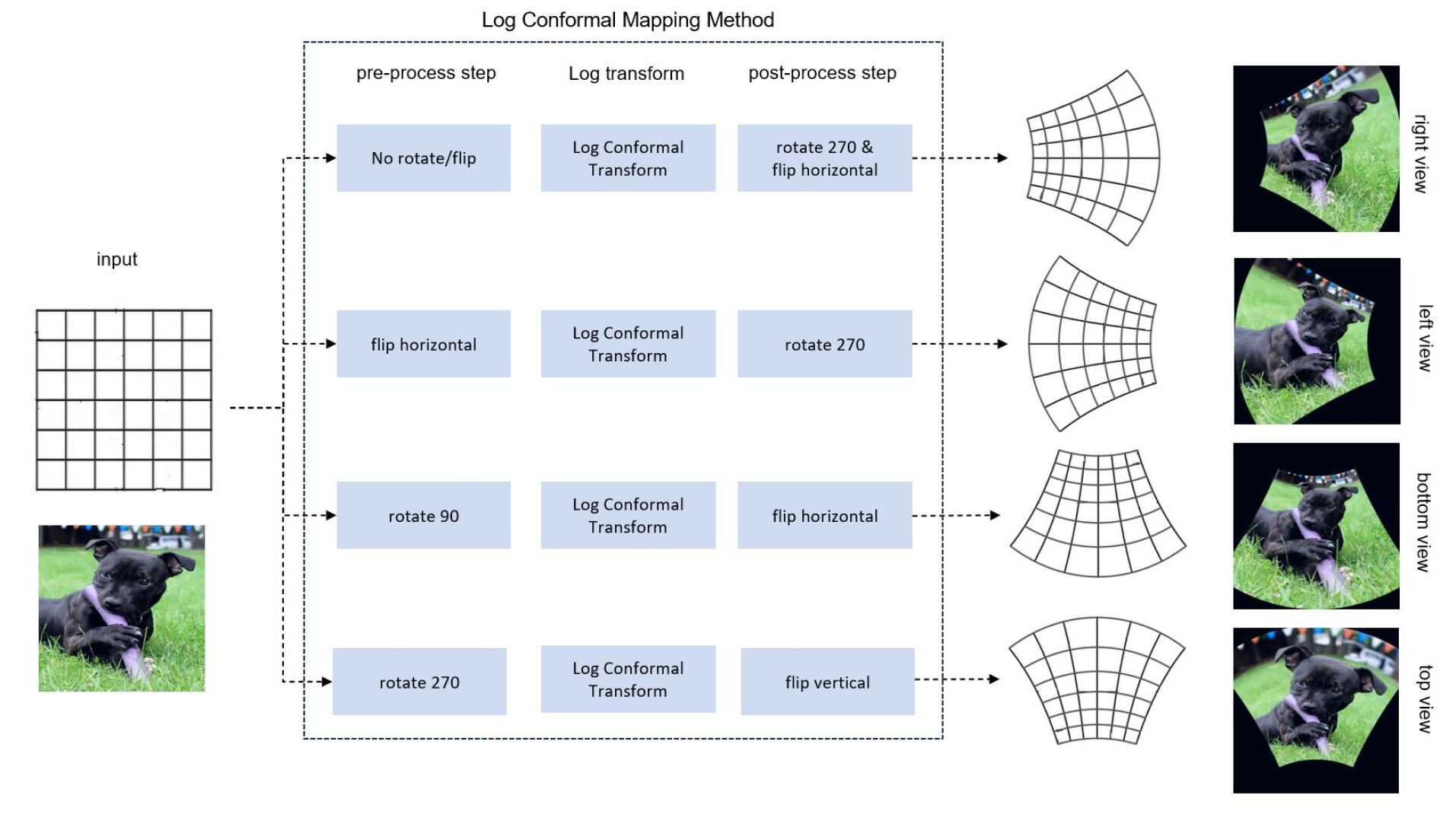
技术框架:LCM可以集成到现有的监督和自监督学习框架中。在训练阶段,LCM被用于生成具有不同透视失真的图像变体,从而增强模型的鲁棒性。在推理阶段,可以直接使用训练好的模型进行预测,无需额外的失真校正步骤。整体流程包括:1) 使用LCM生成透视失真图像;2) 使用原始图像和失真图像训练模型;3) 使用训练好的模型进行推理。
关键创新:LCM的关键创新在于使用对数函数来近似透视失真。与Möbius变换等现有方法相比,LCM具有更少的参数和更低的计算复杂度,同时能够有效地模拟透视变换的效果。这种方法避免了复杂的相机参数估计,并可以直接学习对透视失真具有鲁棒性的图像表征。
关键设计:LCM的具体实现涉及选择合适的对数函数参数,以控制透视失真的程度和方向。论文中可能探讨了不同的参数设置对模型性能的影响。此外,损失函数的设计也至关重要,需要确保模型能够学习到对透视失真具有不变性的特征。具体的网络结构可能根据不同的视觉任务进行调整,但LCM本身可以作为一个通用的数据增强模块集成到各种网络中。
🖼️ 关键图片
📊 实验亮点
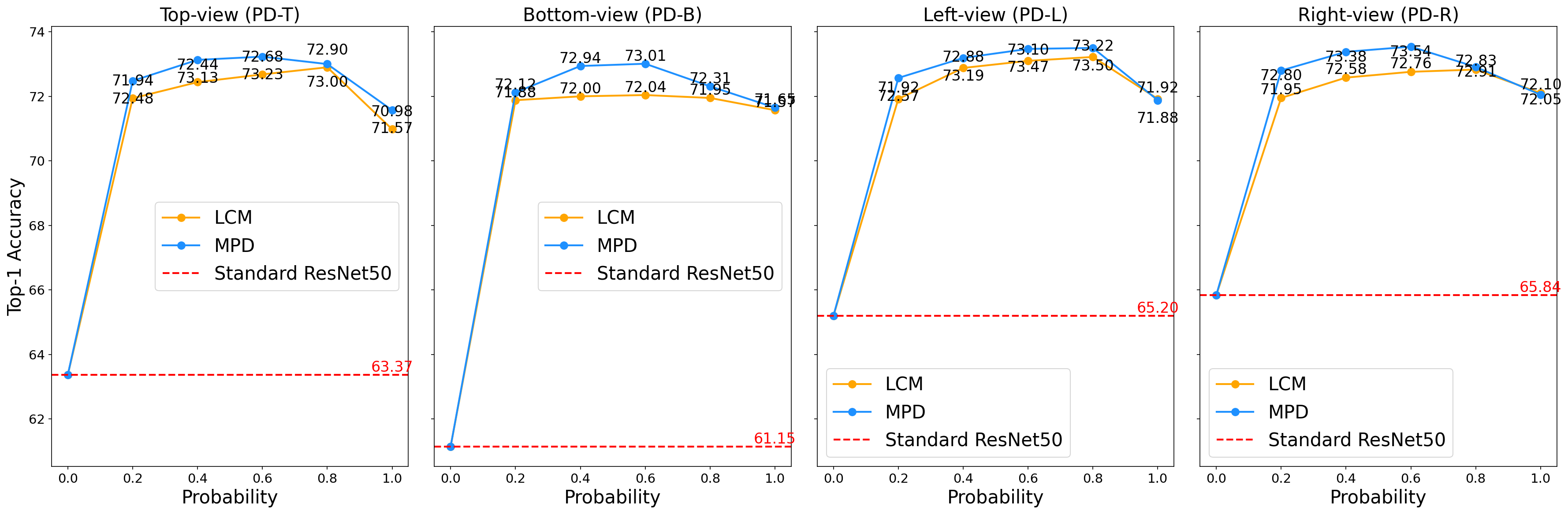
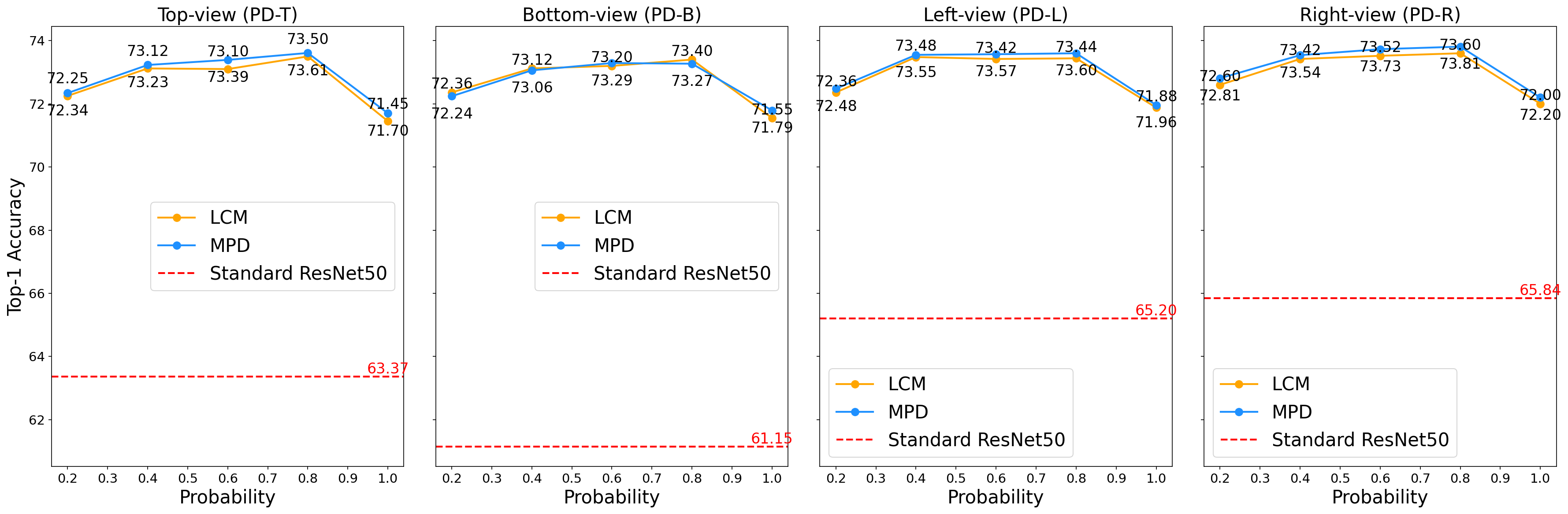
实验结果表明,LCM在Imagenet-PD、Imagenet-E和Imagenet-X等基准测试上,能够匹配甚至超过最先进的透视失真缓解方法。此外,LCM与行人重识别任务的集成也显著提高了性能,证明了其在不同视觉任务中的泛化能力。这些结果表明,LCM是一种有效的、计算高效的透视失真缓解方法。
🎯 应用场景
该研究成果可广泛应用于计算机视觉领域,尤其是在需要处理具有透视失真图像的场景中,例如自动驾驶、机器人导航、图像检索、增强现实和视频监控等。通过提高模型对透视失真的鲁棒性,可以提升这些应用在实际环境中的性能和可靠性。此外,该方法还可以用于生成具有逼真透视效果的图像,为虚拟现实和游戏开发提供支持。
📄 摘要(原文)
Perspective distortion (PD) leads to substantial alterations in the shape, size, orientation, angles, and spatial relationships of visual elements in images. Accurately determining camera intrinsic and extrinsic parameters is challenging, making it hard to synthesize perspective distortion effectively. The current distortion correction methods involve removing distortion and learning vision tasks, thus making it a multi-step process, often compromising performance. Recent work leverages the Möbius transform for mitigating perspective distortions (MPD) to synthesize perspective distortions without estimating camera parameters. Möbius transform requires tuning multiple interdependent and interrelated parameters and involving complex arithmetic operations, leading to substantial computational complexity. To address these challenges, we propose Log Conformal Maps (LCM), a method leveraging the logarithmic function to approximate perspective distortions with fewer parameters and reduced computational complexity. We provide a detailed foundation complemented with experiments to demonstrate that LCM with fewer parameters approximates the MPD. We show that LCM integrates well with supervised and self-supervised representation learning, outperform standard models, and matches the state-of-the-art performance in mitigating perspective distortion over multiple benchmarks, namely Imagenet-PD, Imagenet-E, and Imagenet-X. Further LCM demonstrate seamless integration with person re-identification and improved the performance. Source code is made publicly available at https://github.com/meenakshi23/Log-Conformal-Maps.