A Multimodal Dangerous State Recognition and Early Warning System for Elderly with Intermittent Dementia
作者: Liyun Deng, Lei Jin, Guangcheng Wang, Quan Shi, Han Wang
分类: cs.CV
发布日期: 2024-05-30
备注: 13 pages,9 figures
💡 一句话要点
针对老年痴呆症患者,提出多模态危险状态识别与预警系统,解决走失问题。
🎯 匹配领域: 支柱九:具身大模型 (Embodied Foundation Models)
关键词: 老年痴呆症 多模态融合 危险状态识别 智能预警系统 可穿戴设备
📋 核心要点
- 传统监控设备依赖老年人主动操作,存在数字鸿沟,无法有效预防老年痴呆症患者走失。
- 提出一种多模态危险状态识别网络,融合场景和位置信息,自动评估老年人走失风险。
- 系统无需老年人干预,实现全自动环境感知、风险评估和主动报警,有效防止意外发生。
📝 摘要(中文)
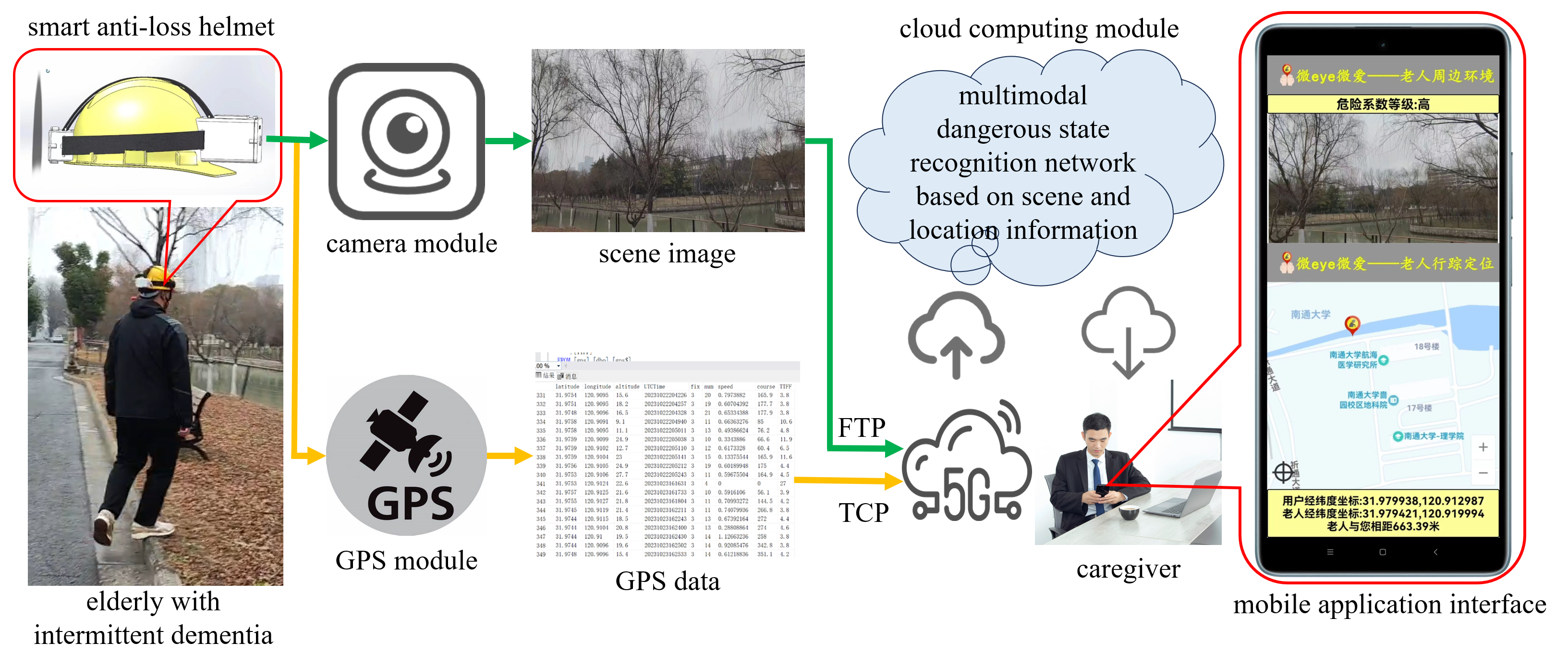
针对中国日益严峻的老龄化社会中老年痴呆症患者走失问题,我们开发了一种可穿戴防丢设备和智能预警系统,该系统利用人工智能和物联网技术。系统包括防丢智能头盔、云计算模块和看护人移动设备上的智能预警应用程序。智能头盔集成了微型摄像头模块、GPS模块和5G通信模块,用于收集老人的第一人称图像和位置信息。数据通过5G、FTP和TCP协议远程传输。在云计算模块中,我们首次提出了一种基于场景和位置信息的多模态危险状态识别网络,以准确评估老年人走失的风险。最后,为看护人移动设备设计的应用程序软件界面实现了多级早期预警。我们团队开发的系统不需要老年人的操作或响应,实现了全自动的环境感知、风险评估和主动报警。这克服了传统监控设备需要主动操作和响应的局限性,从而避免了老年人的数字鸿沟问题。它有效地防止了老年痴呆症患者的意外走失和潜在危险。
🔬 方法详解
问题定义:该论文旨在解决老年痴呆症患者因病情导致走失的问题。现有方法,如传统监控设备,需要老年人主动操作,对于认知障碍的老年人来说存在使用障碍,无法有效预防走失事件的发生。因此,需要一种能够自动感知环境、评估风险并主动预警的系统。
核心思路:核心思路是利用可穿戴设备(智能头盔)收集老年人的第一人称视角图像和位置信息,通过多模态融合分析,判断老年人是否处于危险状态。通过结合场景信息(图像)和位置信息,可以更准确地评估风险,并及时向看护人发出预警。
技术框架:该系统主要包含三个模块:1) 防丢智能头盔:负责采集图像和位置信息,并通过5G网络传输数据。2) 云计算模块:包含多模态危险状态识别网络,用于分析接收到的数据,评估老年人走失风险。3) 智能预警应用程序:安装在看护人的移动设备上,接收来自云计算模块的预警信息,并进行多级报警。数据传输使用5G、FTP和TCP协议。
关键创新:关键创新在于提出了基于场景和位置信息的多模态危险状态识别网络。该网络能够同时处理图像和位置信息,并进行融合分析,从而更准确地判断老年人是否处于危险状态。这是首次将多模态融合技术应用于老年痴呆症患者走失风险评估领域。
关键设计:论文中提到使用微型摄像头模块、GPS模块和5G通信模块,但没有详细说明多模态危险状态识别网络的具体结构、损失函数和训练细节。这些是未知信息。
🖼️ 关键图片


📊 实验亮点
摘要中提到该系统实现了全自动的环境感知、风险评估和主动报警,克服了传统监控设备的局限性,但没有提供具体的实验数据或性能指标来量化系统的有效性。因此,实验亮点部分未知。
🎯 应用场景
该研究成果可广泛应用于养老院、社区养老服务中心以及家庭养老等场景,为老年痴呆症患者提供安全保障,降低走失风险。该系统还可扩展到其他需要环境感知和风险评估的领域,如儿童安全监护、户外作业人员安全管理等,具有重要的社会价值和应用前景。
📄 摘要(原文)
In response to the social issue of the increasing number of elderly vulnerable groups going missing due to the aggravating aging population in China, our team has developed a wearable anti-loss device and intelligent early warning system for elderly individuals with intermittent dementia using artificial intelligence and IoT technology. This system comprises an anti-loss smart helmet, a cloud computing module, and an intelligent early warning application on the caregiver's mobile device. The smart helmet integrates a miniature camera module, a GPS module, and a 5G communication module to collect first-person images and location information of the elderly. Data is transmitted remotely via 5G, FTP, and TCP protocols. In the cloud computing module, our team has proposed for the first time a multimodal dangerous state recognition network based on scene and location information to accurately assess the risk of elderly individuals going missing. Finally, the application software interface designed for the caregiver's mobile device implements multi-level early warnings. The system developed by our team requires no operation or response from the elderly, achieving fully automatic environmental perception, risk assessment, and proactive alarming. This overcomes the limitations of traditional monitoring devices, which require active operation and response, thus avoiding the issue of the digital divide for the elderly. It effectively prevents accidental loss and potential dangers for elderly individuals with dementia.