Diagnosing Alzheimer's Disease using Early-Late Multimodal Data Fusion with Jacobian Maps
作者: Yasmine Mustafa, Tie Luo
分类: cs.CV, cs.LG
发布日期: 2023-10-25 (更新: 2023-10-27)
备注: To be published in Proceedings of 2023 IEEE Healthcom, December 2023
💡 一句话要点
提出早晚多模态数据融合方法以诊断阿尔茨海默病
🎯 匹配领域: 支柱九:具身大模型 (Embodied Foundation Models)
关键词: 阿尔茨海默病 多模态融合 卷积神经网络 随机森林 Jacobian域 医疗影像分析 特征提取 早期诊断
📋 核心要点
- 现有多模态融合模型存在冗余计算、复杂架构和对缺失数据处理过于简单等不足。
- 本文提出的早晚融合方法结合卷积神经网络和随机森林,优化了特征提取和分类过程。
- 实验结果显示,ELF方法在AD分类中取得了97.19%的准确率,显著提升了分类性能。
📝 摘要(中文)
阿尔茨海默病(AD)是一种影响大量老年人口的常见神经退行性疾病。及时检测AD的各个阶段对于早期干预和治疗至关重要。本文提出了一种高效的早晚融合(ELF)方法,利用卷积神经网络进行特征自动提取,并结合随机森林在小数据集上的优越表现。此外,本文引入了一种适应个体特征的稳健预处理管道,使用整个脑部图像而非切片或补丁。为了提高分类的准确性和稳健性,我们将图像转换为Jacobian域。通过对OASIS-3数据集中的MRI和CT图像进行实验,验证了ELF方法在将AD分类为四个阶段时的97.19%准确率。
🔬 方法详解
问题定义:本文旨在解决阿尔茨海默病的早期检测问题。现有方法在多模态数据融合中存在冗余计算和复杂架构,且对缺失数据的处理不够完善。
核心思路:本文提出的早晚融合(ELF)方法,通过卷积神经网络自动提取特征,并利用随机森林进行分类,旨在提高分类的准确性和效率。
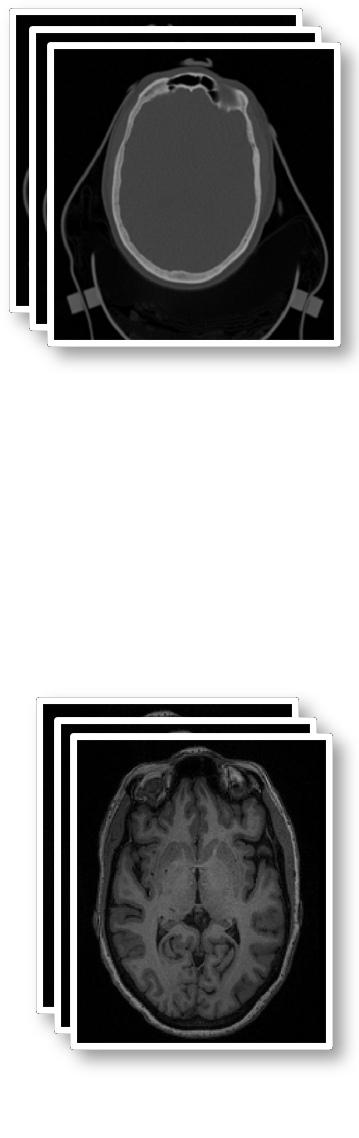
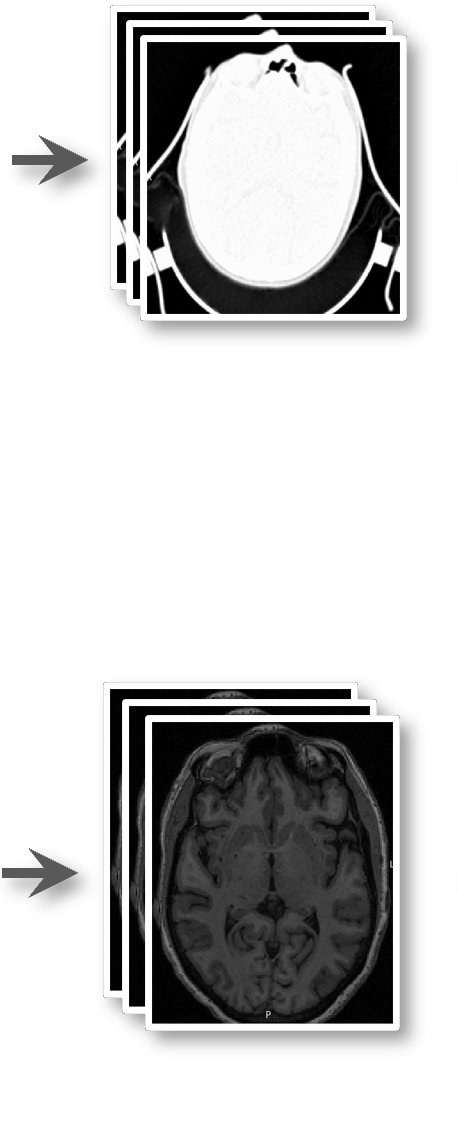
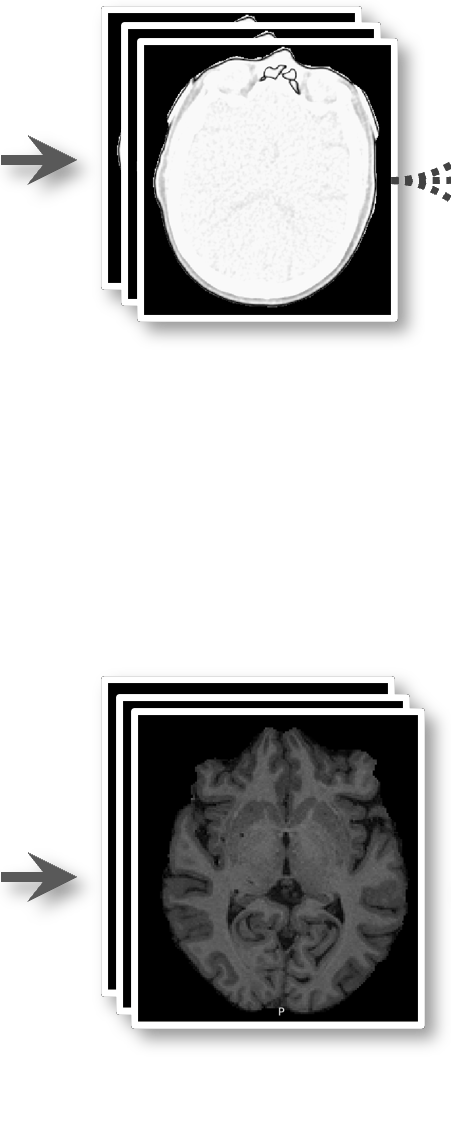
技术框架:整体架构包括数据预处理、特征提取和分类三个主要模块。预处理阶段针对个体特征进行优化,特征提取使用卷积神经网络,分类阶段采用随机森林。
关键创新:本文的关键创新在于引入Jacobian域转换,以增强对脑部体积细微变化的检测能力,从而提高分类的准确性和稳健性。
关键设计:在网络结构上,采用卷积神经网络进行特征提取,随机森林作为分类器,损失函数设计为适应小数据集的特性,确保模型的有效性。实验中使用整个脑部图像而非切片,提升了数据利用效率。
🖼️ 关键图片
📊 实验亮点
实验结果表明,提出的ELF方法在将阿尔茨海默病分类为四个阶段时达到了97.19%的准确率,相较于现有方法有显著提升,展示了在小数据集上的有效性和鲁棒性。
🎯 应用场景
该研究具有广泛的应用潜力,尤其在医疗影像分析和阿尔茨海默病早期诊断领域。通过提高分类准确性,能够为临床提供更可靠的决策支持,促进早期干预和个性化治疗方案的制定,未来可能对老年人群体的健康管理产生深远影响。
📄 摘要(原文)
Alzheimer's disease (AD) is a prevalent and debilitating neurodegenerative disorder impacting a large aging population. Detecting AD in all its presymptomatic and symptomatic stages is crucial for early intervention and treatment. An active research direction is to explore machine learning methods that harness multimodal data fusion to outperform human inspection of medical scans. However, existing multimodal fusion models have limitations, including redundant computation, complex architecture, and simplistic handling of missing data. Moreover, the preprocessing pipelines of medical scans remain inadequately detailed and are seldom optimized for individual subjects. In this paper, we propose an efficient early-late fusion (ELF) approach, which leverages a convolutional neural network for automated feature extraction and random forests for their competitive performance on small datasets. Additionally, we introduce a robust preprocessing pipeline that adapts to the unique characteristics of individual subjects and makes use of whole brain images rather than slices or patches. Moreover, to tackle the challenge of detecting subtle changes in brain volume, we transform images into the Jacobian domain (JD) to enhance both accuracy and robustness in our classification. Using MRI and CT images from the OASIS-3 dataset, our experiments demonstrate the effectiveness of the ELF approach in classifying AD into four stages with an accuracy of 97.19%.