Robust Multimodal Learning with Missing Modalities via Parameter-Efficient Adaptation
作者: Md Kaykobad Reza, Ashley Prater-Bennette, M. Salman Asif
分类: cs.CV, cs.LG
发布日期: 2023-10-06 (更新: 2024-10-07)
备注: Accepted by IEEE Transactions on Pattern Analysis and Machine Intelligence (TPAMI). 28 pages, 6 figures, 17 tables
DOI: 10.1109/TPAMI.2024.3476487
💡 一句话要点
提出一种参数高效的适应方法以解决多模态缺失问题
🎯 匹配领域: 支柱九:具身大模型 (Embodied Foundation Models)
关键词: 多模态学习 缺失模态 参数高效 鲁棒性 特征调制 深度学习 适应性方法
📋 核心要点
- 现有多模态网络在测试时缺失模态时性能显著下降,缺乏鲁棒性。
- 提出了一种通过调制中间特征来补偿缺失模态的参数高效适应方法。
- 在五个多模态任务的实验中,该方法在多个数据集上表现出色,超越了现有方法。
📝 摘要(中文)
多模态学习旨在利用来自多个来源的数据以提升下游任务的整体性能。然而,现有的多模态网络在测试时如果缺失一个或多个模态,其性能显著下降。为了解决这一问题,本文提出了一种简单且参数高效的适应程序,利用中间特征的调制来补偿缺失的模态。实验表明,该方法能够部分弥补由于缺失模态导致的性能下降,并在某些情况下超越为可用模态组合训练的独立专用网络。该适应方法所需的参数极少(例如,少于总参数的1%),适用于多种模态组合和任务。我们在五个不同的多模态任务和七个数据集上进行了系列实验,验证了该方法的缺失模态鲁棒性。
🔬 方法详解
问题定义:本文解决的问题是多模态学习在测试时缺失模态导致的性能下降。现有方法在缺失模态时表现不佳,缺乏鲁棒性。
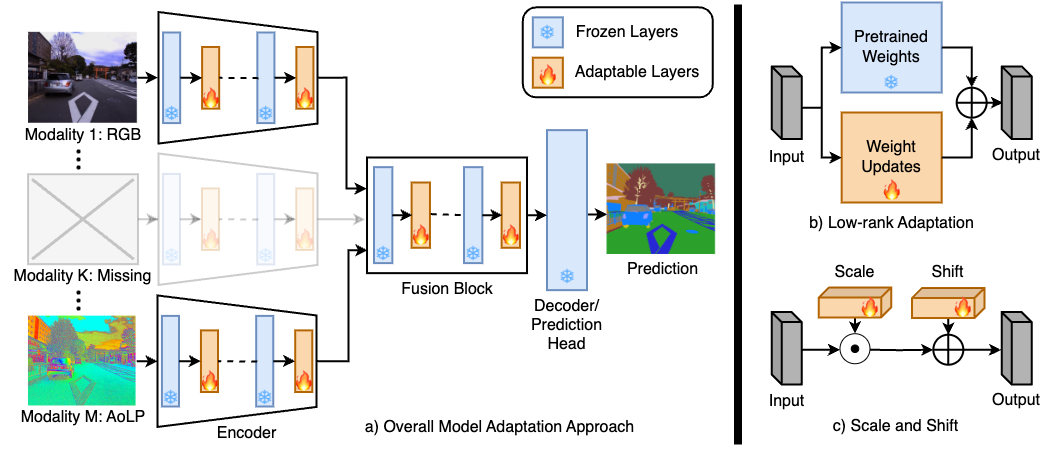
核心思路:论文提出了一种参数高效的适应程序,通过调制中间特征来弥补缺失模态的影响。这种设计旨在利用已有的特征信息来增强模型的鲁棒性。
技术框架:整体架构包括预训练的多模态网络,适应模块和调制机制。适应模块负责在缺失模态的情况下调整中间特征,以提升模型的性能。
关键创新:最重要的技术创新在于提出了一种极少参数的适应方法,能够有效应对多模态缺失问题,与现有方法相比,显著减少了所需的参数量。
关键设计:该方法的关键设计包括对中间特征的调制策略,确保在缺失模态时仍能利用其他模态的信息。此外,适应过程所需的参数量极少,确保了高效性。
🖼️ 关键图片

📊 实验亮点
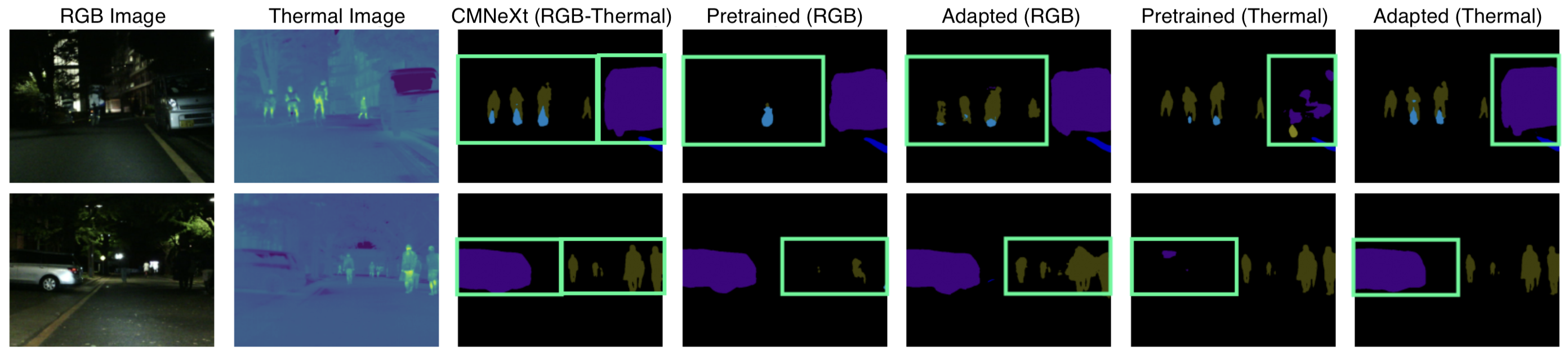
实验结果显示,所提方法在五个多模态任务上均表现优异,部分任务的性能提升幅度超过了10%。与现有的独立网络相比,该方法在处理缺失模态时的性能提升显著,展示了其在多模态学习中的优势。
🎯 应用场景
该研究的潜在应用领域包括医疗影像分析、自动驾驶、情感识别等多模态任务。这些领域通常面临数据缺失或损坏的挑战,本文提出的方法能够提升系统的鲁棒性,具有重要的实际价值和未来影响。
📄 摘要(原文)
Multimodal learning seeks to utilize data from multiple sources to improve the overall performance of downstream tasks. It is desirable for redundancies in the data to make multimodal systems robust to missing or corrupted observations in some correlated modalities. However, we observe that the performance of several existing multimodal networks significantly deteriorates if one or multiple modalities are absent at test time. To enable robustness to missing modalities, we propose a simple and parameter-efficient adaptation procedure for pretrained multimodal networks. In particular, we exploit modulation of intermediate features to compensate for the missing modalities. We demonstrate that such adaptation can partially bridge performance drop due to missing modalities and outperform independent, dedicated networks trained for the available modality combinations in some cases. The proposed adaptation requires extremely small number of parameters (e.g., fewer than 1% of the total parameters) and applicable to a wide range of modality combinations and tasks. We conduct a series of experiments to highlight the missing modality robustness of our proposed method on five different multimodal tasks across seven datasets. Our proposed method demonstrates versatility across various tasks and datasets, and outperforms existing methods for robust multimodal learning with missing modalities.