LumiNet: Perception-Driven Knowledge Distillation via Statistical Logit Calibration
作者: Md. Ismail Hossain, M M Lutfe Elahi, Sameera Ramasinghe, Ali Cheraghian, Fuad Rahman, Nabeel Mohammed, Shafin Rahman
分类: cs.CV
发布日期: 2023-10-05 (更新: 2025-08-05)
备注: Accepted at Transactions on Machine Learning Research (TMLR), August 2025
🔗 代码/项目: GITHUB
💡 一句话要点
提出LumiNet以解决logit蒸馏性能不足问题
🎯 匹配领域: 支柱二:RL算法与架构 (RL & Architecture)
关键词: 知识蒸馏 logit校准 深度学习 计算机视觉 模型压缩
📋 核心要点
- 现有的logit基础蒸馏方法在性能上通常不及特征基础方法,存在过度自信的问题。
- LumiNet通过引入“感知”概念,校准logits并重构样本logits,以提高logit基础蒸馏的效果。
- 在多个基准测试中,LumiNet的表现超越了传统特征基础方法,显示出显著的性能提升。
📝 摘要(中文)
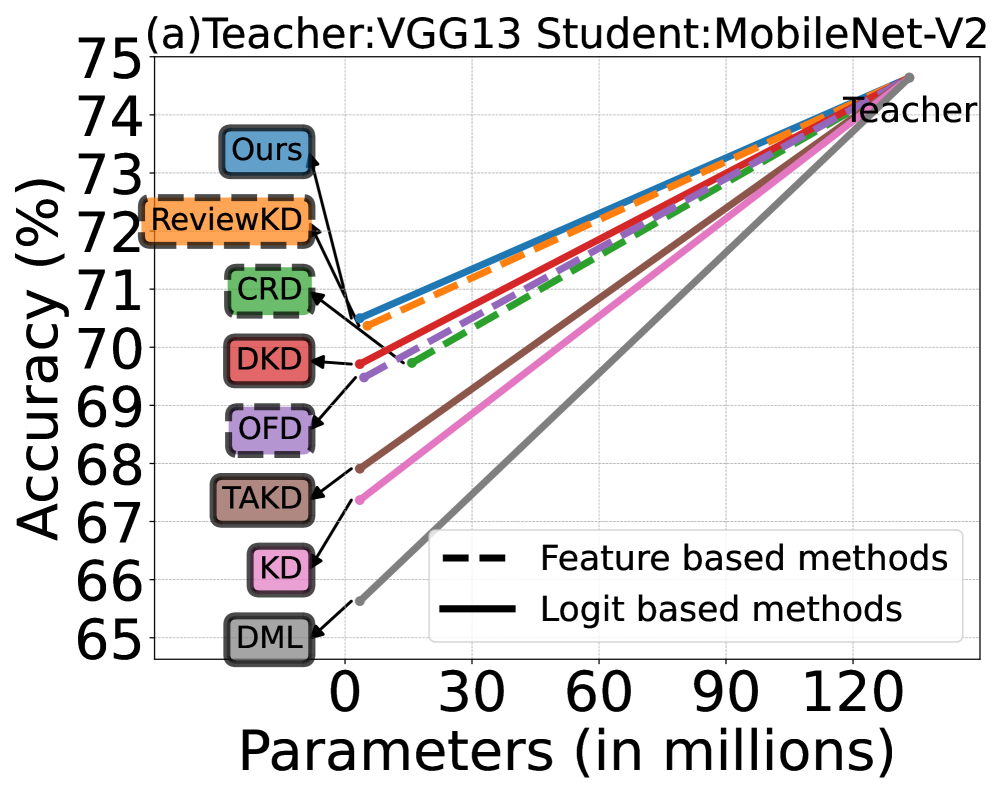
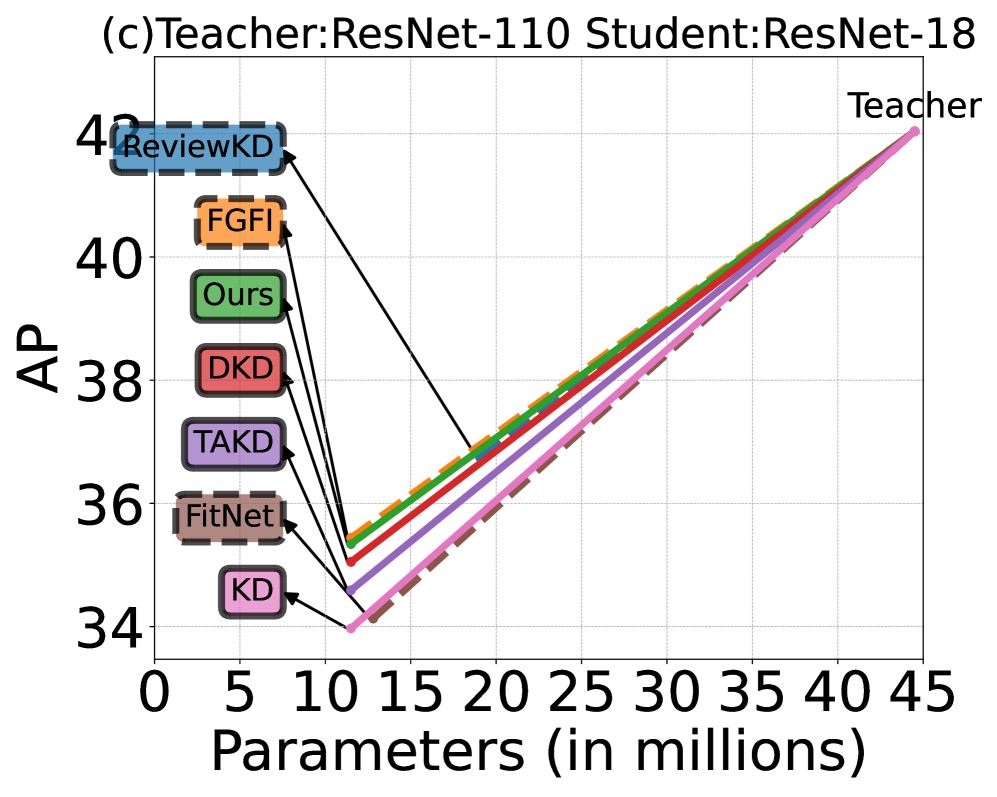
在知识蒸馏领域,特征基础的方法因其有效利用教师模型而占据主导地位。然而,logit基础的方法通常表现较差。为了解决这一问题,本文提出了LumiNet,一种新颖的知识蒸馏算法,旨在增强logit基础蒸馏。我们引入了“感知”概念,通过模型的表示能力来校准logits,解决了logit基础蒸馏中的过度自信问题,并提出了一种新方法,通过考虑批次中其他样本的关系来重构样本的logits。LumiNet在CIFAR-100、ImageNet和MSCOCO等基准上表现优异,超越了领先的特征基础方法,例如在ImageNet上与ResNet18和MobileNetV2的KD相比,分别提高了1.5%和2.05%。代码可在https://github.com/ismail31416/LumiNet获取。
🔬 方法详解
问题定义:本文旨在解决logit基础知识蒸馏方法在性能上的不足,尤其是其在处理教师模型的“黑暗知识”时的过度自信问题。现有方法通常依赖于特征提取,导致logit基础方法的效果不佳。
核心思路:LumiNet的核心思想是通过“感知”来校准logits,增强模型的表示能力,从而改善logit基础蒸馏的效果。通过重构样本logits并考虑批次中其他样本的关系,LumiNet有效地提取了教师模型的知识。
技术框架:LumiNet的整体架构包括数据输入、logit校准、样本关系重构和知识蒸馏四个主要模块。首先,输入样本经过模型生成logits,然后通过感知机制进行校准,最后结合其他样本的信息进行重构,最终实现知识的有效蒸馏。
关键创新:LumiNet的主要创新在于引入了“感知”概念,解决了logit基础蒸馏中的过度自信问题,并通过样本间关系重构logits,这一方法与传统的特征基础蒸馏方法有本质区别。
关键设计:在设计中,LumiNet采用了特定的损失函数来优化logits的校准效果,同时在网络结构上进行了调整,以更好地适应样本间的关系重构。
🖼️ 关键图片

📊 实验亮点
LumiNet在多个基准测试中表现出色,特别是在ImageNet上与ResNet18和MobileNetV2的对比中,分别提高了1.5%和2.05%的准确率,展示了其在logit基础蒸馏方面的显著优势。
🎯 应用场景
LumiNet的研究成果在计算机视觉领域具有广泛的应用潜力,尤其是在图像分类、目标检测和图像生成等任务中。通过提高logit基础蒸馏的性能,LumiNet能够帮助构建更高效的深度学习模型,推动智能系统的进一步发展。
📄 摘要(原文)
In the knowledge distillation literature, feature-based methods have dominated due to their ability to effectively tap into extensive teacher models. In contrast, logit-based approaches, which aim to distill "dark knowledge" from teachers, typically exhibit inferior performance compared to feature-based methods. To bridge this gap, we present LumiNet, a novel knowledge distillation algorithm designed to enhance logit-based distillation. We introduce the concept of "perception", aiming to calibrate logits based on the model's representation capability. This concept addresses overconfidence issues in the logit-based distillation method while also introducing a novel method to distill knowledge from the teacher. It reconstructs the logits of a sample/instances by considering relationships with other samples in the batch. LumiNet excels on benchmarks like CIFAR-100, ImageNet, and MSCOCO, outperforming the leading feature-based methods, e.g., compared to KD with ResNet18 and MobileNetV2 on ImageNet, it shows improvements of 1.5% and 2.05%, respectively. Codes are available at https://github.com/ismail31416/LumiNet.