Beyond Task Performance: Evaluating and Reducing the Flaws of Large Multimodal Models with In-Context Learning
作者: Mustafa Shukor, Alexandre Rame, Corentin Dancette, Matthieu Cord
分类: cs.CV, cs.MM
发布日期: 2023-10-01 (更新: 2024-01-22)
备注: ICLR 2024. Project Page: https://evalign-icl.github.io/
🔗 代码/项目: GITHUB
💡 一句话要点
提出多模态ICL变体以解决大型多模态模型的局限性
🎯 匹配领域: 支柱二:RL算法与架构 (RL & Architecture) 支柱九:具身大模型 (Embodied Foundation Models)
关键词: 多模态模型 上下文学习 模型评估 可解释性 幻觉现象 指令遵循 组合能力 无训练方法
📋 核心要点
- 现有的评估基准无法全面捕捉大型多模态模型的真实能力和局限性,导致对其性能的理解不足。
- 论文提出通过无训练的上下文学习(ICL)来评估和缓解大型多模态模型的缺陷,并探索新的ICL变体。
- 实验结果显示,ICL在某些方面有效,但对指令遵循的改善有限,并且可能加剧幻觉现象,提出的ICL变体具有潜力。
📝 摘要(中文)
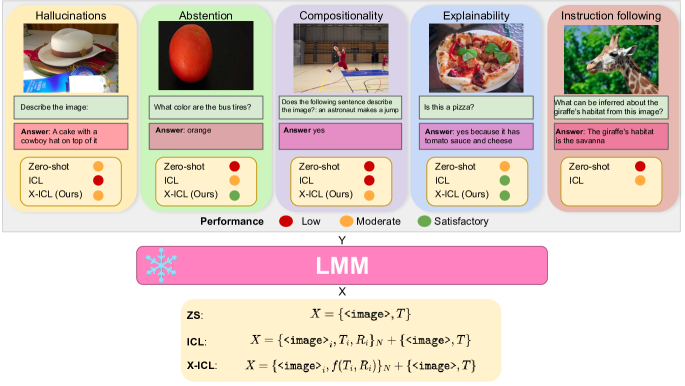
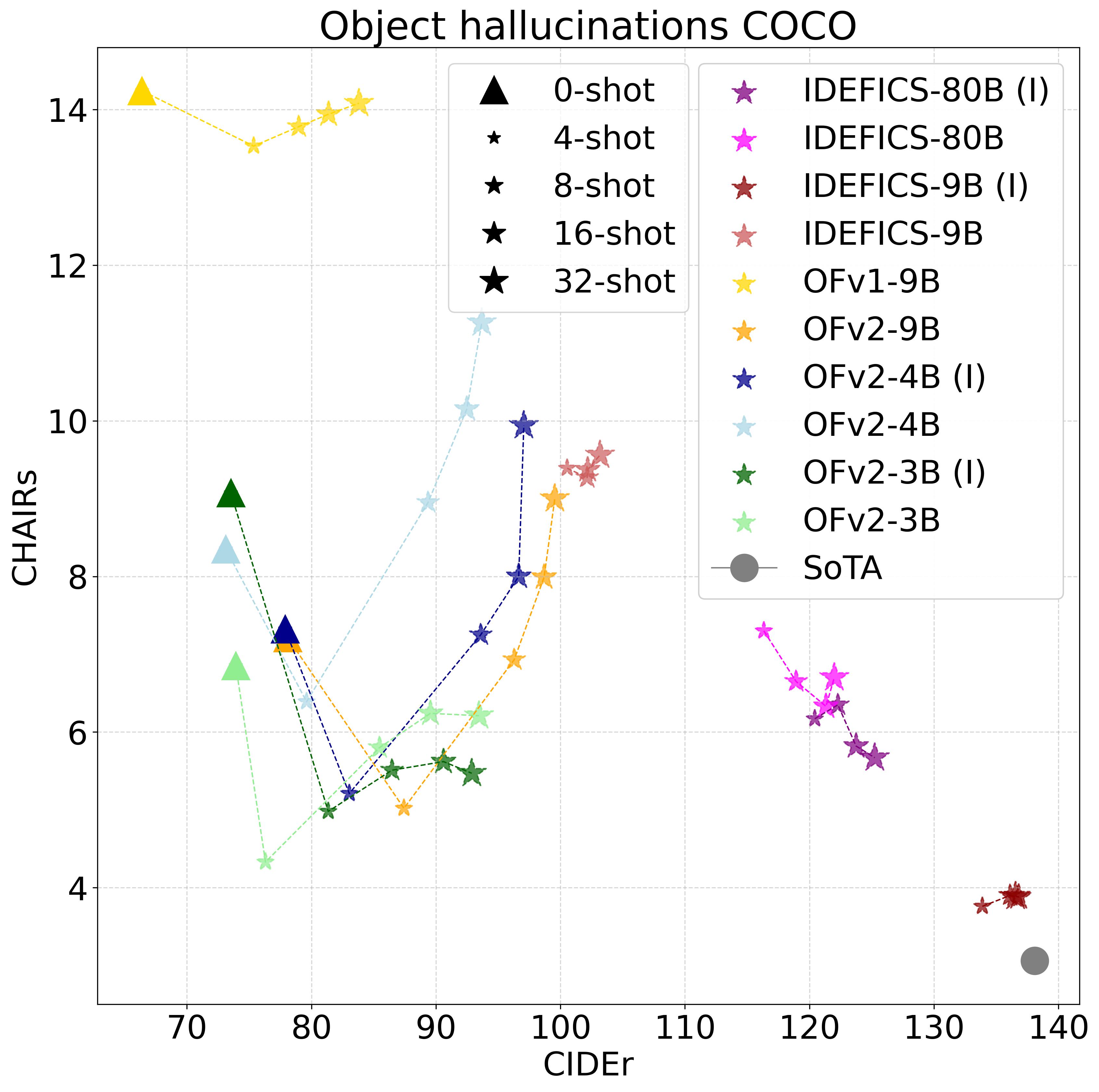
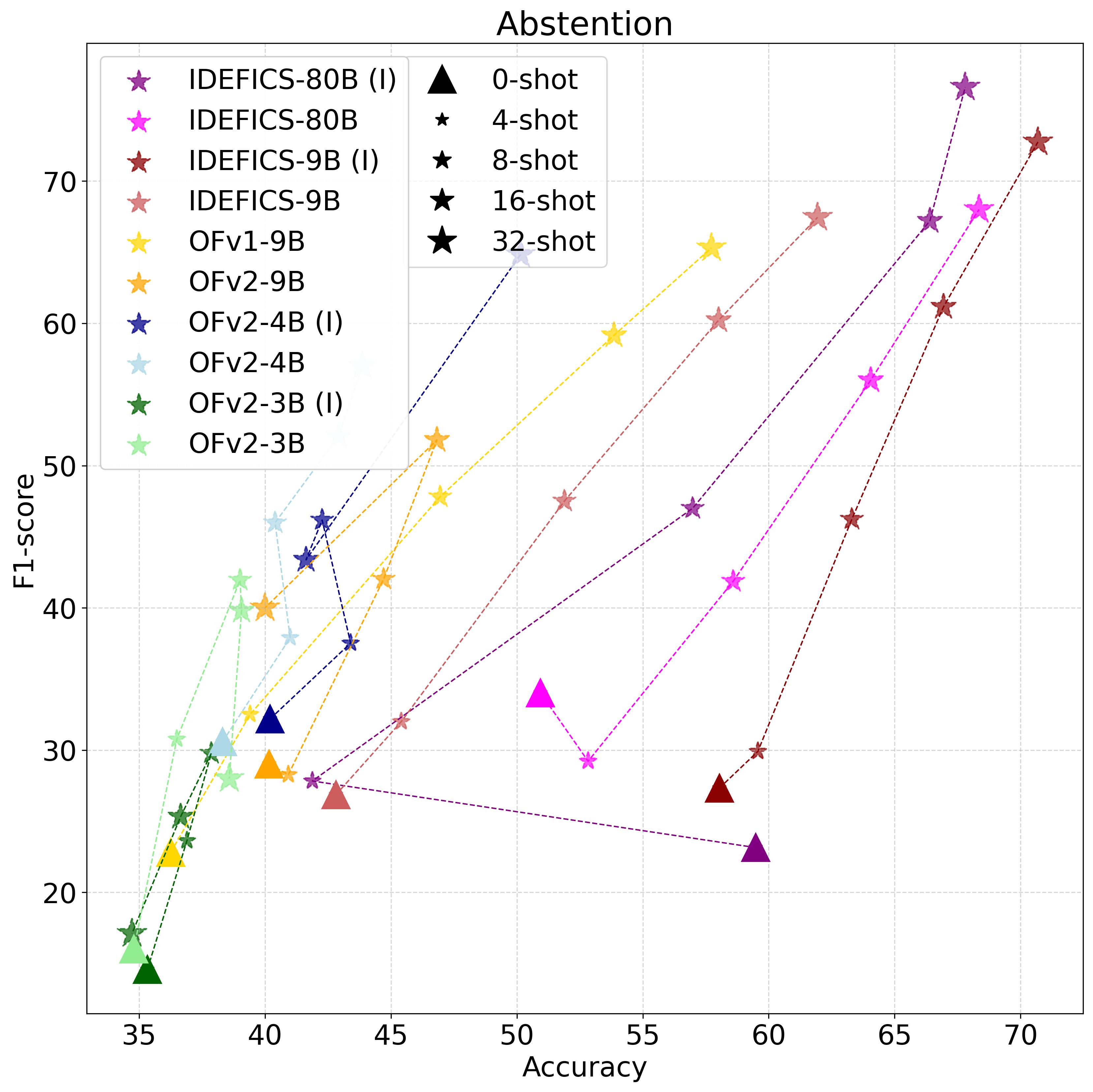
随着大型语言模型(LLMs)的成功,大型多模态模型(LMMs)如Flamingo模型及其竞争者开始出现。然而,与这些LMMs的交互揭示了当前评估基准难以捕捉的重大局限性。仅依靠任务性能(如VQA准确率)无法充分理解其真实能力和局限性。为此,本文对10个参数规模从3B到80B的开源LMMs进行了评估,涵盖了幻觉、放弃、组合能力、可解释性和指令遵循等5个维度,发现了显著缺陷。本文探索了无训练的上下文学习(ICL)作为解决方案,并提出了多模态ICL的新变体。研究结果表明,尽管ICL在提高可解释性和回答放弃方面有效,但对指令遵循的改善有限,组合能力未见提升,且可能加剧幻觉现象。
🔬 方法详解
问题定义:本文旨在解决大型多模态模型在任务性能评估中存在的局限性,现有方法主要依赖于任务准确率,无法全面理解模型的能力和缺陷。
核心思路:论文通过评估模型在幻觉、放弃、组合能力、可解释性和指令遵循等多个维度,提出无训练的上下文学习(ICL)作为一种新的解决方案,探索其对模型缺陷的影响。
技术框架:整体架构包括对10个开源LMMs的评估,采用多维度评估方法,结合ICL的应用,提出新的ICL变体如多任务ICL、回顾链ICL和自我纠正ICL。
关键创新:最重要的创新在于提出了多模态ICL的变体,这些变体作为后处理方法,能够有效应对模型的某些缺陷,与传统的基于训练的对齐方法形成鲜明对比。
关键设计:在实验中,ICL的应用并未显著改善指令遵循能力,且对组合能力没有提升,反而在某些情况下加剧了幻觉现象,显示出ICL在不同维度的复杂影响。
🖼️ 关键图片
📊 实验亮点
实验结果显示,尽管大型多模态模型在某些任务上表现良好,但在幻觉和组合能力方面存在显著缺陷。ICL在提高可解释性和回答放弃方面表现出色,但对指令遵循的改善幅度有限,且可能加剧幻觉现象。提出的ICL变体为后处理方法提供了新的思路。
🎯 应用场景
该研究的潜在应用领域包括智能助手、自动化内容生成和人机交互等。通过改进多模态模型的评估和训练方法,可以提升其在实际应用中的表现,满足更高的用户期望,推动智能系统的进一步发展。
📄 摘要(原文)
Following the success of Large Language Models (LLMs), Large Multimodal Models (LMMs), such as the Flamingo model and its subsequent competitors, have started to emerge as natural steps towards generalist agents. However, interacting with recent LMMs reveals major limitations that are hardly captured by the current evaluation benchmarks. Indeed, task performances (e.g., VQA accuracy) alone do not provide enough clues to understand their real capabilities, limitations, and to which extent such models are aligned to human expectations. To refine our understanding of those flaws, we deviate from the current evaluation paradigm, and (1) evaluate 10 recent open-source LMMs from 3B up to 80B parameter scale, on 5 different axes; hallucinations, abstention, compositionality, explainability and instruction following. Our evaluation on these axes reveals major flaws in LMMs. While the current go-to solution to align these models is based on training, such as instruction tuning or RLHF, we rather (2) explore the training-free in-context learning (ICL) as a solution, and study how it affects these limitations. Based on our ICL study, (3) we push ICL further and propose new multimodal ICL variants such as; Multitask-ICL, Chain-of-Hindsight-ICL, and Self-Correcting-ICL. Our findings are as follows. (1) Despite their success, LMMs have flaws that remain unsolved with scaling alone. (2) The effect of ICL on LMMs flaws is nuanced; despite its effectiveness for improved explainability, answer abstention, ICL only slightly improves instruction following, does not improve compositional abilities, and actually even amplifies hallucinations. (3) The proposed ICL variants are promising as post-hoc approaches to efficiently tackle some of those flaws. The code is available here: https://github.com/mshukor/EvALign-ICL.