Flippi: End To End GenAI Assistant for E-Commerce
作者: Anand A. Rajasekar, Praveen Tangarajan, Anjali Nainani, Amogh Batwal, Vinay Rao Dandin, Anusua Trivedi, Ozan Ersoy
分类: cs.CL
发布日期: 2025-07-08 (更新: 2025-07-11)
备注: 10 pages, 2 figures, 7 tables
💡 一句话要点
Flippi:面向电商的端到端生成式AI助手,提升用户购物体验
🎯 匹配领域: 支柱九:具身大模型 (Embodied Foundation Models)
关键词: 电商助手 对话系统 大型语言模型 检索增强生成 个性化推荐 自然语言处理 意图检测 查询重构
📋 核心要点
- 电商平台产品信息过载,传统搜索方式难以满足用户个性化、主观的购物需求。
- Flippi利用大型语言模型和多种NLP技术,通过对话交互理解用户需求,提供个性化商品推荐和对比。
- Flippi通过优化用户购物体验,提升客户参与度和转化率,为电商平台带来实际价值。
📝 摘要(中文)
本文介绍Flippi,一个由大型语言模型(LLM)驱动的、为电商领域量身定制的端到端对话式助手。Flippi旨在解决电商平台产品种类繁多、信息过载的问题,通过自然语言对话帮助用户更高效地发现商品。它能够理解用户客观和主观的需求,提供超越传统搜索方式的个性化购物体验。Flippi利用查询重构、意图检测、检索增强生成(RAG)、命名实体识别(NER)和上下文缩减等先进的NLP技术,精准解读用户查询并提供产品信息。此外,Flippi还能识别并展示电商平台上的最优优惠,帮助用户做出划算的选择,并提供产品对比分析功能,辅助用户进行明智的决策。论文还概述了Flippi的鲁棒架构,强调其在不同电商平台上的适应性,以及支撑其性能和准确性的技术选择。最后,论文提出了一个全面的评估框架,涵盖性能指标、用户满意度以及对客户参与度和转化率的影响。
🔬 方法详解
问题定义:电商平台商品数量庞大,用户难以快速找到符合需求的商品。传统搜索方式依赖关键词匹配,无法理解用户的主观意图和个性化需求,导致购物体验不佳。现有方法难以有效利用用户历史行为和上下文信息,进行精准推荐和产品对比。
核心思路:利用大型语言模型(LLM)的强大语义理解和生成能力,构建一个对话式助手,通过自然语言交互理解用户需求,并结合检索增强生成(RAG)技术,从海量商品信息中提取相关信息,为用户提供个性化推荐和产品对比。通过多轮对话,逐步 уточнить 用户需求,提供更精准的推荐。
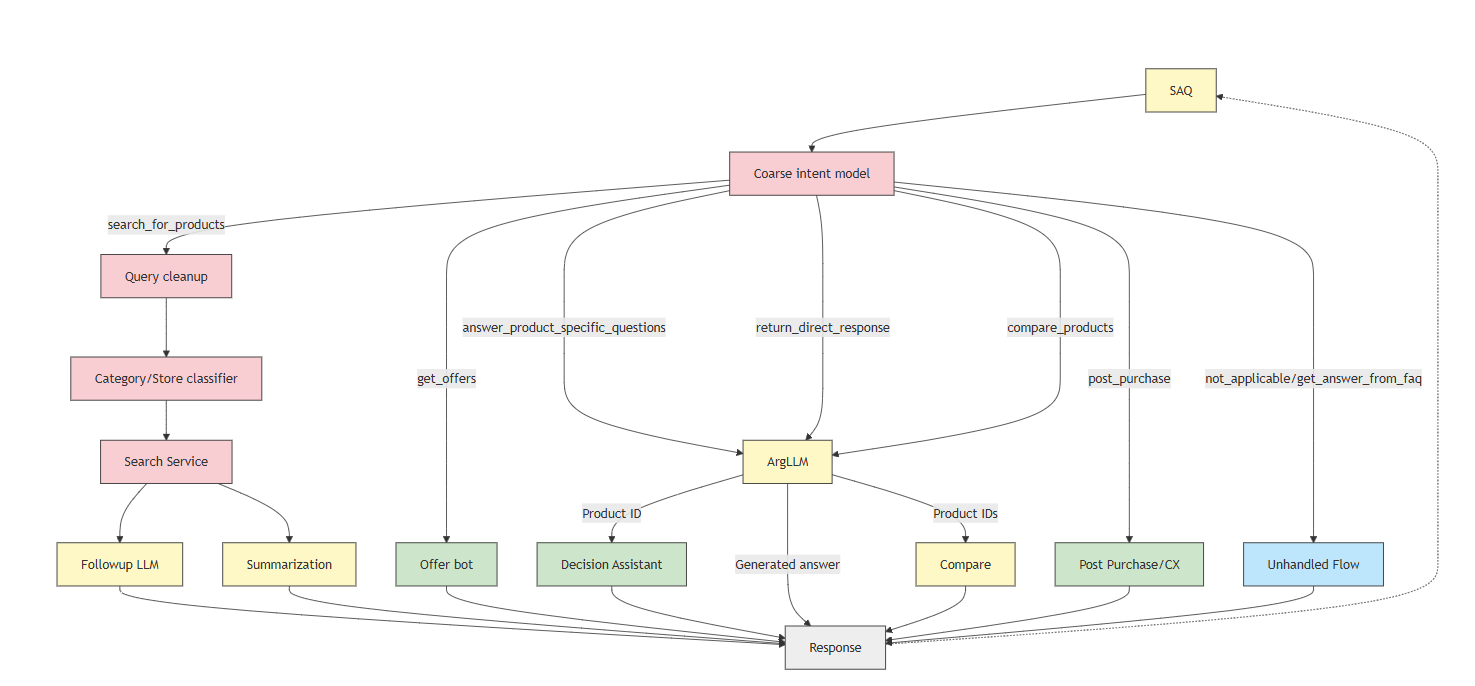
技术框架:Flippi的整体架构包含以下主要模块:1) 查询重构:优化用户输入的查询语句,使其更适合信息检索;2) 意图检测:识别用户查询的意图,例如查找商品、比较商品等;3) 检索增强生成(RAG):从商品数据库中检索相关信息,并利用LLM生成自然语言回复;4) 命名实体识别(NER):识别查询中的关键实体,例如商品名称、品牌等;5) 上下文缩减:管理对话历史,提取关键信息,避免LLM处理过长的上下文。
关键创新:Flippi的关键创新在于将大型语言模型与电商领域的特定需求相结合,构建了一个端到端的对话式助手。与传统的基于规则或机器学习的对话系统相比,Flippi能够更好地理解用户的意图,并生成更自然、更流畅的回复。此外,Flippi还集成了多种NLP技术,例如查询重构、意图检测和RAG,以提高推荐的准确性和效率。
关键设计:论文中未明确给出关键参数设置、损失函数、网络结构等技术细节。但可以推测,LLM的选择和微调、RAG的检索策略、以及各个模块之间的协同工作是关键的设计要素。例如,LLM的微调可能使用了电商领域的特定数据,以提高其对商品信息的理解能力。RAG的检索策略可能采用了向量相似度搜索等技术,以快速找到相关商品。
🖼️ 关键图片

📊 实验亮点
论文提出了一个完整的电商对话助手Flippi,但摘要中没有提供具体的实验数据和性能指标。因此,无法量化Flippi在用户满意度、转化率等方面的提升。未来的研究可以提供更详细的实验结果,例如与传统搜索方式或现有对话系统的对比,以更充分地证明Flippi的有效性。
🎯 应用场景
Flippi可广泛应用于各类电商平台,提升用户购物体验,提高商品发现效率,并促进销售转化。该技术还可扩展到其他领域,例如在线客服、智能导购等,为用户提供个性化的信息服务。未来,Flippi有望与虚拟现实、增强现实等技术结合,打造更沉浸式的购物体验。
📄 摘要(原文)
The emergence of conversational assistants has fundamentally reshaped user interactions with digital platforms. This paper introduces Flippi-a cutting-edge, end-to-end conversational assistant powered by large language models (LLMs) and tailored for the e-commerce sector. Flippi addresses the challenges posed by the vast and often overwhelming product landscape, enabling customers to discover products more efficiently through natural language dialogue. By accommodating both objective and subjective user requirements, Flippi delivers a personalized shopping experience that surpasses traditional search methods. This paper details how Flippi interprets customer queries to provide precise product information, leveraging advanced NLP techniques such as Query Reformulation, Intent Detection, Retrieval-Augmented Generation (RAG), Named Entity Recognition (NER), and Context Reduction. Flippi's unique capability to identify and present the most attractive offers on an e-commerce site is also explored, demonstrating how it empowers users to make cost-effective decisions. Additionally, the paper discusses Flippi's comparative analysis features, which help users make informed choices by contrasting product features, prices, and other relevant attributes. The system's robust architecture is outlined, emphasizing its adaptability for integration across various e-commerce platforms and the technological choices underpinning its performance and accuracy. Finally, a comprehensive evaluation framework is presented, covering performance metrics, user satisfaction, and the impact on customer engagement and conversion rates. By bridging the convenience of online shopping with the personalized assistance traditionally found in physical stores, Flippi sets a new standard for customer satisfaction and engagement in the digital marketplace.