Active Inference for Self-Organizing Multi-LLM Systems: A Bayesian Thermodynamic Approach to Adaptation
作者: Rithvik Prakki
分类: cs.CL, cs.AI
发布日期: 2024-12-10 (更新: 2025-01-09)
💡 一句话要点
提出主动推理框架以解决大语言模型适应性不足问题
🎯 匹配领域: 支柱九:具身大模型 (Embodied Foundation Models)
关键词: 主动推理 大型语言模型 自适应系统 环境建模 信息寻求 热力学原理 探索-开发行为
📋 核心要点
- 现有的大语言模型在适应新信息和变化环境方面存在局限,主要依赖静态提示,导致灵活性不足。
- 论文提出通过主动推理框架,作为LLM代理的认知层,动态调整提示和搜索策略,以实现更好的适应性。
- 实验结果显示,代理能够有效建模环境动态,展现出复杂的探索与开发行为,提升了适应能力。
📝 摘要(中文)
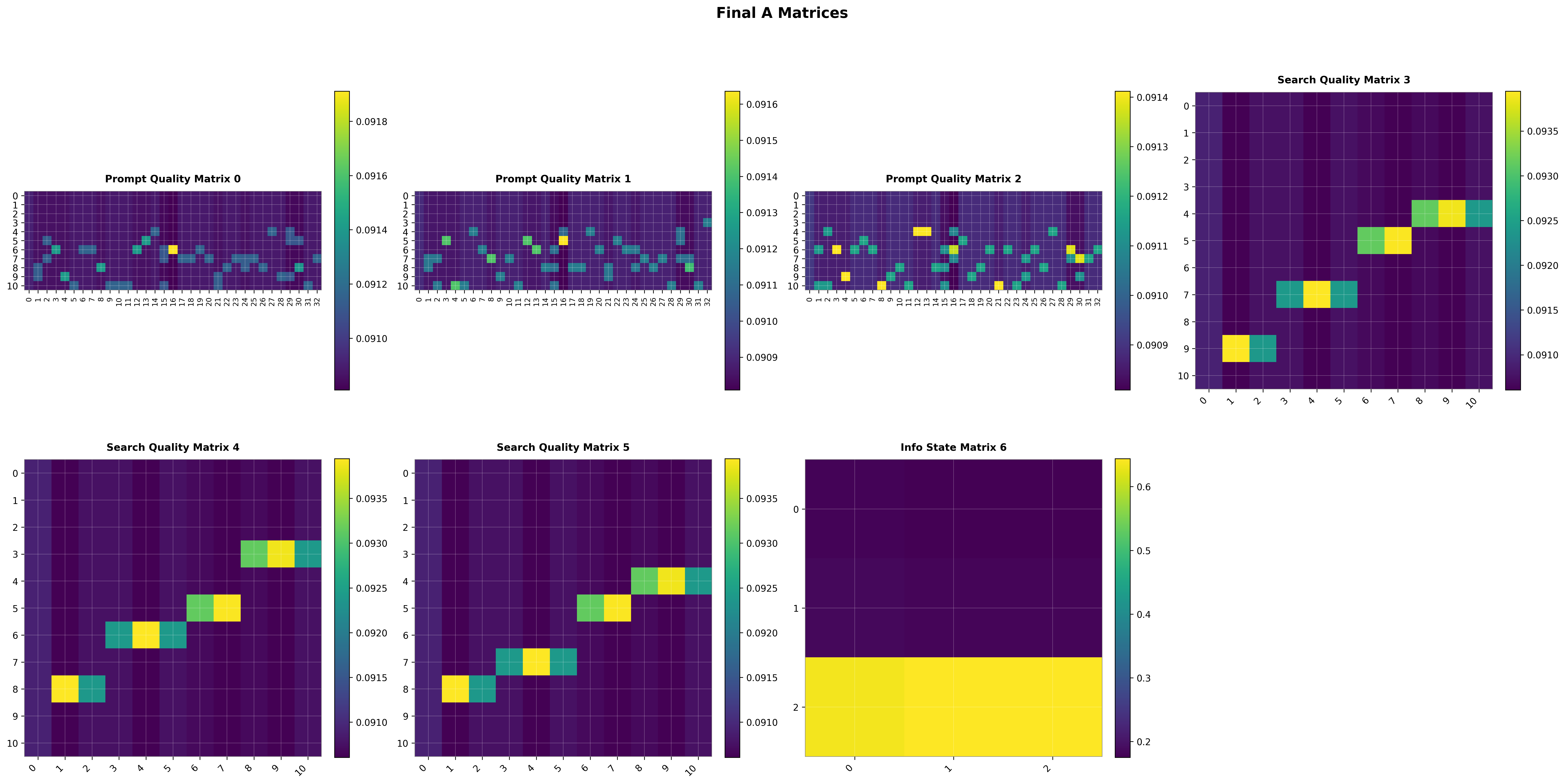
本文提出了一种新颖的方法,通过将主动推理与大型语言模型(LLMs)结合,创建自适应语言代理。尽管LLMs展现出卓越的能力,但其对静态提示的依赖限制了对新信息和变化环境的适应。我们通过实施一个主动推理框架,作为LLM代理的认知层,动态调整提示和搜索策略,从而实现基于原则的信息寻求行为。该框架通过三个状态因素(提示、搜索和信息状态)建模环境,并利用七种观察模态捕捉质量指标。通过自由能原理框架,我们能够系统地探索提示组合和搜索策略。实验结果表明,该方法有效,代理能够准确建模环境动态,观察矩阵中出现的结构证实了这一点。行动选择模式显示出复杂的探索-开发行为,从最初的信息收集转向有针对性的提示测试。
🔬 方法详解
问题定义:本文旨在解决大型语言模型在动态环境中适应性不足的问题,现有方法主要依赖静态提示,无法有效应对信息变化。
核心思路:通过引入主动推理框架,作为LLM的认知层,动态调整提示和搜索策略,以实现基于信息的自适应行为。
技术框架:整体架构包括三个主要模块:环境建模模块(使用提示、搜索和信息状态),信息寻求模块(通过七种观察模态捕捉质量指标),以及学习模块(基于自由能原理进行系统探索)。
关键创新:最重要的创新在于将热力学原理与语言模型能力相结合,扩展了主动推理的应用范围,从传统的低维控制问题延伸至高维语言驱动环境。
关键设计:在设计中,采用了自由能原理作为学习框架,设置了多种提示组合和搜索策略的探索机制,确保了代理在动态环境中的有效适应。具体的参数设置和损失函数设计未在摘要中详细说明,待进一步研究。
🖼️ 关键图片

📊 实验亮点
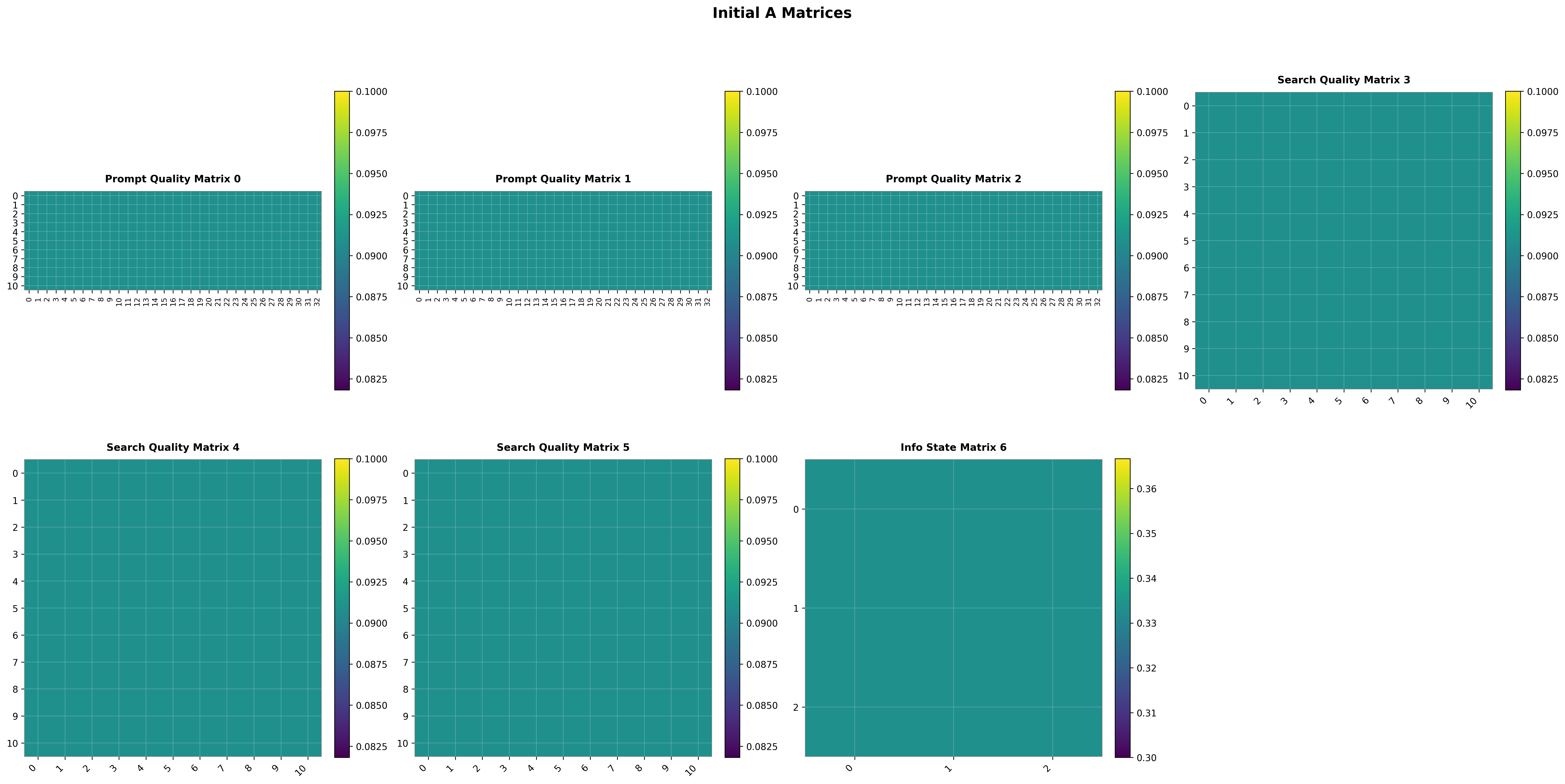
实验结果表明,代理在环境动态建模方面表现出色,观察矩阵中出现的结构证实了其有效性。行动选择模式显示出从信息收集到有针对性提示测试的复杂行为,展现了显著的探索-开发能力。
🎯 应用场景
该研究的潜在应用领域包括智能对话系统、自动化内容生成和人机交互等。通过提升语言代理的适应能力,可以在快速变化的环境中提供更为精准和个性化的服务,具有重要的实际价值和未来影响。
📄 摘要(原文)
This paper introduces a novel approach to creating adaptive language agents by integrating active inference with large language models (LLMs). While LLMs demonstrate remarkable capabilities, their reliance on static prompts limits adaptation to new information and changing environments. We address this by implementing an active inference framework that acts as a cognitive layer above an LLM-based agent, dynamically adjusting prompts and search strategies through principled information-seeking behavior. Our framework models the environment using three state factors (prompt, search, and information states) with seven observation modalities capturing quality metrics. By framing the agent's learning through the free energy principle, we enable systematic exploration of prompt combinations and search strategies. Experimental results demonstrate the effectiveness of this approach, with the agent developing accurate models of environment dynamics evidenced by emergent structure in observation matrices. Action selection patterns reveal sophisticated exploration-exploitation behavior, transitioning from initial information-gathering to targeted prompt testing. The integration of thermodynamic principles with language model capabilities provides a principled framework for creating robust, adaptable agents, extending active inference beyond traditional low-dimensional control problems to high-dimensional, language-driven environments.