Who Speaks Next? Multi-party AI Discussion Leveraging the Systematics of Turn-taking in Murder Mystery Games
作者: Ryota Nonomura, Hiroki Mori
分类: cs.CL, cs.AI
发布日期: 2024-12-06 (更新: 2025-02-21)
💡 一句话要点
提出Murder Mystery Agents框架,提升多智能体对话控制
🎯 匹配领域: 支柱一:机器人控制 (Robot Control) 支柱九:具身大模型 (Embodied Foundation Models)
关键词: 多智能体系统 对话控制 大型语言模型 轮流发言 邻接对 谋杀之谜 人机交互
📋 核心要点
- 现有基于LLM的多智能体系统在对话控制和自主决策方面仍面临挑战,对话流畅性有待提高。
- 提出Murder Mystery Agents框架,利用邻接对和轮流发言等会话规范来控制AI智能体的对话。
- 实验表明,该框架显著减少了对话中断,并提升了智能体的信息共享和逻辑推理能力。
📝 摘要(中文)
本文提出了一种名为“Murder Mystery Agents”的新框架,旨在利用会话分析中的邻接对和轮流发言等对话规范来改进多智能体系统中基于大型语言模型(LLM)的自然对话。该框架应用于“谋杀之谜”游戏,这是一种需要复杂社会推理和信息操纵的推理型桌面角色扮演游戏。该框架集成了基于邻接对的下一发言者选择机制和考虑智能体内部状态的自选择机制,以实现更自然和更具策略性的对话。实验结果表明,下一发言者选择机制的实施显著减少了对话中断,并提高了智能体共享信息和执行逻辑推理的能力。这项研究表明,人类对话中的轮流发言系统对于控制AI智能体之间的对话也是有效的,并为更高级的多智能体对话系统提供了设计指南。
🔬 方法详解
问题定义:现有基于大型语言模型的多智能体对话系统在对话控制方面存在不足,尤其是在如何让智能体之间自然地轮流发言、避免对话中断以及进行有效的策略性沟通方面。现有的方法难以模拟人类对话中的复杂社交规范,导致对话不够流畅和自然。
核心思路:本文的核心思路是将人类对话中的轮流发言机制和邻接对等概念引入到多智能体对话系统中。通过模仿人类对话的结构化模式,使智能体能够更自然地选择下一发言者,并根据自身的内部状态做出更合理的发言决策。这种方法旨在提高对话的连贯性、策略性和效率。
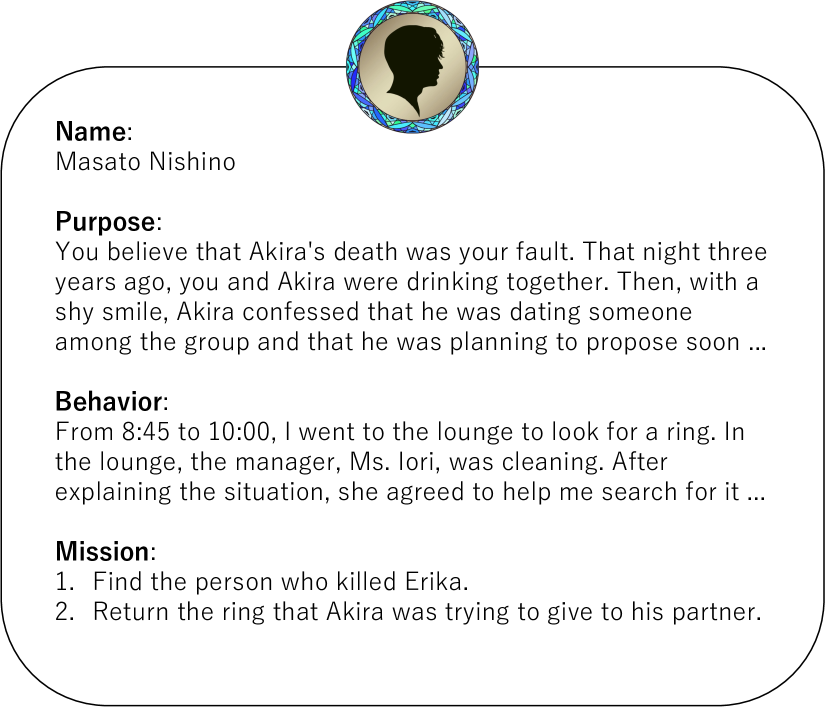
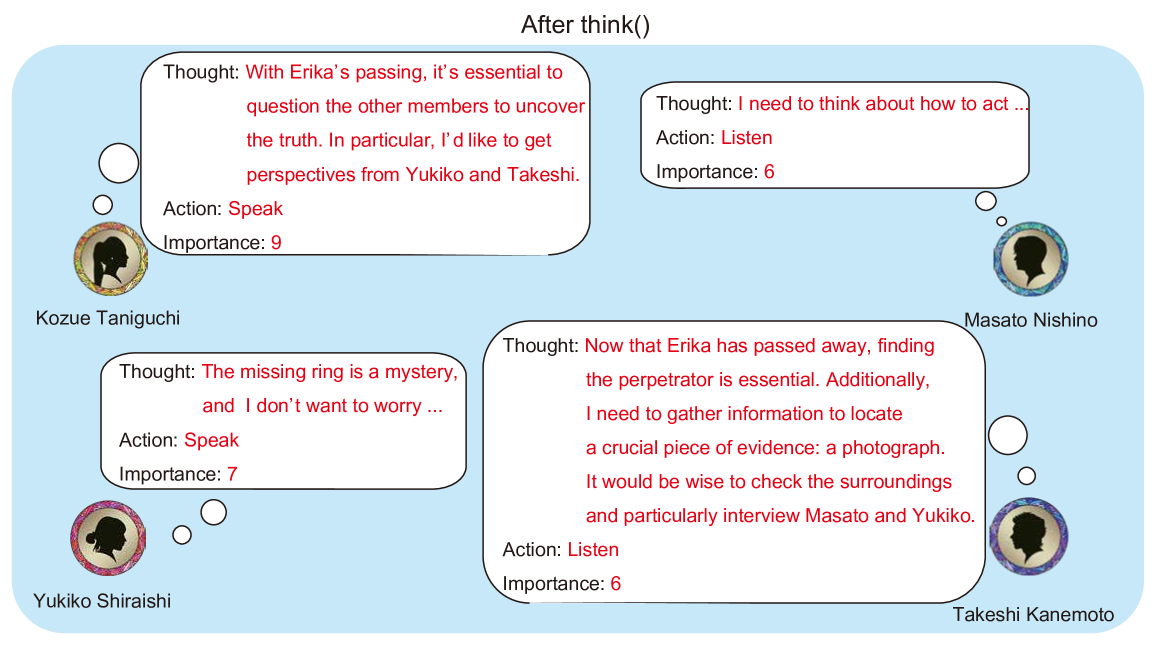
技术框架:Murder Mystery Agents框架主要包含两个关键模块:下一发言者选择机制和自选择机制。下一发言者选择机制基于邻接对,即根据当前发言者的发言类型(如提问、陈述)来预测下一位合适的发言者。自选择机制则允许智能体根据自身的内部状态(如掌握的信息、推理结果)来主动选择是否发言。这两个机制协同工作,共同决定对话的流程。
关键创新:该框架的关键创新在于将对话分析中的理论应用到多智能体对话控制中,并设计了相应的机制来实现这些理论。与传统的基于规则或概率模型的对话控制方法不同,该框架更加注重模拟人类对话的自然性和策略性。
关键设计:在下一发言者选择机制中,需要定义不同类型的邻接对,并为每个邻接对指定可能的下一发言者。自选择机制则需要设计一个函数,根据智能体的内部状态来计算其发言的意愿度。此外,还需要设计一个冲突解决机制,当多个智能体同时想要发言时,能够选择出最合适的发言者。具体的参数设置和函数形式未知。
🖼️ 关键图片

📊 实验亮点
实验结果表明,实施下一发言者选择机制后,对话中断显著减少。此外,通过LLM自动评估和人工评估,证明了该框架提高了智能体共享信息和进行逻辑推理的能力。具体性能提升数据未知,但定性分析表明该方法在提升对话质量方面具有显著效果。
🎯 应用场景
该研究成果可应用于各种需要多方参与的AI对话场景,例如在线教育、客户服务、协同设计和智能会议等。通过提升AI智能体之间的对话流畅性和策略性,可以提高沟通效率和用户体验,并促进更有效的协作和决策。
📄 摘要(原文)
Multi-agent systems utilizing large language models (LLMs) have shown great promise in achieving natural dialogue. However, smooth dialogue control and autonomous decision making among agents still remain challenges. In this study, we focus on conversational norms such as adjacency pairs and turn-taking found in conversation analysis and propose a new framework called "Murder Mystery Agents" that applies these norms to AI agents' dialogue control. As an evaluation target, we employed the "Murder Mystery" game, a reasoning-type table-top role-playing game that requires complex social reasoning and information manipulation. In this game, players need to unravel the truth of the case based on fragmentary information through cooperation and bargaining. The proposed framework integrates next speaker selection based on adjacency pairs and a self-selection mechanism that takes agents' internal states into account to achieve more natural and strategic dialogue. To verify the effectiveness of this new approach, we analyzed utterances that led to dialogue breakdowns and conducted automatic evaluation using LLMs, as well as human evaluation using evaluation criteria developed for the Murder Mystery game. Experimental results showed that the implementation of the next speaker selection mechanism significantly reduced dialogue breakdowns and improved the ability of agents to share information and perform logical reasoning. The results of this study demonstrate that the systematics of turn-taking in human conversation are also effective in controlling dialogue among AI agents, and provide design guidelines for more advanced multi-agent dialogue systems.