Advancing Conversational Psychotherapy: Integrating Privacy, Dual-Memory, and Domain Expertise with Large Language Models
作者: XiuYu Zhang, Zening Luo
分类: cs.CL, cs.CY
发布日期: 2024-12-04
备注: Accepted as a Poster at Statistical Foundations of LLMs and Foundation Models (NeurIPS 2024 Workshop)
💡 一句话要点
提出SoulSpeak,融合隐私保护、双重记忆和领域知识的大语言模型心理治疗聊天机器人。
🎯 匹配领域: 支柱九:具身大模型 (Embodied Foundation Models)
关键词: 心理治疗 大型语言模型 双重记忆 隐私保护 检索增强生成 人机对话 BERT模型
📋 核心要点
- 传统心理治疗受限于地点、时间、费用和隐私,难以满足日益增长的心理健康需求。
- SoulSpeak通过双重记忆、隐私模块和领域知识,提升LLM聊天机器人在心理治疗中的应用效果。
- 实验表明,SoulSpeak在个性化、隐私保护和治疗相关性方面优于现有LLM和人类治疗师。
📝 摘要(中文)
心理健康日益成为全球性问题,传统的对话心理治疗在地点、时间、费用和隐私方面存在局限性。为了应对这些挑战,我们推出了SoulSpeak,一个基于大型语言模型(LLM)的聊天机器人,旨在普及心理治疗。SoulSpeak通过结合短期和长期上下文的双重记忆组件,利用检索增强生成(RAG)提供个性化响应,并通过专门的隐私模块确保用户隐私和亲密性,从而改进了标准LLM聊天机器人的功能。此外,它还利用治疗师-客户互动咨询聊天数据集和各种提示技术,使生成的响应与心理治疗方法保持一致。我们引入了两个微调的BERT模型来评估系统与现有LLM和人类治疗师的对比:会话心理治疗偏好模型(CPPM)用于模拟人类对响应的偏好,另一个用于评估响应与用户输入的相关性。CPPM有助于独立于SoulSpeak训练和评估以心理治疗为重点的语言模型,从而帮助解决心理治疗可用资源受限的问题。此外,还检查了双重记忆组件的有效性和隐私模块的鲁棒性。我们的研究结果强调了通过结合传统治疗的专业知识和LLM的优势来加强心理健康护理的潜力和挑战,为解决当前心理健康服务中的可及性和个性化差距提供了一种有希望的方法。
🔬 方法详解
问题定义:论文旨在解决传统心理治疗的可及性、个性化和隐私保护问题。现有方法,即直接使用LLM构建心理治疗聊天机器人,存在无法有效利用长期对话历史、容易泄露用户隐私以及缺乏专业心理治疗知识等痛点。
核心思路:论文的核心思路是构建一个融合双重记忆、隐私模块和领域知识的LLM心理治疗聊天机器人SoulSpeak。通过双重记忆实现对短期和长期对话历史的有效利用,通过隐私模块保护用户隐私,通过领域知识提升治疗的专业性。
技术框架:SoulSpeak的整体架构包含以下几个主要模块:1) LLM核心模块,负责生成回复;2) 短期记忆模块,存储最近的对话历史;3) 长期记忆模块,存储用户的长期信息和治疗记录,通过RAG机制检索相关信息;4) 隐私模块,负责检测和过滤敏感信息;5) 领域知识模块,利用心理治疗数据集和提示工程提升回复的专业性。
关键创新:论文的关键创新点在于双重记忆模块和隐私模块的设计。双重记忆模块通过RAG机制将短期和长期记忆结合,提升了回复的个性化和相关性。隐私模块通过检测和过滤敏感信息,有效保护了用户隐私。此外,CPPM模型的设计也为心理治疗领域的语言模型评估提供了一种新的方法。
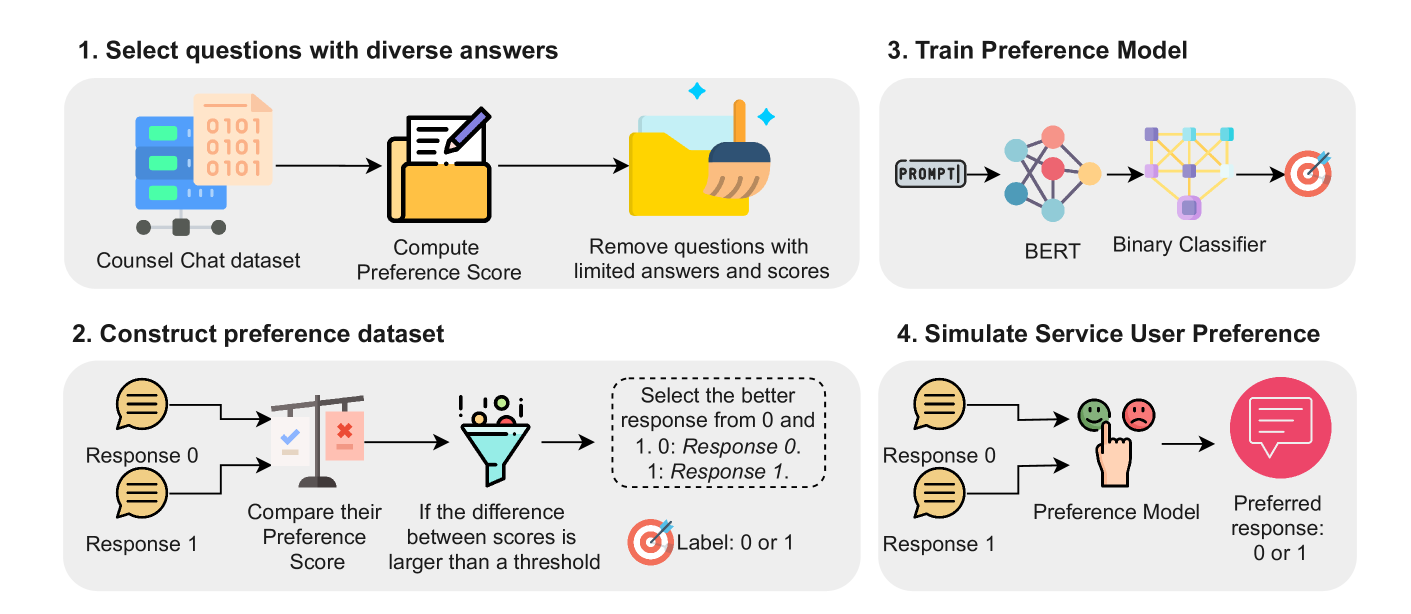
关键设计:双重记忆模块中,短期记忆采用滑动窗口机制,长期记忆采用向量数据库存储用户历史信息,并通过相似度检索获取相关信息。隐私模块采用基于BERT的分类器检测敏感信息,并进行过滤或替换。CPPM模型是一个微调的BERT模型,用于评估回复的质量和偏好,训练数据来自人类治疗师的反馈。
🖼️ 关键图片

📊 实验亮点
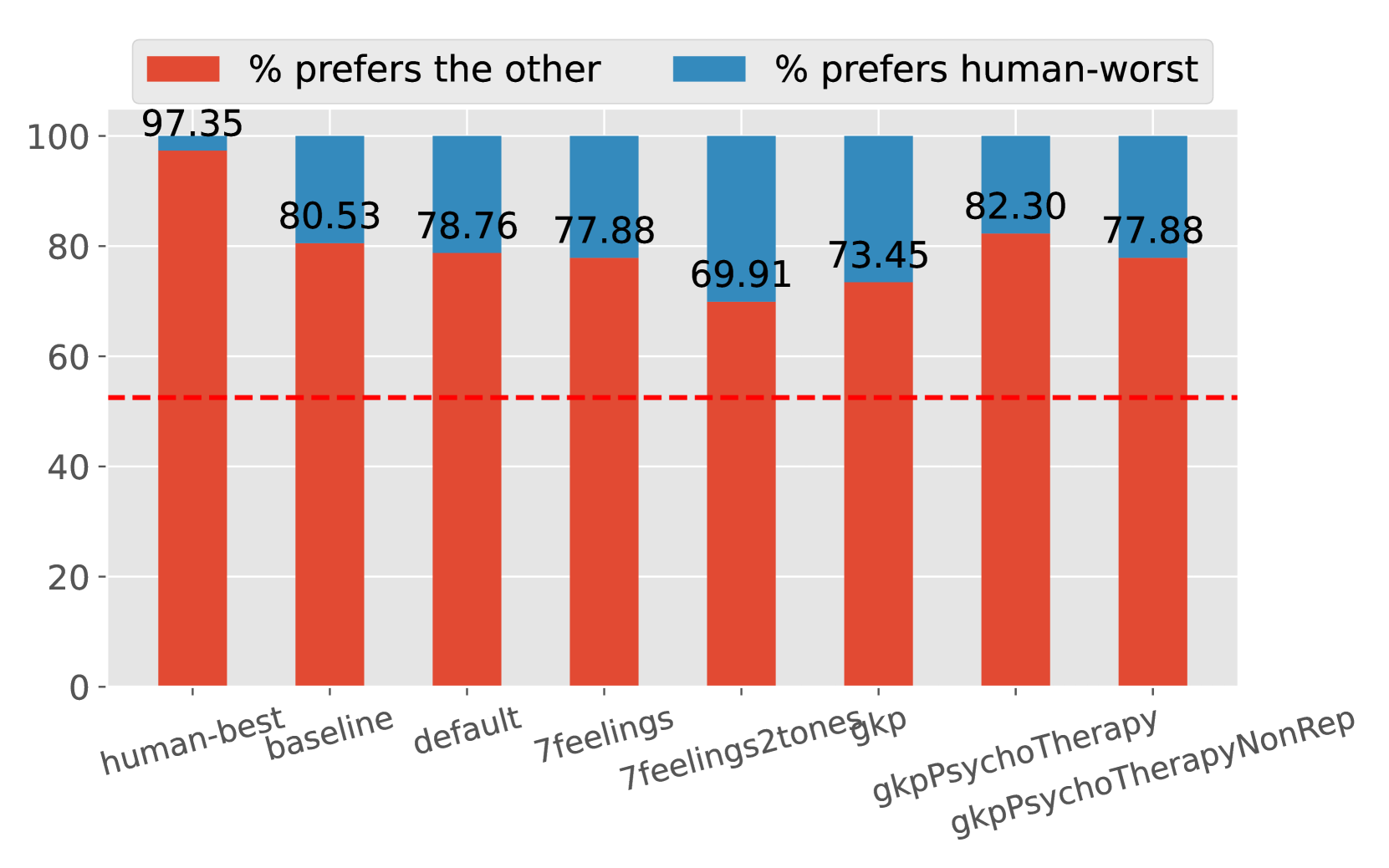
实验结果表明,SoulSpeak在多个指标上优于现有LLM和人类治疗师。具体而言,SoulSpeak在个性化、相关性和隐私保护方面均取得了显著提升。CPPM模型能够有效模拟人类对回复的偏好,为心理治疗领域的语言模型评估提供了一种可靠的方法。隐私模块能够有效检测和过滤敏感信息,保护用户隐私。
🎯 应用场景
SoulSpeak可应用于在线心理咨询平台,为用户提供便捷、个性化和隐私保护的心理治疗服务。它能够有效缓解心理健康服务资源不足的问题,尤其是在偏远地区或医疗资源匮乏的地区。未来,该技术可进一步发展为智能心理健康助手,为用户提供全天候的心理支持。
📄 摘要(原文)
Mental health has increasingly become a global issue that reveals the limitations of traditional conversational psychotherapy, constrained by location, time, expense, and privacy concerns. In response to these challenges, we introduce SoulSpeak, a Large Language Model (LLM)-enabled chatbot designed to democratize access to psychotherapy. SoulSpeak improves upon the capabilities of standard LLM-enabled chatbots by incorporating a novel dual-memory component that combines short-term and long-term context via Retrieval Augmented Generation (RAG) to offer personalized responses while ensuring the preservation of user privacy and intimacy through a dedicated privacy module. In addition, it leverages a counseling chat dataset of therapist-client interactions and various prompting techniques to align the generated responses with psychotherapeutic methods. We introduce two fine-tuned BERT models to evaluate the system against existing LLMs and human therapists: the Conversational Psychotherapy Preference Model (CPPM) to simulate human preference among responses and another to assess response relevance to user input. CPPM is useful for training and evaluating psychotherapy-focused language models independent from SoulSpeak, helping with the constrained resources available for psychotherapy. Furthermore, the effectiveness of the dual-memory component and the robustness of the privacy module are also examined. Our findings highlight the potential and challenge of enhancing mental health care by offering an alternative that combines the expertise of traditional therapy with the advantages of LLMs, providing a promising way to address the accessibility and personalization gap in current mental health services.