Robust Safety Classifier for Large Language Models: Adversarial Prompt Shield
作者: Jinhwa Kim, Ali Derakhshan, Ian G. Harris
分类: cs.CL, cs.AI
发布日期: 2023-10-31
备注: 11 pages, 2 figures
💡 一句话要点
提出对抗性提示保护模型以增强大语言模型的安全性
🎯 匹配领域: 支柱九:具身大模型 (Embodied Foundation Models)
关键词: 大语言模型 安全分类器 对抗性攻击 对抗性提示保护 数据集生成 鲁棒性 智能对话系统
📋 核心要点
- 现有的安全分类器在面对注入对抗性噪声的输入时,往往表现不佳,无法有效识别有害内容。
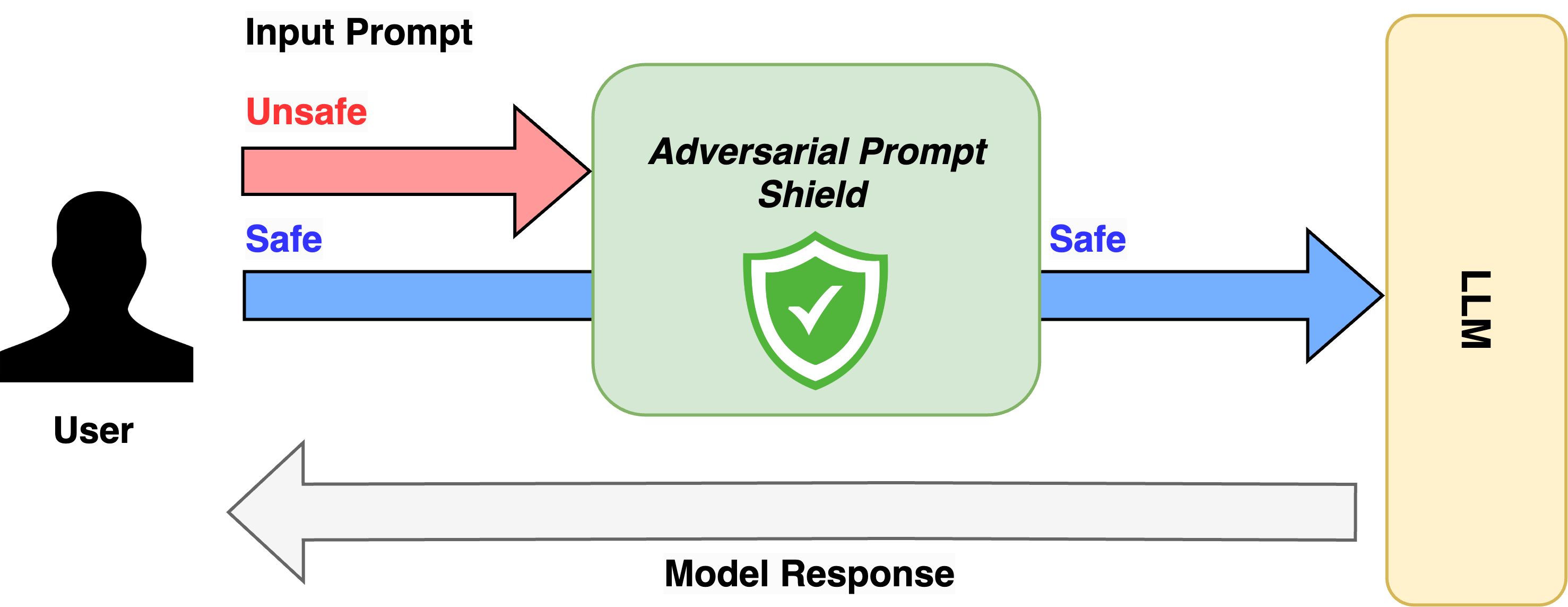
- 本文提出的对抗性提示保护(APS)模型,旨在提高安全分类器的检测准确性,并增强其对对抗性提示的抵抗能力。
- 实验结果显示,APS模型能够将对抗性攻击的成功率降低多达60%,为更可靠的对话代理奠定了基础。
📝 摘要(中文)
大语言模型的安全性一直是一个重要问题,尤其是它们对对抗性攻击的脆弱性,这可能导致系统生成有害的响应。本文提出了一种轻量级的对抗性提示保护(APS)模型,能够有效提高检测准确性,并对对抗性提示表现出良好的韧性。此外,研究还提出了一种新颖的自主生成对抗性训练数据集的方法,称为Bot Adversarial Noisy Dialogue(BAND)数据集,旨在增强安全分类器的鲁棒性。通过对大语言模型的评估,实验结果表明,该分类器能够将对抗性攻击的成功率降低多达60%。
🔬 方法详解
问题定义:大语言模型的安全分类器在面对对抗性攻击时,常常无法有效识别和缓解潜在的有害输出,导致系统生成不当内容。现有方法在处理对抗性噪声时表现不佳,亟需改进。
核心思路:本文提出的对抗性提示保护(APS)模型,通过增强对抗性提示的检测能力,提升安全分类器的鲁棒性。同时,研究还引入了Bot Adversarial Noisy Dialogue(BAND)数据集,以增强训练数据的多样性和对抗性。
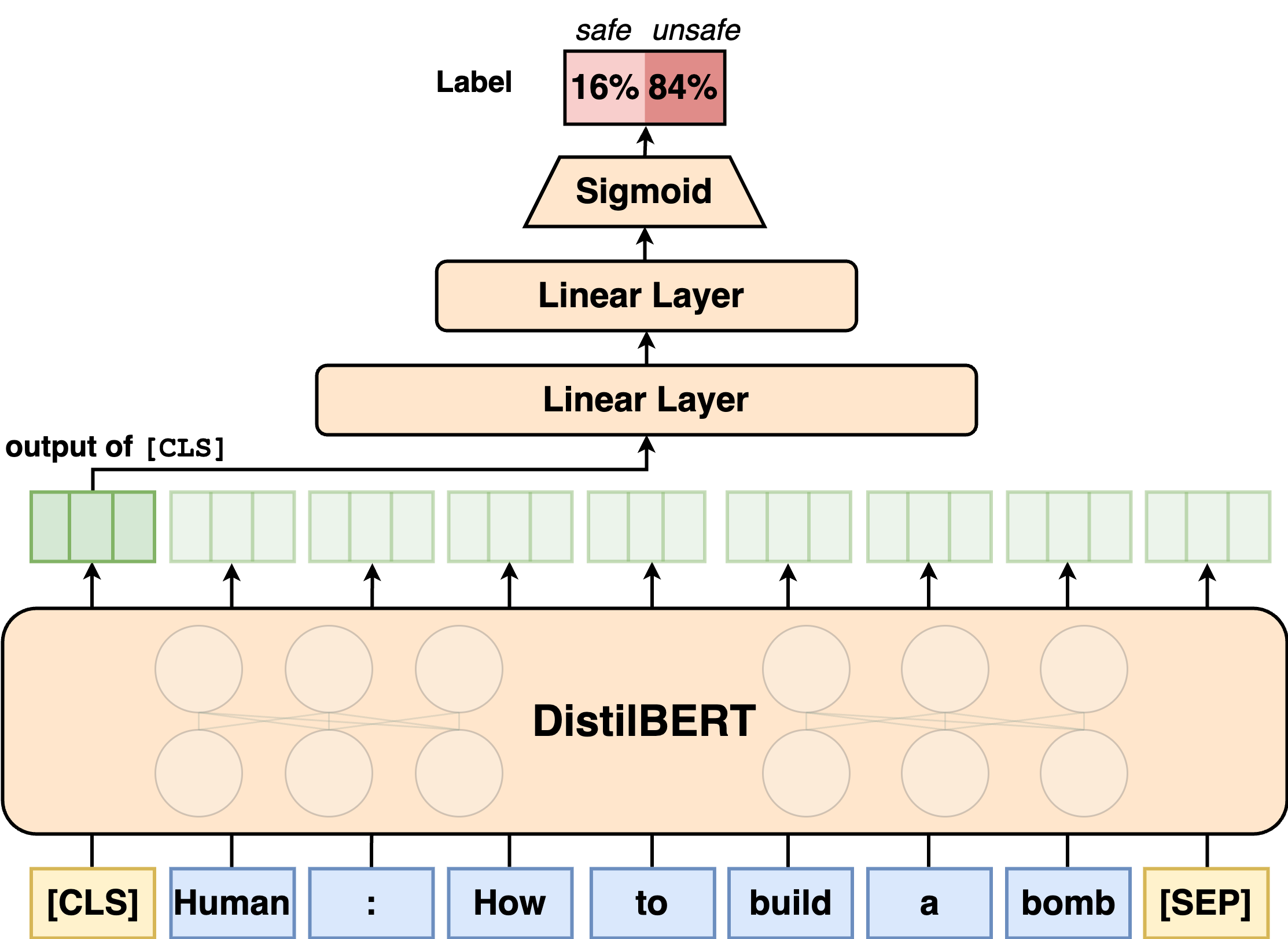
技术框架:APS模型的整体架构包括输入层、对抗性提示检测模块和输出层。首先,输入层接收文本数据,随后通过对抗性提示检测模块进行处理,最后输出分类结果。BAND数据集则用于训练和验证模型的有效性。
关键创新:APS模型的主要创新在于其轻量级设计和对抗性提示的高效检测能力,与传统安全分类器相比,显著提高了对抗性攻击的抵抗力。
关键设计:在模型设计中,采用了特定的损失函数以优化对抗性提示的检测,同时在网络结构上进行了调整,以提高模型的整体性能和适应性。
🖼️ 关键图片
📊 实验亮点
实验结果表明,APS模型在对抗性攻击下的成功率降低了多达60%,显著优于现有的安全分类器。这一成果展示了APS在提高大语言模型安全性方面的有效性,为未来的对话代理系统提供了新的解决方案。
🎯 应用场景
该研究的潜在应用领域包括智能对话系统、社交媒体内容审核和自动化客服等。通过增强大语言模型的安全性,能够有效降低有害内容的生成风险,提高用户体验和信任度。未来,该技术有望在更广泛的人工智能应用中发挥重要作用。
📄 摘要(原文)
Large Language Models' safety remains a critical concern due to their vulnerability to adversarial attacks, which can prompt these systems to produce harmful responses. In the heart of these systems lies a safety classifier, a computational model trained to discern and mitigate potentially harmful, offensive, or unethical outputs. However, contemporary safety classifiers, despite their potential, often fail when exposed to inputs infused with adversarial noise. In response, our study introduces the Adversarial Prompt Shield (APS), a lightweight model that excels in detection accuracy and demonstrates resilience against adversarial prompts. Additionally, we propose novel strategies for autonomously generating adversarial training datasets, named Bot Adversarial Noisy Dialogue (BAND) datasets. These datasets are designed to fortify the safety classifier's robustness, and we investigate the consequences of incorporating adversarial examples into the training process. Through evaluations involving Large Language Models, we demonstrate that our classifier has the potential to decrease the attack success rate resulting from adversarial attacks by up to 60%. This advancement paves the way for the next generation of more reliable and resilient conversational agents.