On the Automatic Generation and Simplification of Children's Stories
作者: Maria Valentini, Jennifer Weber, Jesus Salcido, Téa Wright, Eliana Colunga, Katharina Kann
分类: cs.CL
发布日期: 2023-10-27
备注: Accepted to EMNLP 2023 (main conference)
💡 一句话要点
提出儿童故事自动生成与简化的新方法
🎯 匹配领域: 支柱九:具身大模型 (Embodied Foundation Models)
关键词: 儿童故事生成 词汇简化 大型语言模型 教育技术 文本生成
📋 核心要点
- 现有的语言模型在生成儿童故事时无法有效控制词汇的复杂性,导致生成的文本不适合年轻读者。
- 论文提出了一种新的方法,通过开发儿童导向的词汇简化数据集,来提高词汇简化模型在儿童故事生成中的表现。
- 实验结果显示,经过微调的词汇简化模型在儿童导向数据集上的表现显著提升,能够更好地满足儿童的阅读需求。
📝 摘要(中文)
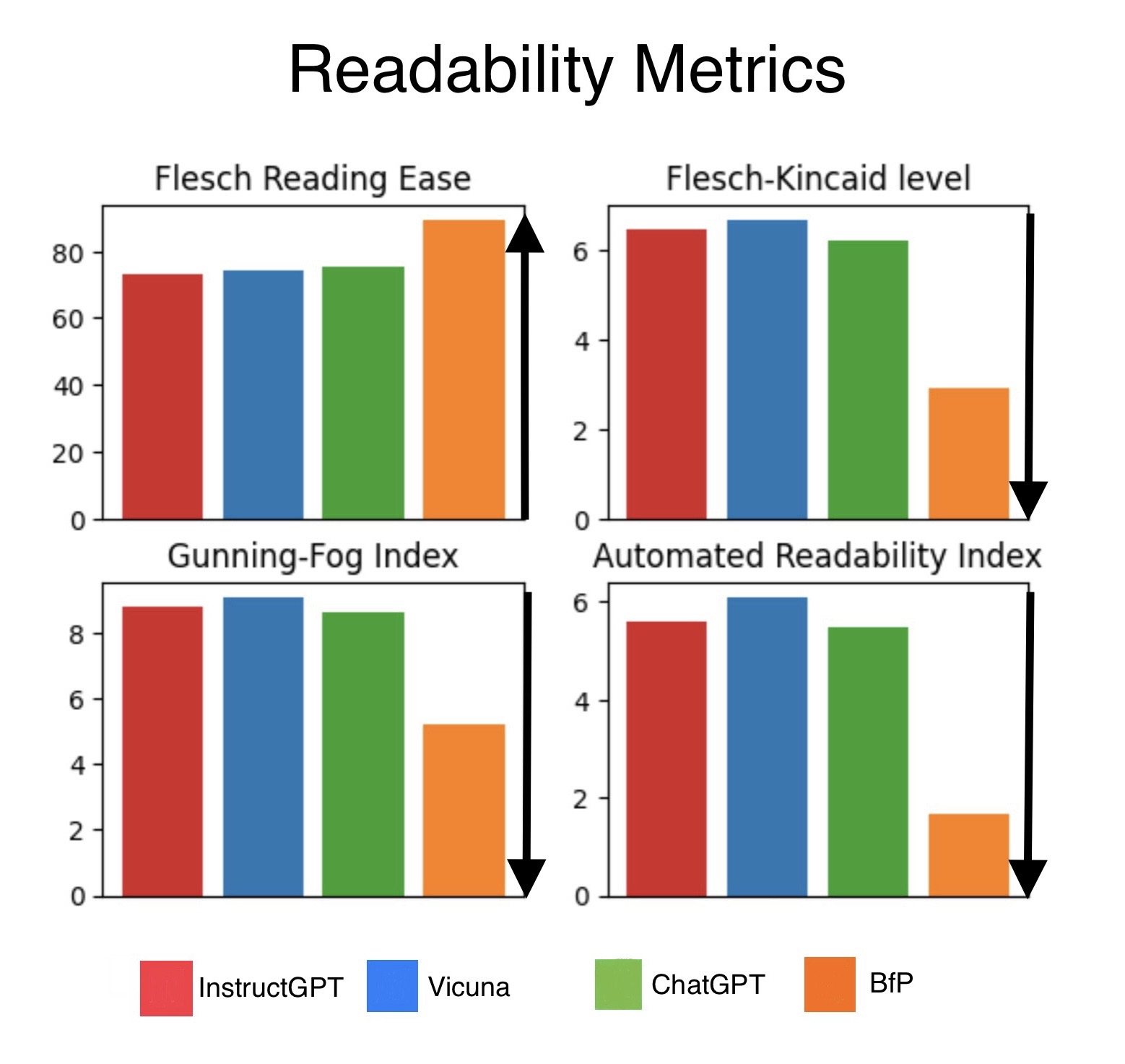
随着大型语言模型(LLMs)的进步,自动生成儿童教育材料的概念变得愈加现实。本文首先考察了多种流行LLMs生成适合儿童的故事的能力,发现尽管LLMs的能力在增长,但它们尚未能将词汇限制在适合年轻年龄段的水平。其次,本文探索了最先进的词汇简化模型在儿童故事领域的泛化能力,并开发了一个儿童导向的词汇简化数据集,以测试这些模型的有效性。研究表明,尽管当前表现最强的词汇简化模型在儿童材料上表现不佳,但经过适当的微调,某些模型在儿童导向数据上能够模仿或甚至提升其性能。
🔬 方法详解
问题定义:本文旨在解决当前大型语言模型在生成儿童故事时无法有效控制词汇复杂性的问题。现有方法在处理儿童教育材料时,往往无法满足适龄读者的需求,导致生成文本的可读性不足。
核心思路:论文的核心思路是通过构建一个儿童导向的词汇简化数据集,来测试和改进现有的词汇简化模型,使其能够更好地适应儿童故事的生成需求。这样的设计旨在提升模型在特定领域的泛化能力。
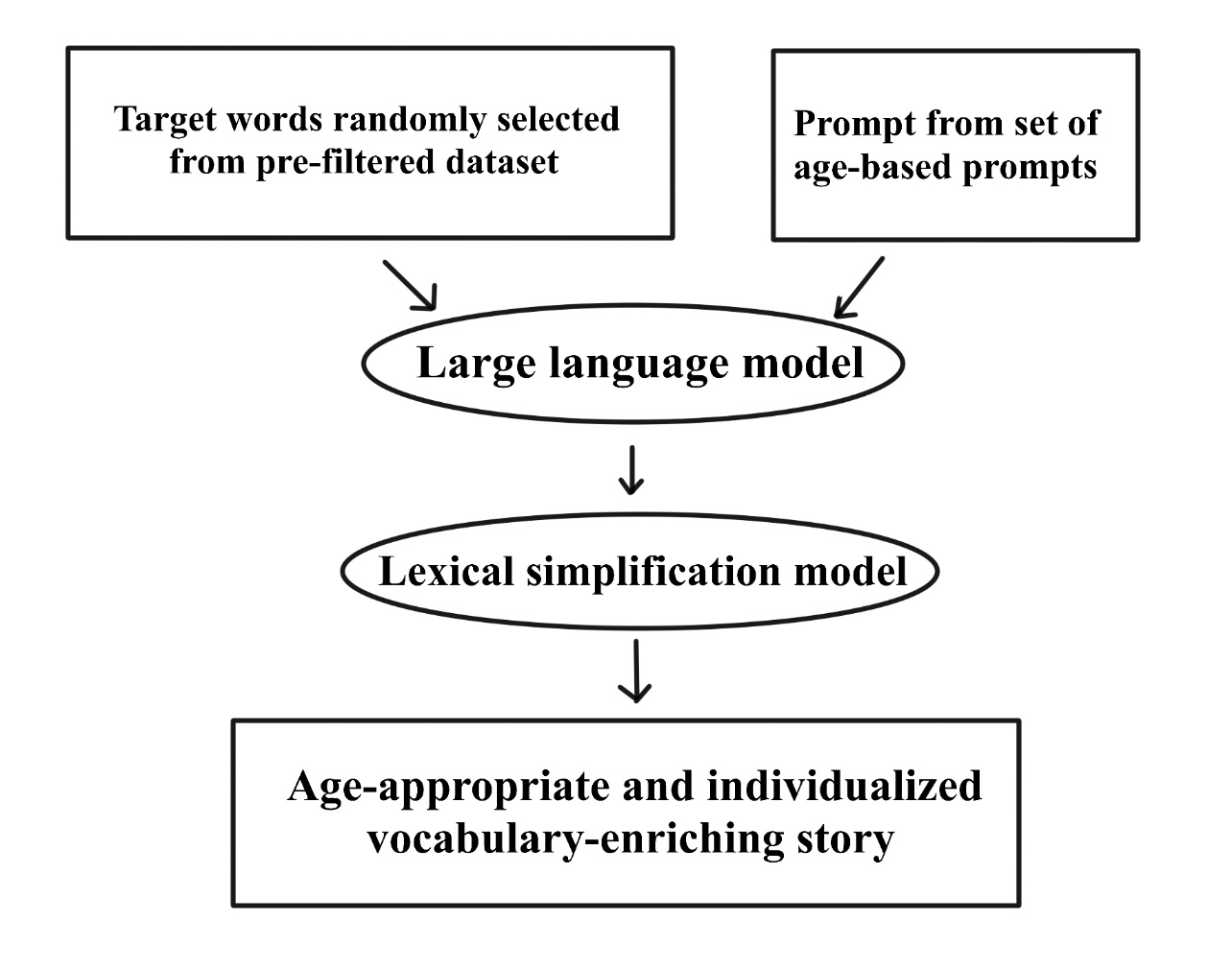
技术框架:整体架构包括两个主要阶段:首先,使用大型语言模型生成儿童故事;其次,应用词汇简化模型对生成的故事进行简化处理。数据集的构建则是通过从生成的故事中提取儿童导向的简化实例。
关键创新:最重要的技术创新点在于构建了一个专门针对儿童故事的词汇简化数据集,并通过微调现有模型来提升其在儿童文本生成中的表现。这与传统的通用简化模型形成了鲜明对比。
关键设计:在模型微调过程中,采用了特定的损失函数来优化模型在儿童导向数据集上的表现,同时调整了模型的超参数,以确保其能够有效地处理儿童故事中的词汇简化任务。
🖼️ 关键图片
📊 实验亮点
实验结果表明,经过微调的词汇简化模型在儿童导向数据集上的表现显著提升,能够在词汇复杂性控制上达到更好的效果。具体而言,某些模型在儿童文本上的性能提升幅度超过了20%,显示出良好的适应性和有效性。
🎯 应用场景
该研究的潜在应用领域包括教育技术、儿童文学创作以及语言学习工具。通过自动生成和简化儿童故事,可以为教育工作者和家长提供更为丰富和适龄的阅读材料,促进儿童的语言发展和阅读兴趣。未来,该方法还可能扩展到其他类型的文本生成和简化任务中。
📄 摘要(原文)
With recent advances in large language models (LLMs), the concept of automatically generating children's educational materials has become increasingly realistic. Working toward the goal of age-appropriate simplicity in generated educational texts, we first examine the ability of several popular LLMs to generate stories with properly adjusted lexical and readability levels. We find that, in spite of the growing capabilities of LLMs, they do not yet possess the ability to limit their vocabulary to levels appropriate for younger age groups. As a second experiment, we explore the ability of state-of-the-art lexical simplification models to generalize to the domain of children's stories and, thus, create an efficient pipeline for their automatic generation. In order to test these models, we develop a dataset of child-directed lexical simplification instances, with examples taken from the LLM-generated stories in our first experiment. We find that, while the strongest-performing current lexical simplification models do not perform as well on material designed for children due to their reliance on large language models behind the scenes, some models that still achieve fairly strong results on general data can mimic or even improve their performance on children-directed data with proper fine-tuning, which we conduct using our newly created child-directed simplification dataset.