An Open Source Data Contamination Report for Large Language Models
作者: Yucheng Li, Frank Guerin, Chenghua Lin
分类: cs.CL, cs.AI
发布日期: 2023-10-26 (更新: 2024-01-29)
💡 一句话要点
提出开放源代码数据污染报告以解决大语言模型评估问题
🎯 匹配领域: 支柱九:具身大模型 (Embodied Foundation Models)
关键词: 数据污染 大语言模型 模型评估 开放源代码 污染分析 性能提升 透明性
📋 核心要点
- 核心问题:现有的大语言模型评估方法普遍缺乏透明性,污染分析往往由内部开发者进行,导致结果的可靠性受到质疑。
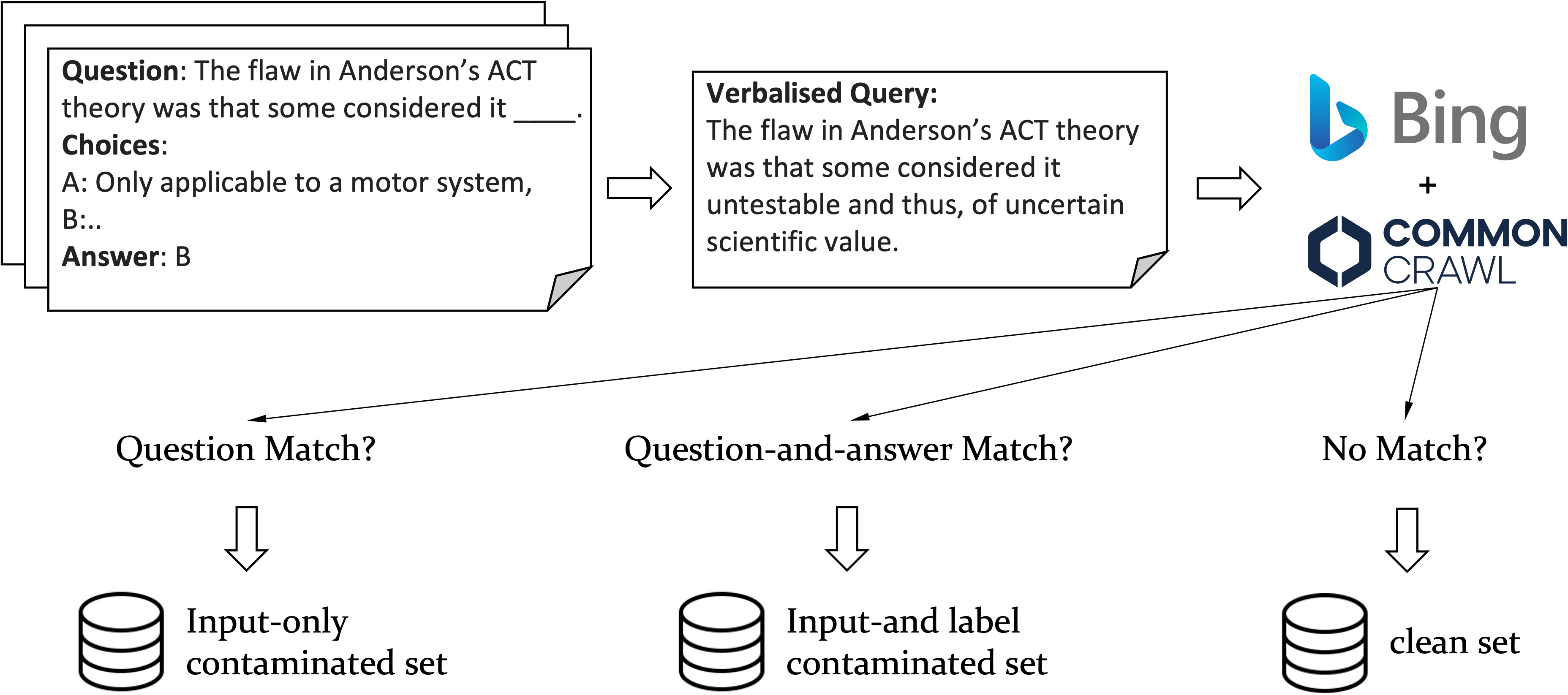
- 方法要点:本文提出了一个开放源代码的污染分析管道,允许研究者对自定义数据和模型进行全面的污染分析。
- 实验或效果:实验结果显示,污染水平在不同基准上变化显著,且较大模型在污染测试集上表现出更大的优势。
📝 摘要(中文)
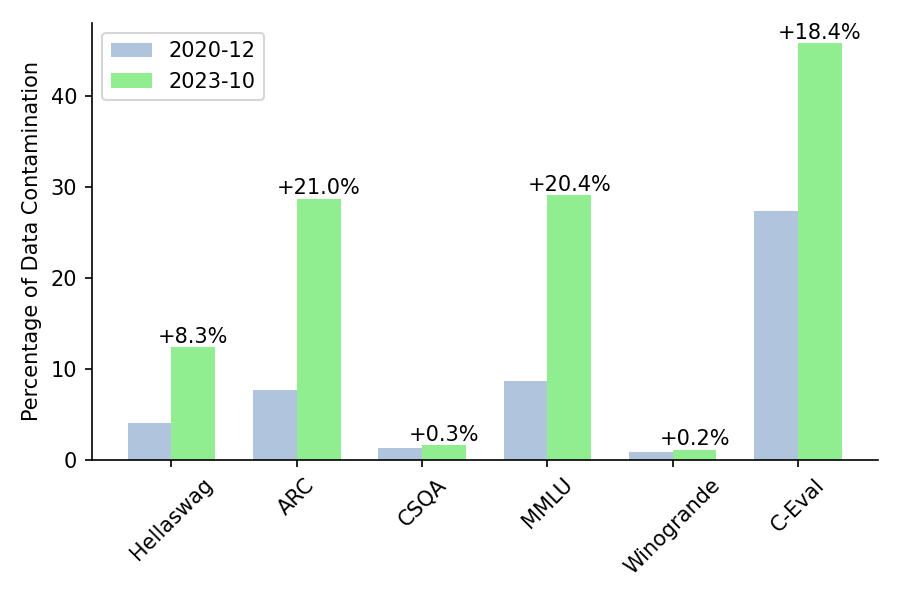
随着大语言模型的普及,模型评估中的数据污染问题日益严重。这种污染使模型通过记忆而非真实能力来“作弊”。因此,污染分析成为可靠模型评估的重要组成部分。然而,现有的污染分析通常由模型开发者内部进行,缺乏透明性和完整性。本文为15个流行的大语言模型在六个多项选择问答基准上提供了广泛的数据污染报告,并引入了一个开放源代码的管道,允许社区对定制数据和模型进行污染分析。实验结果显示,不同基准的污染水平从1%到45%不等,且污染程度随时间迅速增加。
🔬 方法详解
问题定义:本文旨在解决大语言模型评估中的数据污染问题。现有方法通常缺乏透明度,污染分析的结果不够全面,影响了模型评估的可靠性。
核心思路:通过引入一个开放源代码的污染分析管道,本文允许社区对不同数据集和模型进行自定义的污染分析,从而提高评估的透明性和准确性。
技术框架:整体架构包括数据收集、污染检测、结果分析等主要模块。首先收集不同基准的数据,然后通过特定算法检测数据污染,最后对结果进行分析和可视化。
关键创新:本文的主要创新在于提供了一个开放源代码的污染分析工具,打破了以往仅限于内部开发者的分析方式,使得研究者能够独立验证模型的评估结果。
关键设计:在技术细节上,本文设计了多种污染检测算法,并对不同模型的性能进行了详细的对比分析,确保结果的准确性和可靠性。具体参数设置和损失函数的选择也经过精心设计,以适应不同的评估需求。
🖼️ 关键图片
📊 实验亮点
实验结果显示,污染水平在不同基准上变化显著,污染程度从1%到45%不等。特别是在C-Eval和Hellaswag基准上,污染数据导致模型准确率提升高达14%和7%,而在MMLU基准上仅有微小提升,表明不同基准对污染的敏感性差异。
🎯 应用场景
该研究的潜在应用领域包括大语言模型的开发、评估和优化,尤其是在教育、医疗和客户服务等需要高可靠性的场景中。通过提供透明的污染分析,研究者和开发者可以更好地理解模型的性能,进而提升模型的实际应用价值。
📄 摘要(原文)
Data contamination in model evaluation has become increasingly prevalent with the growing popularity of large language models. It allows models to "cheat" via memorisation instead of displaying true capabilities. Therefore, contamination analysis has become an crucial part of reliable model evaluation to validate results. However, existing contamination analysis is usually conducted internally by large language model developers and often lacks transparency and completeness. This paper presents an extensive data contamination report for over 15 popular large language models across six popular multiple-choice QA benchmarks. We also introduce an open-source pipeline that enables the community to perform contamination analysis on customised data and models. Our experiments reveal varying contamination levels ranging from 1\% to 45\% across benchmarks, with the contamination degree increasing rapidly over time. Performance analysis of large language models indicates that data contamination does not necessarily lead to increased model metrics: while significant accuracy boosts of up to 14\% and 7\% are observed on contaminated C-Eval and Hellaswag benchmarks, only a minimal increase is noted on contaminated MMLU. We also find larger models seem able to gain more advantages than smaller models on contaminated test sets.