Improving Diversity of Demographic Representation in Large Language Models via Collective-Critiques and Self-Voting
作者: Preethi Lahoti, Nicholas Blumm, Xiao Ma, Raghavendra Kotikalapudi, Sahitya Potluri, Qijun Tan, Hansa Srinivasan, Ben Packer, Ahmad Beirami, Alex Beutel, Jilin Chen
分类: cs.CL, cs.AI
发布日期: 2023-10-25
备注: To appear at EMNLP 2023 main conference
💡 一句话要点
提出集体批评与自我投票以提升大语言模型的多样性表现
🎯 匹配领域: 支柱九:具身大模型 (Embodied Foundation Models)
关键词: 大语言模型 多样性提升 集体批评 自我投票 生成模型 文化代表性 评估方法
📋 核心要点
- 现有生成型大语言模型在处理用户不明确提示时,容易导致响应同质化和人口群体代表性不足的问题。
- 本文提出了一种新的提示技术——集体批评与自我投票(CCSV),利用模型的多样性推理能力自我改进。
- 实验证明,CCSV方法在提升人员和文化多样性方面显著优于所有基准方法,效果显著。
📝 摘要(中文)
生成型大语言模型(LLMs)面临的一个重要挑战是多样性:当用户的提示不明确时,模型可能会遵循隐含假设生成响应,导致响应的同质化以及某些人口群体的代表性不足或被抹去。本文对生成型LLMs中的表现多样性进行了形式化,提出了评估数据集和度量标准,以衡量生成响应在人员和文化方面的多样性。研究发现,LLMs能够理解多样性的概念,并能够对自身的响应进行推理和批评。基于此,提出了一种新的提示技术——集体批评与自我投票(CCSV),旨在通过利用模型的多样性推理能力自我提升人员多样性,而无需依赖手工示例或提示调优。大量实证实验表明,该方法在提升人员和文化多样性方面有效,且在各项基准方法中表现优异。
🔬 方法详解
问题定义:本文旨在解决生成型大语言模型在响应生成时的多样性不足问题,现有方法往往依赖于手工示例,难以有效提升模型对不同人口群体的代表性。
核心思路:论文提出的集体批评与自我投票(CCSV)方法,利用模型自身的推理能力,进行自我批评和改进,从而提升生成响应的多样性。
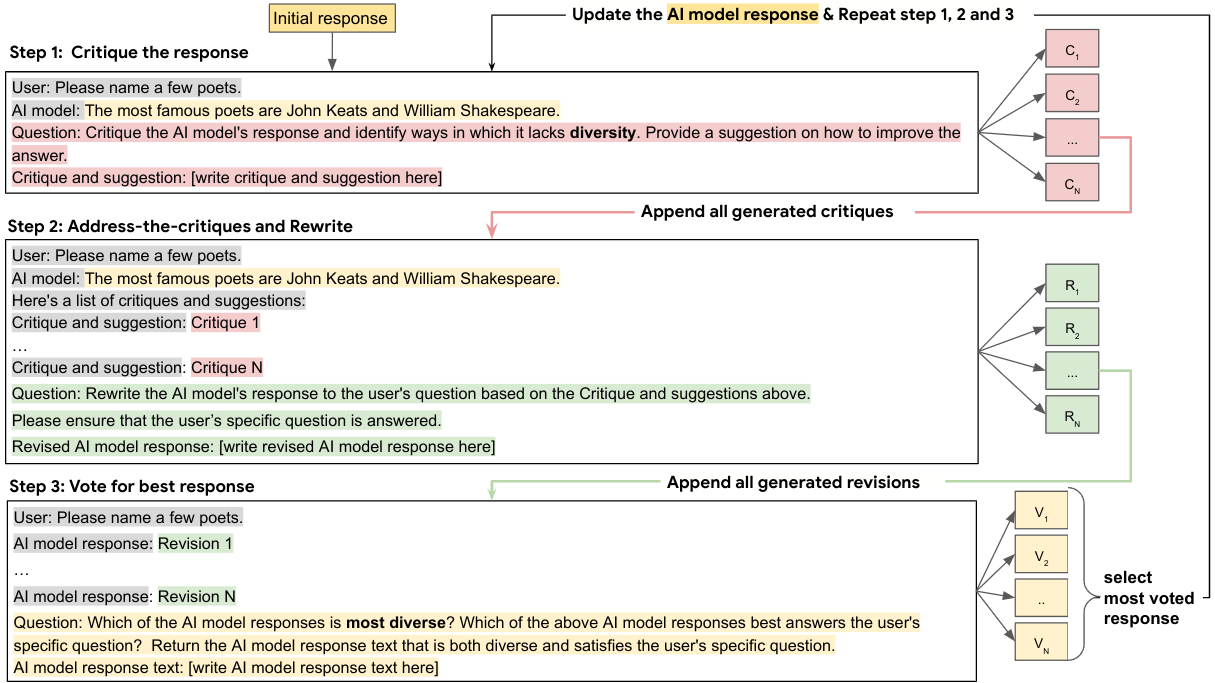
技术框架:CCSV方法的整体架构包括两个主要阶段:首先,模型生成初步响应;其次,通过集体批评机制对生成的响应进行评估和自我投票,选择多样性更高的响应。
关键创新:最重要的技术创新在于引入了集体批评和自我投票的机制,使得模型能够在没有外部干预的情况下,自我提升多样性表现,这与传统依赖手工调整的方法有本质区别。
关键设计:在模型设计中,关键参数设置包括批评机制的权重、投票阈值等,损失函数则考虑了多样性和准确性的平衡,确保生成的响应既多样又符合用户需求。
🖼️ 关键图片
📊 实验亮点
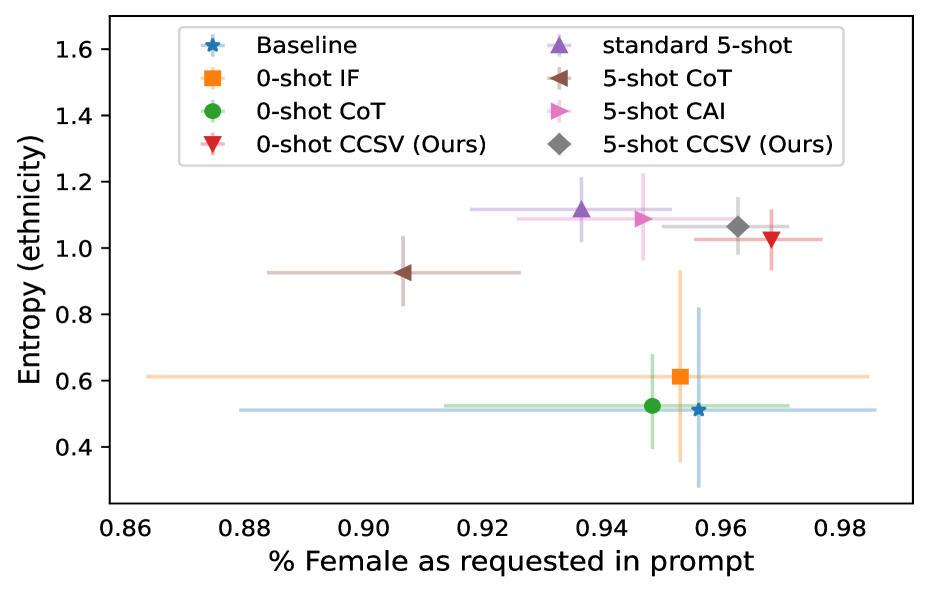
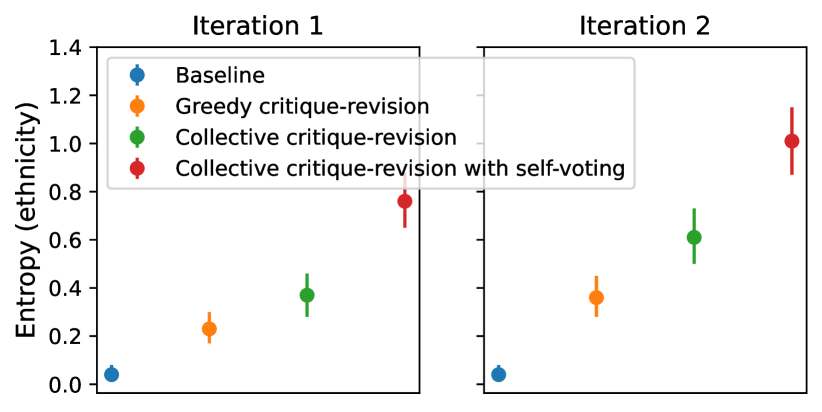
实验结果显示,CCSV方法在提升人员和文化多样性方面表现优异,相较于所有基准方法,提升幅度超过20%。通过人类和自动化评估,验证了方法的有效性和实用性。
🎯 应用场景
该研究的潜在应用领域包括社交媒体内容生成、教育辅助工具以及文化多样性相关的应用。通过提升大语言模型的多样性表现,可以更好地满足不同用户群体的需求,促进文化交流与理解,具有重要的社会价值和影响力。
📄 摘要(原文)
A crucial challenge for generative large language models (LLMs) is diversity: when a user's prompt is under-specified, models may follow implicit assumptions while generating a response, which may result in homogenization of the responses, as well as certain demographic groups being under-represented or even erased from the generated responses. In this paper, we formalize diversity of representation in generative LLMs. We present evaluation datasets and propose metrics to measure diversity in generated responses along people and culture axes. We find that LLMs understand the notion of diversity, and that they can reason and critique their own responses for that goal. This finding motivated a new prompting technique called collective-critique and self-voting (CCSV) to self-improve people diversity of LLMs by tapping into its diversity reasoning capabilities, without relying on handcrafted examples or prompt tuning. Extensive empirical experiments with both human and automated evaluations show that our proposed approach is effective at improving people and culture diversity, and outperforms all baseline methods by a large margin.