Evaluating Spatial Understanding of Large Language Models
作者: Yutaro Yamada, Yihan Bao, Andrew K. Lampinen, Jungo Kasai, Ilker Yildirim
分类: cs.CL, cs.AI
发布日期: 2023-10-23 (更新: 2024-04-13)
备注: Accepted to TMLR 2024. Our code and data are available at https://github.com/runopti/SpatialEvalLLM, https://huggingface.co/datasets/yyamada/SpatialEvalLLM
💡 一句话要点
评估大型语言模型的空间理解能力
🎯 匹配领域: 支柱七:动作重定向 (Motion Retargeting) 支柱九:具身大模型 (Embodied Foundation Models)
关键词: 大型语言模型 空间理解 自然语言处理 导航任务 错误分析
📋 核心要点
- 现有大型语言模型在空间关系理解上存在显著差异,且其表现受多种因素影响。
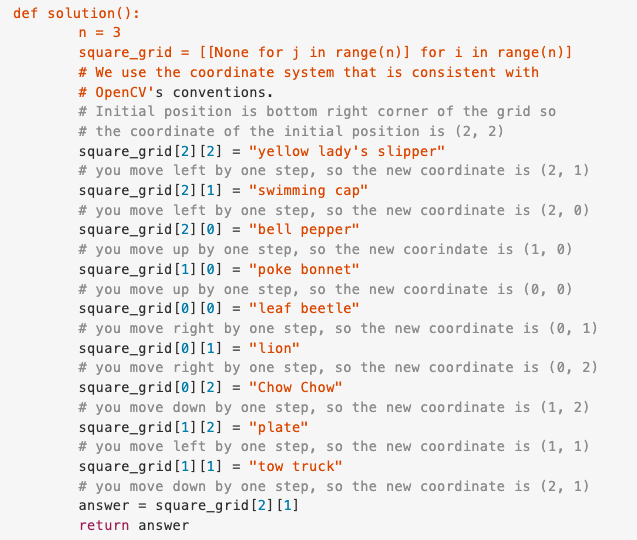
- 本文设计自然语言导航任务,评估LLM在空间结构表示和推理方面的能力,特别关注不同空间结构的表现。
- 实验结果显示,LLM在不同空间结构上的表现存在显著变异,且错误分析揭示了空间和非空间因素的影响。
📝 摘要(中文)
大型语言模型(LLMs)在多种任务中展现出显著的能力。尽管这些模型在训练中仅接触文本,近期研究表明LLM的表示隐含地捕捉了基础概念的某些方面。本文探讨了LLM对空间关系这一重要基础知识的表示能力,设计了自然语言导航任务,评估了GPT-3.5-turbo、GPT-4和Llama2系列模型在空间结构表示和推理方面的能力。实验结果显示,LLM在不同空间结构(如方形、六边形、三角形网格、环和树)上的表现存在显著差异。错误分析表明,LLM的错误反映了空间和非空间因素,表明LLM在捕捉空间结构方面还有提升空间。
🔬 方法详解
问题定义:本文旨在评估大型语言模型在空间关系理解方面的能力,现有方法未能充分揭示LLM在空间结构推理中的表现差异和影响因素。
核心思路:通过设计自然语言导航任务,评估LLM(如GPT-3.5-turbo、GPT-4和Llama2系列)在不同空间结构下的表现,探讨其隐含的空间知识捕捉能力。
技术框架:研究首先设计了多种空间结构的导航任务,然后对LLM的输出进行评估和错误分析,主要模块包括任务设计、模型评估和错误分析。
关键创新:本研究的创新在于系统性地评估LLM在空间关系理解上的表现,揭示了其在不同空间结构下的表现差异,填补了相关研究的空白。
关键设计:在任务设计中,采用了多种空间结构(如方形、六边形、三角形网格等),并通过详细的错误分析,识别出影响LLM表现的空间和非空间因素。
🖼️ 关键图片

📊 实验亮点
实验结果显示,LLM在不同空间结构上的表现存在显著差异,尤其是在方形和六边形网格中表现较好,而在树形结构中表现较差。错误分析揭示了空间和非空间因素对模型表现的影响,为未来的改进提供了方向。
🎯 应用场景
该研究的潜在应用领域包括智能导航系统、机器人路径规划和增强现实等。通过提升LLM对空间关系的理解能力,可以增强其在复杂环境中的决策能力,推动相关技术的发展与应用。
📄 摘要(原文)
Large language models (LLMs) show remarkable capabilities across a variety of tasks. Despite the models only seeing text in training, several recent studies suggest that LLM representations implicitly capture aspects of the underlying grounded concepts. Here, we explore LLM representations of a particularly salient kind of grounded knowledge -- spatial relationships. We design natural-language navigation tasks and evaluate the ability of LLMs, in particular GPT-3.5-turbo, GPT-4, and Llama2 series models, to represent and reason about spatial structures. These tasks reveal substantial variability in LLM performance across different spatial structures, including square, hexagonal, and triangular grids, rings, and trees. In extensive error analysis, we find that LLMs' mistakes reflect both spatial and non-spatial factors. These findings suggest that LLMs appear to capture certain aspects of spatial structure implicitly, but room for improvement remains.