Data Contamination Through the Lens of Time
作者: Manley Roberts, Himanshu Thakur, Christine Herlihy, Colin White, Samuel Dooley
分类: cs.CL
发布日期: 2023-10-16
💡 一句话要点
通过时间视角分析大语言模型的数据污染问题
🎯 匹配领域: 支柱九:具身大模型 (Embodied Foundation Models)
关键词: 数据污染 大型语言模型 评估方法 纵向分析 开源数据集
📋 核心要点
- 核心问题:现有方法在评估大型语言模型时,难以有效测量和缓解数据污染问题。
- 方法要点:通过分析GPT模型的训练截止时间,进行纵向研究,揭示数据污染的影响。
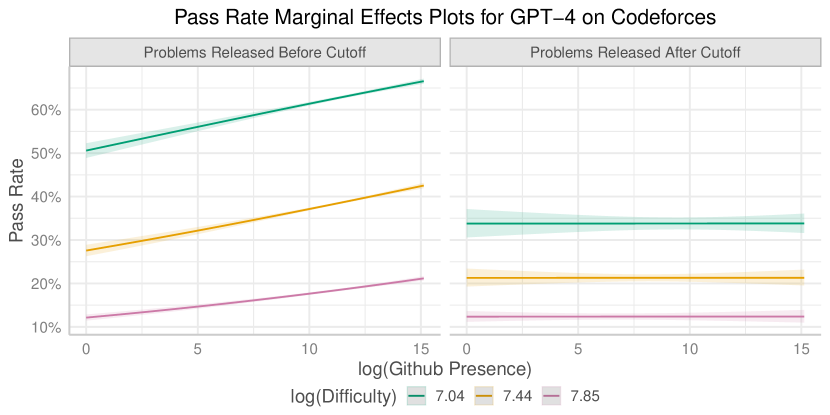
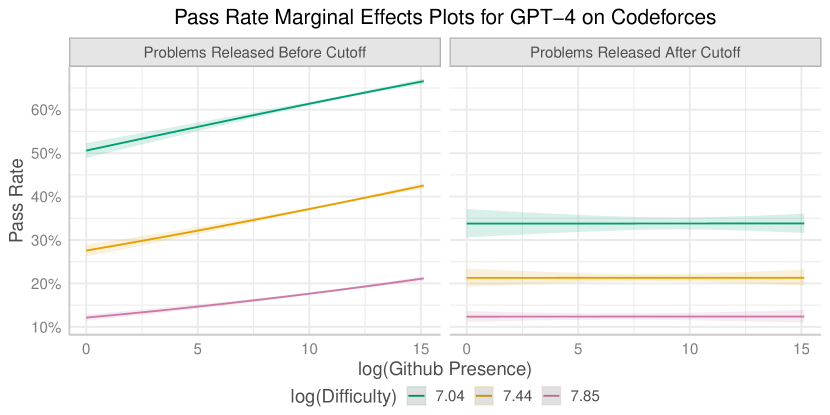
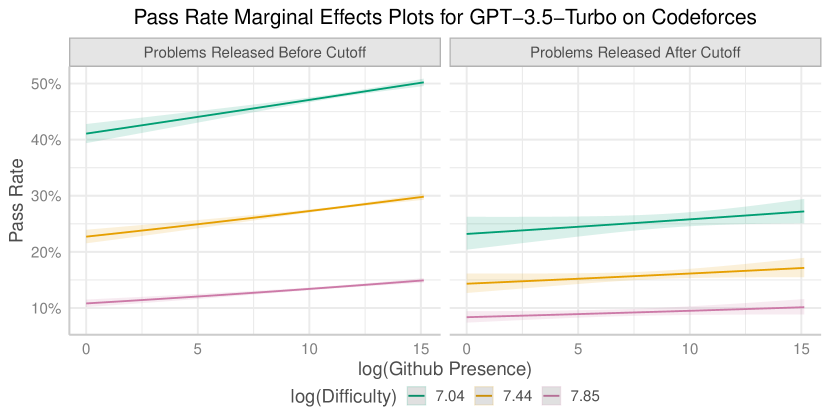
- 实验或效果:发现LLM的通过率与GitHub流行度和发布日期之间存在显著的统计趋势,提供了污染的证据。
📝 摘要(中文)
近年来关于大型语言模型(LLMs)卓越能力的论断,往往依赖于对公开基准的评估。然而,由于LLMs训练于互联网的广泛数据,这种做法引发了数据污染的担忧,即在评估中使用了明确或隐含包含在训练数据中的示例。数据污染的测量和缓解一直是个难题。本文首次对LLMs中的数据污染进行了全面的纵向分析,利用GPT模型的训练截止时间的自然实验,考察了随时间发布的基准。我们分析了两个代码/数学问题解决数据集,发现LLM的通过率与GitHub流行度和发布日期之间存在显著的统计趋势,提供了污染的有力证据。通过开源我们的数据集、原始结果和评估框架,我们的工作为现代模型中数据污染的严格分析铺平了道路。最后,我们讨论了在LLMs时代发布基准的最佳实践和未来步骤。
🔬 方法详解
问题定义:本文旨在解决大型语言模型(LLMs)在评估时可能面临的数据污染问题。现有方法在测量和缓解数据污染方面存在显著不足,尤其是在使用公共基准进行评估时,难以区分训练数据与评估数据的重叠。
核心思路:论文的核心思路是利用GPT模型的训练截止时间作为自然实验,分析随时间发布的基准数据,从而揭示数据污染的影响。这种方法允许研究者观察到不同时间点的模型表现与数据集流行度之间的关系。
技术框架:整体架构包括数据集的选择(Codeforces和Project Euler),数据的收集与处理,统计分析以及结果的可视化。研究通过对比不同时间点的模型通过率与数据集流行度,揭示潜在的数据污染趋势。
关键创新:最重要的技术创新在于首次进行纵向分析,利用训练截止时间的自然实验来评估数据污染的影响。这种方法与传统的静态评估方法本质上不同,提供了动态视角。
关键设计:在实验设计中,关键参数包括数据集的选择标准、统计分析方法(如回归分析)以及评估框架的构建。研究还开源了数据集和结果,促进了后续研究的开展。
🖼️ 关键图片
📊 实验亮点
实验结果显示,LLM的通过率与GitHub流行度和发布日期之间存在显著的统计相关性,提供了数据污染的强有力证据。这一发现为理解和缓解数据污染问题提供了新的视角,推动了对模型评估方法的反思与改进。
🎯 应用场景
该研究的潜在应用领域包括大型语言模型的评估与优化、数据集的构建与管理,以及人工智能系统的透明性和可解释性。通过揭示数据污染的影响,研究为改进模型训练和评估提供了重要参考,未来可能推动更为严格的模型评估标准的建立。
📄 摘要(原文)
Recent claims about the impressive abilities of large language models (LLMs) are often supported by evaluating publicly available benchmarks. Since LLMs train on wide swaths of the internet, this practice raises concerns of data contamination, i.e., evaluating on examples that are explicitly or implicitly included in the training data. Data contamination remains notoriously challenging to measure and mitigate, even with partial attempts like controlled experimentation of training data, canary strings, or embedding similarities. In this work, we conduct the first thorough longitudinal analysis of data contamination in LLMs by using the natural experiment of training cutoffs in GPT models to look at benchmarks released over time. Specifically, we consider two code/mathematical problem-solving datasets, Codeforces and Project Euler, and find statistically significant trends among LLM pass rate vs. GitHub popularity and release date that provide strong evidence of contamination. By open-sourcing our dataset, raw results, and evaluation framework, our work paves the way for rigorous analyses of data contamination in modern models. We conclude with a discussion of best practices and future steps for publicly releasing benchmarks in the age of LLMs that train on webscale data.