Glitter or Gold? Deriving Structured Insights from Sustainability Reports via Large Language Models
作者: Marco Bronzini, Carlo Nicolini, Bruno Lepri, Andrea Passerini, Jacopo Staiano
分类: cs.CL, cs.CE, cs.CY
发布日期: 2023-10-09 (更新: 2024-01-16)
💡 一句话要点
利用大语言模型提取可持续发展报告中的结构化洞察
🎯 匹配领域: 支柱九:具身大模型 (Embodied Foundation Models)
关键词: 大语言模型 信息提取 可持续发展 企业社会责任 增强检索生成 ESG分析 统计分析
📋 核心要点
- 现有的可持续发展报告通常以非结构化形式呈现,难以有效提取和整合信息,影响决策支持。
- 本文提出利用大语言模型和增强检索生成技术,从可持续发展报告中提取结构化的ESG洞察,提升信息处理效率。
- 实验结果显示,提取的ESG主题数量超过500个,且公司间的披露相似性验证了现有文献中的假设,ESG披露对评级影响显著。
📝 摘要(中文)
在过去十年中,多个监管机构开始要求上市公司披露非财务信息,以应对投资者对环境、社会和治理(ESG)问题的关注。可持续发展实践的信息通常以多样化、非结构化的文档形式发布,这使得有效整合数据以获取企业社会责任(CSR)相关洞察成为一项挑战。本文采用大语言模型(LLMs)、上下文学习和增强检索生成(RAG)范式,从公司可持续发展报告中提取与ESG相关的结构化洞察,并利用图形化表示法进行统计分析,发现ESG标准涵盖超过500个主题,且公司在不同区域或行业间的披露存在相似性。通过引入公司属性分析,研究表明ESG披露对公司评级的影响大于其他财务数据。
🔬 方法详解
问题定义:本研究旨在解决如何从多样化和非结构化的可持续发展报告中有效提取和整合ESG相关信息的问题。现有方法在信息提取和分析上存在效率低下和准确性不足的痛点。
核心思路:论文的核心思路是利用大语言模型(LLMs)和增强检索生成(RAG)技术,通过上下文学习提取结构化的ESG洞察,以便为利益相关者提供可操作的数据。
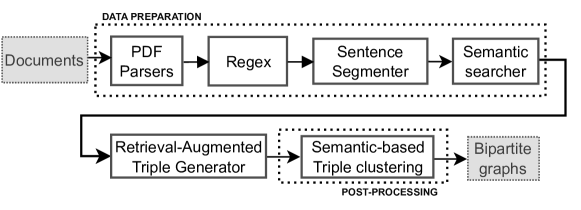
技术框架:整体架构包括信息提取模块、上下文学习模块和图形化表示模块。首先,通过LLMs对可持续发展报告进行分析,然后将提取的信息转化为结构化数据,最后利用图形化工具进行统计分析。
关键创新:最重要的技术创新在于结合了大语言模型与增强检索生成的能力,使得信息提取不仅高效且具有更高的准确性。这一方法与传统的信息提取技术相比,能够处理更复杂的文档结构和多模态信息。
关键设计:在模型设计中,采用了特定的损失函数以优化信息提取的准确性,并通过图形化表示增强了数据的可读性和分析的直观性。
🖼️ 关键图片
📊 实验亮点
实验结果表明,提取的ESG主题数量超过500个,且公司间的披露相似性验证了现有文献中的假设。此外,研究发现ESG披露对公司评级的影响显著,超越了其他财务数据的影响,显示出该方法在实际应用中的有效性。
🎯 应用场景
该研究的潜在应用领域包括企业可持续发展报告的自动化分析、投资决策支持系统以及政策制定中的数据驱动决策。通过提供结构化的ESG洞察,能够帮助投资者和监管机构更好地理解企业的社会责任表现,推动可持续发展目标的实现。
📄 摘要(原文)
Over the last decade, several regulatory bodies have started requiring the disclosure of non-financial information from publicly listed companies, in light of the investors' increasing attention to Environmental, Social, and Governance (ESG) issues. Publicly released information on sustainability practices is often disclosed in diverse, unstructured, and multi-modal documentation. This poses a challenge in efficiently gathering and aligning the data into a unified framework to derive insights related to Corporate Social Responsibility (CSR). Thus, using Information Extraction (IE) methods becomes an intuitive choice for delivering insightful and actionable data to stakeholders. In this study, we employ Large Language Models (LLMs), In-Context Learning, and the Retrieval-Augmented Generation (RAG) paradigm to extract structured insights related to ESG aspects from companies' sustainability reports. We then leverage graph-based representations to conduct statistical analyses concerning the extracted insights. These analyses revealed that ESG criteria cover a wide range of topics, exceeding 500, often beyond those considered in existing categorizations, and are addressed by companies through a variety of initiatives. Moreover, disclosure similarities emerged among companies from the same region or sector, validating ongoing hypotheses in the ESG literature. Lastly, by incorporating additional company attributes into our analyses, we investigated which factors impact the most on companies' ESG ratings, showing that ESG disclosure affects the obtained ratings more than other financial or company data.