Ada-Instruct: Adapting Instruction Generators for Complex Reasoning
作者: Wanyun Cui, Qianle Wang
分类: cs.CL, cs.AI
发布日期: 2023-10-06 (更新: 2024-10-03)
💡 一句话要点
提出Ada-Instruct以解决复杂推理任务中的指令生成问题
🎯 匹配领域: 支柱九:具身大模型 (Embodied Foundation Models)
关键词: 指令生成 复杂推理 微调 大型语言模型 自适应生成器
📋 核心要点
- 现有的Self-Instruct方法在生成复杂指令时存在明显不足,尤其是在指令长度和复杂性方面。
- 论文提出的Ada-Instruct通过对开源LLMs进行微调,仅需十个示例即可生成复杂指令,保持分布一致性。
- 实验证明,Ada-Instruct在多个应用场景中表现出色,能够生成长且复杂的指令,显著提升了指令生成的能力。
📝 摘要(中文)
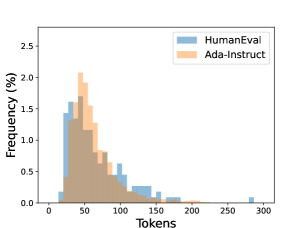
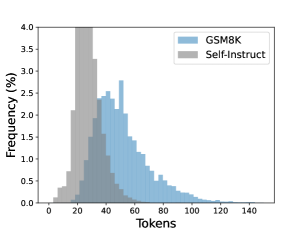
指令增强是释放大型语言模型(LLMs)在下游任务中潜力的关键步骤。现有的Self-Instruct方法主要通过上下文学习从少量初始指令模拟新指令。然而,我们的研究发现这一方法存在严重缺陷:即使使用GPT-4o,Self-Instruct也无法生成长度≥100的复杂指令,而这在代码补全等复杂任务中是必要的。为了解决这一问题,我们的关键见解是,仅通过十个示例对开源LLMs进行微调,可以生成在复杂推理任务中保持分布一致性的复杂指令。我们提出了Ada-Instruct,这是一种通过微调开发的自适应指令生成器。我们在不同应用中实证验证了Ada-Instruct的有效性,结果显示其能够生成长且复杂且分布一致的指令。
🔬 方法详解
问题定义:本论文旨在解决现有Self-Instruct方法在生成复杂指令时的局限性,尤其是指令长度不足和复杂性不够的问题。现有方法在处理复杂任务时,如代码补全,无法生成所需的长指令。
核心思路:论文的核心思路是通过对开源LLMs进行微调,仅使用十个示例即可生成复杂的指令。这种方法能够保持生成指令的分布一致性,从而适应复杂推理任务的需求。
技术框架:Ada-Instruct的整体架构包括数据准备、微调过程和指令生成三个主要模块。首先,通过选择合适的示例构建训练数据集;然后,进行微调以优化模型;最后,利用微调后的模型生成复杂指令。
关键创新:最重要的技术创新点在于通过少量示例实现复杂指令的生成,这与现有方法依赖大量示例和上下文学习的方式有本质区别。Ada-Instruct能够在保持指令质量的同时,显著减少对训练数据的需求。
关键设计:在微调过程中,采用了特定的损失函数以确保生成指令的分布一致性,并对模型的参数设置进行了优化,以提高生成指令的复杂性和长度。
🖼️ 关键图片

📊 实验亮点
实验结果表明,Ada-Instruct在生成复杂指令方面表现优异,相较于传统Self-Instruct方法,生成指令的长度和复杂性有显著提升,具体性能数据未提供,但实验验证了其在多个应用中的有效性。
🎯 应用场景
该研究的潜在应用领域包括代码生成、自然语言处理和智能助手等。通过提高指令生成的复杂性和一致性,Ada-Instruct能够在实际应用中显著提升大型语言模型的性能,推动智能系统在复杂任务中的应用和发展。
📄 摘要(原文)
Instructions augmentation is a crucial step for unleashing the full potential of large language models (LLMs) in downstream tasks. Existing Self-Instruct methods primarily simulate new instructions from a few initial instructions with in-context learning. However, our study identifies a critical flaw in this approach: even with GPT4o, Self-Instruct cannot generate complex instructions of length $\ge 100$, which is necessary in complex tasks such as code completion. To address this issue, our key insight is that fine-tuning open source LLMs with only ten examples can produce complex instructions that maintain distributional consistency for complex reasoning tasks. We introduce Ada-Instruct, an adaptive instruction generator developed through fine-tuning. We empirically validated Ada-Instruct's efficacy across different applications. The results highlight Ada-Instruct's capacity to generate long, intricate, and distributionally consistent instructions.