Adaptive-Solver Framework for Dynamic Strategy Selection in Large Language Model Reasoning
作者: Jianpeng Zhou, Wanjun Zhong, Yanlin Wang, Jiahai Wang
分类: cs.CL, cs.AI
发布日期: 2023-10-01 (更新: 2024-12-23)
备注: Accepted by Information Processing & Management
🔗 代码/项目: GITHUB
💡 一句话要点
提出自适应求解框架以解决大语言模型推理中的策略选择问题
🎯 匹配领域: 支柱九:具身大模型 (Embodied Foundation Models)
关键词: 自适应求解 大语言模型 推理任务 动态策略 计算资源优化 性能提升
📋 核心要点
- 现有大语言模型方法普遍采用固定的求解策略,导致在处理复杂任务时效率低下或性能不佳。
- 本文提出的自适应求解框架能够根据任务复杂性动态调整求解策略,灵活分配计算资源。
- 实验结果显示,该框架在保持性能的同时,显著降低了计算成本,提升了准确率。
📝 摘要(中文)
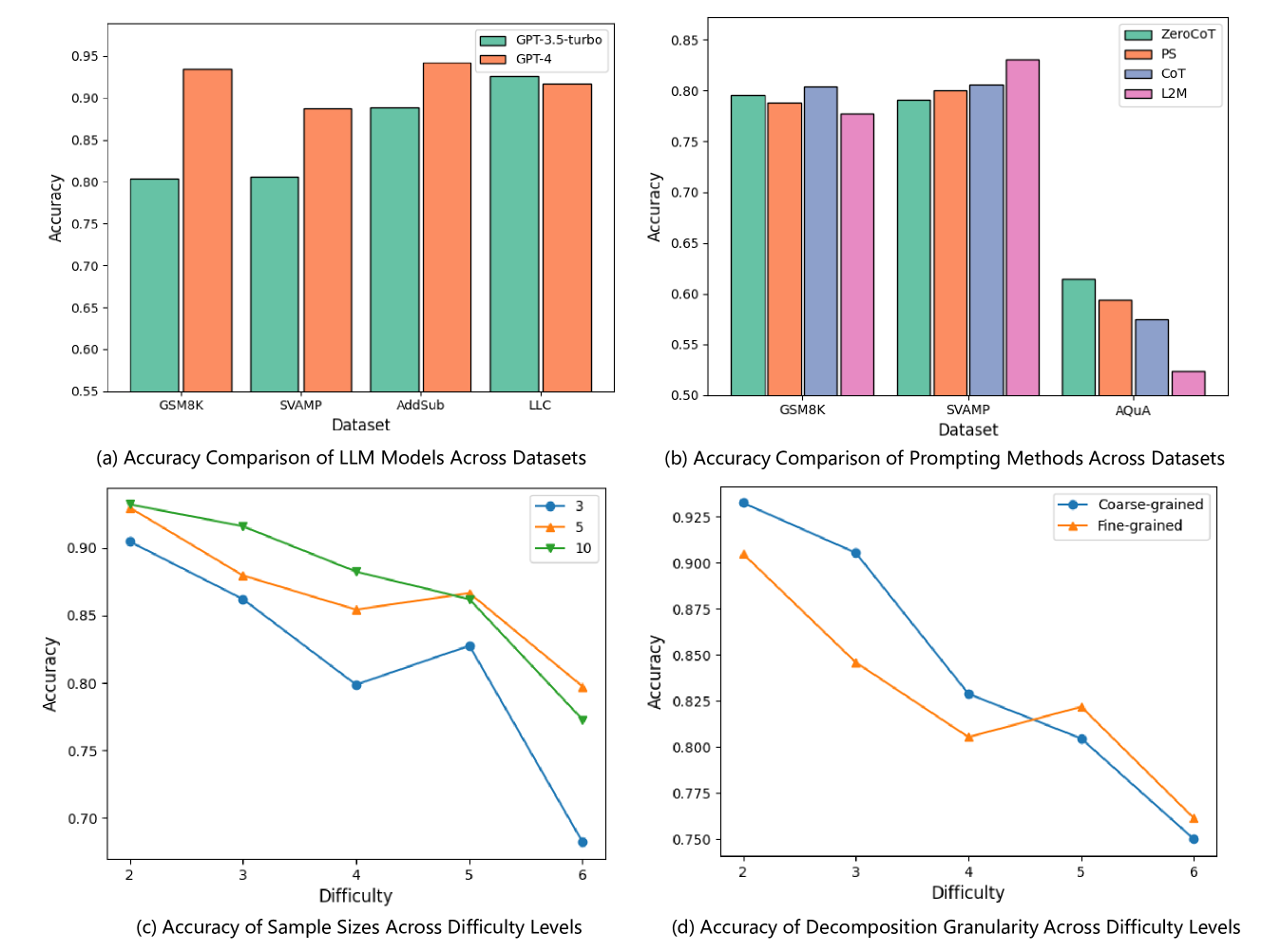
大语言模型(LLMs)在处理推理任务方面表现出色,但现有方法普遍采用一刀切的策略,未能根据任务复杂性灵活调整求解策略。为了解决这一问题,本文提出了自适应求解框架(AS),能够动态调整求解策略以适应不同问题,从而优化计算资源的分配。该框架包含初始评估模块和适应模块,通过多种适应策略的协同作用,显著降低计算消耗并提升性能。实验结果表明,该方法在复杂推理基准上可将API成本降低至85%,同时在相同成本下提高准确率达4.5%。
🔬 方法详解
问题定义:本文旨在解决大语言模型在推理任务中采用固定求解策略所带来的效率低下和性能不佳的问题。现有方法未能根据任务复杂性灵活调整,导致计算资源浪费。
核心思路:提出的自适应求解框架通过动态调整求解策略,能够根据不同问题的复杂性灵活分配计算资源,从而提高效率和准确性。
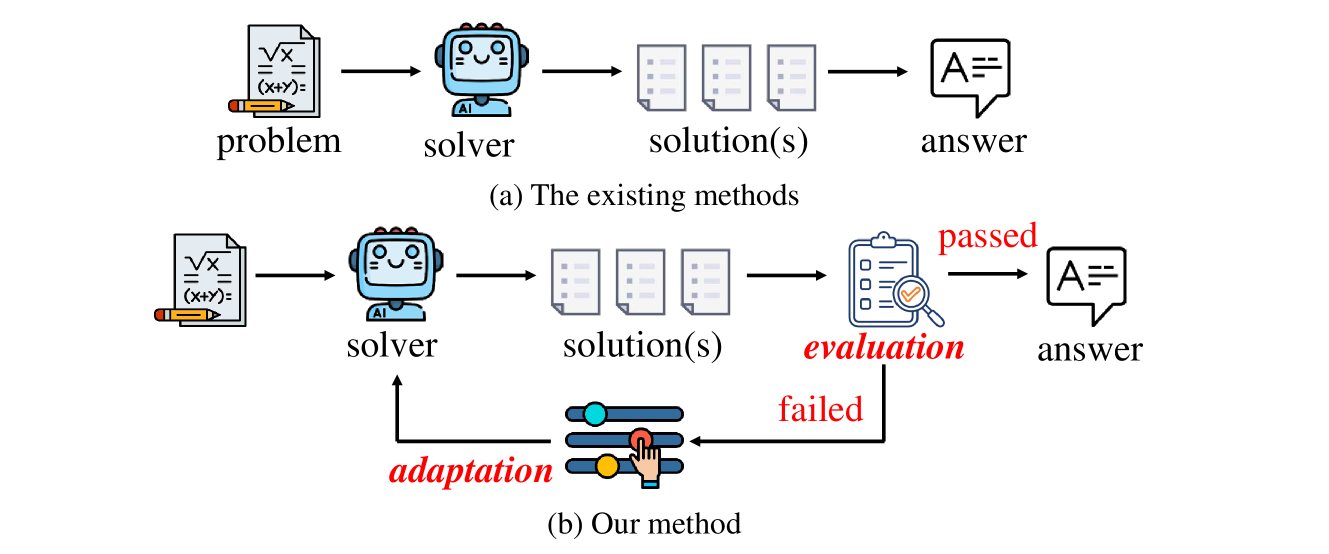
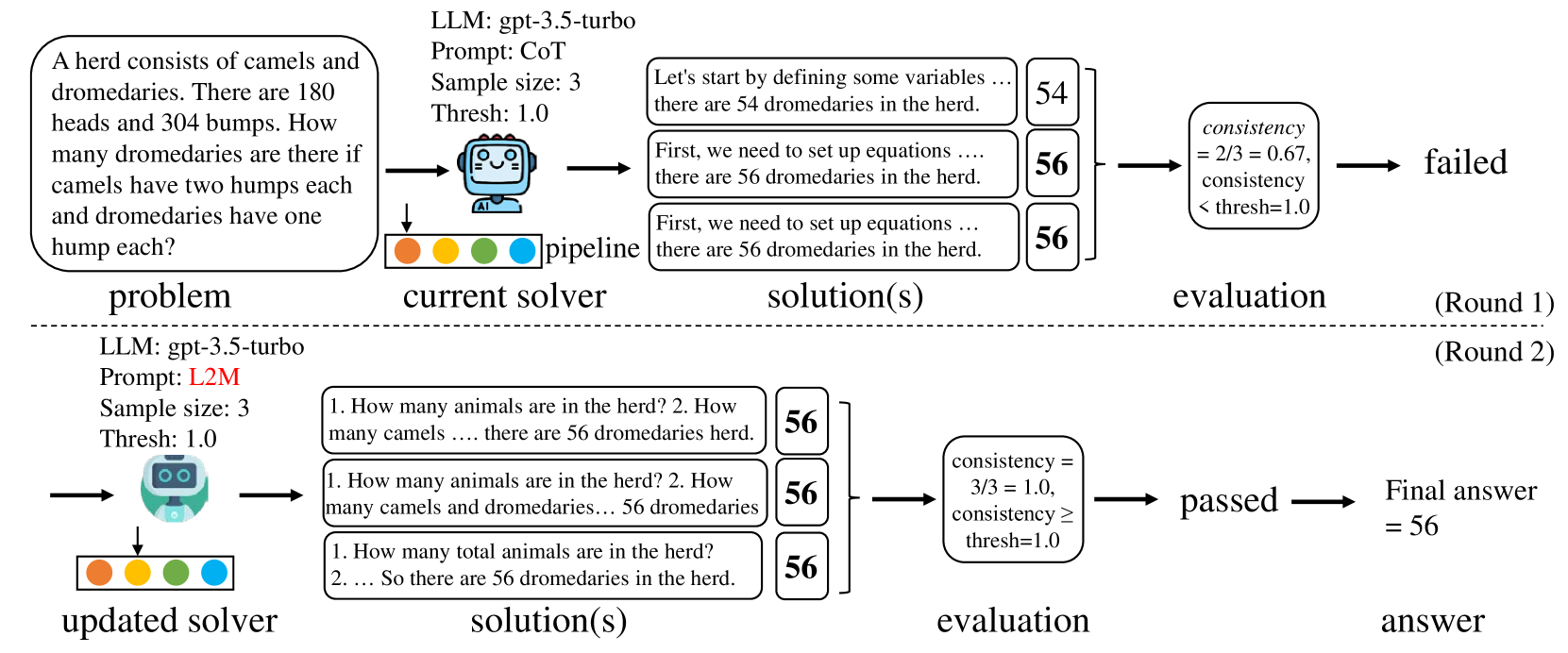
技术框架:该框架主要由两个模块组成:初始评估模块和适应模块。初始评估模块用于评估当前解的可靠性,如果解不可靠,则激活适应模块,采用多种适应策略进行协同调整。
关键创新:最重要的创新在于动态适应策略的引入,使得求解过程能够根据实时反馈进行调整,与传统固定策略方法形成鲜明对比。
关键设计:在设计上,初始评估模块通过答案一致性评估解的可靠性,适应模块则结合多种适应策略进行优化,确保在不同复杂度问题上都能有效运作。具体的参数设置和损失函数设计在论文中详细描述。
🖼️ 关键图片
📊 实验亮点
实验结果表明,提出的自适应求解框架在复杂推理基准上能够将API成本降低至85%,同时在相同成本下提高准确率达4.5%。这一显著的性能提升展示了该方法的有效性和实用性。
🎯 应用场景
该研究的潜在应用领域包括智能问答系统、自动化推理工具以及复杂决策支持系统等。通过灵活的求解策略,该框架能够在多种场景中提高效率,降低计算成本,具有广泛的实际价值和未来影响。
📄 摘要(原文)
Large Language Models (LLMs) demonstrate impressive ability in handling reasoning tasks. However, unlike humans who can instinctively adapt their problem-solving strategies to the complexity of task, most LLM-based methods adopt a one-size-fits-all approach. These methods employ consistent models, sample sizes, prompting methods and levels of problem decomposition, regardless of the problem complexity. The inflexibility of these methods can bring unnecessary computational overhead or sub-optimal performance. To address this limitation, we introduce an Adaptive-Solver (AS) framework tha dynamically adapts solving strategies to suit various problems, enabling the flexible allocation of test-time computational resources. The framework functions with two primary modules. The initial evaluation module assesses the reliability of the current solution using answer consistency. If the solution is deemed unreliable, the subsequent adaptation module comes into play. Within this module, various types of adaptation strategies are employed collaboratively. Through such dynamic and multi-faceted adaptations, our framework can help reduce computational consumption and improve performance. Experimental results from complex reasoning benchmarks reveal that our method can significantly reduce API costs (up to 85%) while maintaining original performance. Alternatively, it achieves up to 4.5% higher accuracy compared to the baselines at the same cost. The code and dataset are available at https://github.com/john1226966735/Adaptive-Solver.