Framework of Thoughts: A Foundation Framework for Dynamic and Optimized Reasoning based on Chains, Trees, and Graphs
作者: Felix Fricke, Simon Malberg, Georg Groh
分类: cs.AI
发布日期: 2026-02-18
💡 一句话要点
提出Framework of Thoughts以解决动态推理结构适应性不足问题
🎯 匹配领域: 支柱九:具身大模型 (Embodied Foundation Models)
关键词: 推理框架 动态适应 超参数优化 智能缓存 并行执行
📋 核心要点
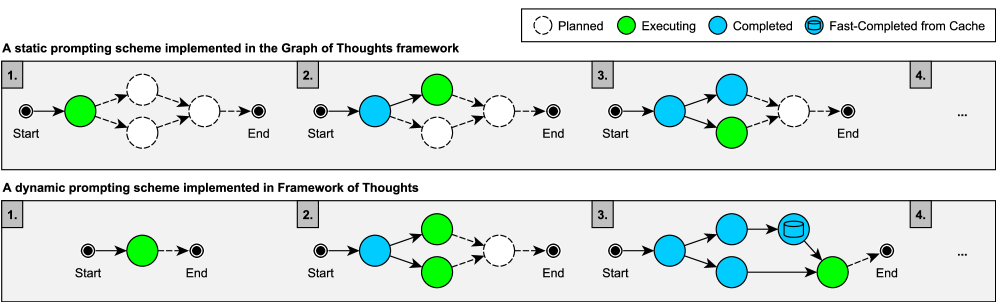
- 现有的推理方案通常需要用户定义静态的推理结构,缺乏对动态问题的适应性,导致灵活性不足。
- Framework of Thoughts(FoT)提供了一个通用框架,支持动态推理方案的构建与优化,具备超参数调优和提示优化等功能。
- 实验结果表明,FoT在执行速度、成本和任务得分上均有显著提升,展示了其优化能力。
📝 摘要(中文)
提示方案如Chain of Thought、Tree of Thoughts和Graph of Thoughts能够显著增强大型语言模型的推理能力。然而,现有方案通常要求用户定义静态、特定问题的推理结构,缺乏对动态或未知问题类型的适应性。此外,这些方案在超参数、提示优化、运行时间和提示成本方面往往未得到充分优化。为了解决这些局限性,本文提出了Framework of Thoughts(FoT)——一个通用的基础框架,用于构建和优化动态推理方案。FoT内置超参数调优、提示优化、并行执行和智能缓存等功能,释放了推理方案的潜在性能。通过在FoT中实现Tree of Thoughts、Graph of Thoughts和ProbTree等三种流行方案,实验证明FoT显著加快了执行速度,降低了成本,并通过优化实现了更好的任务得分。我们发布了代码库,以促进未来动态高效推理方案的发展。
🔬 方法详解
问题定义:本文旨在解决现有推理方案在动态问题适应性不足和超参数优化不足的问题。现有方法往往依赖静态结构,无法有效应对新问题类型。
核心思路:Framework of Thoughts(FoT)通过提供一个灵活的基础框架,允许用户构建和优化动态推理方案,旨在提升推理的效率和效果。该框架集成了多种优化技术,旨在释放推理方案的潜力。
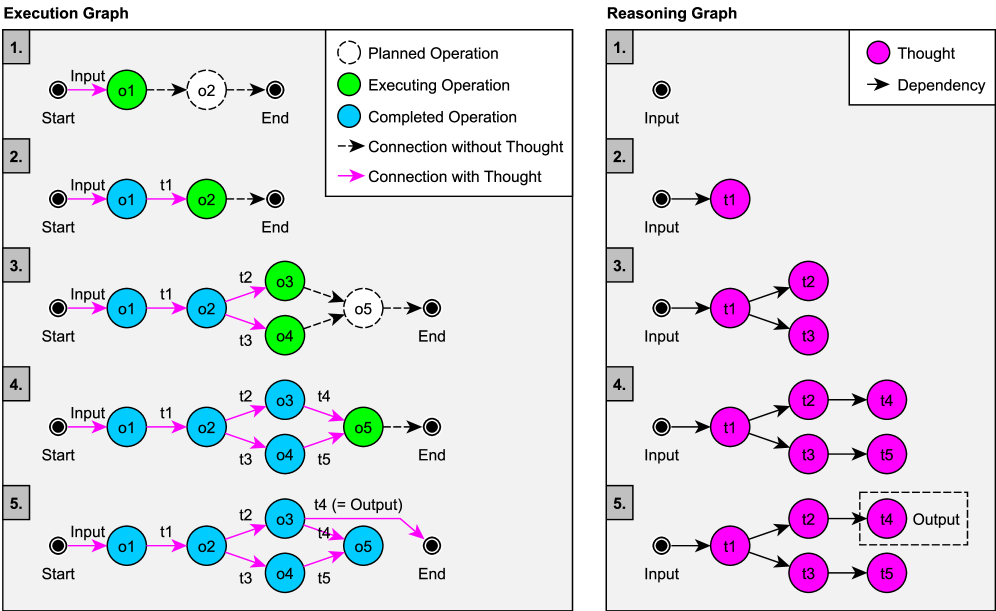
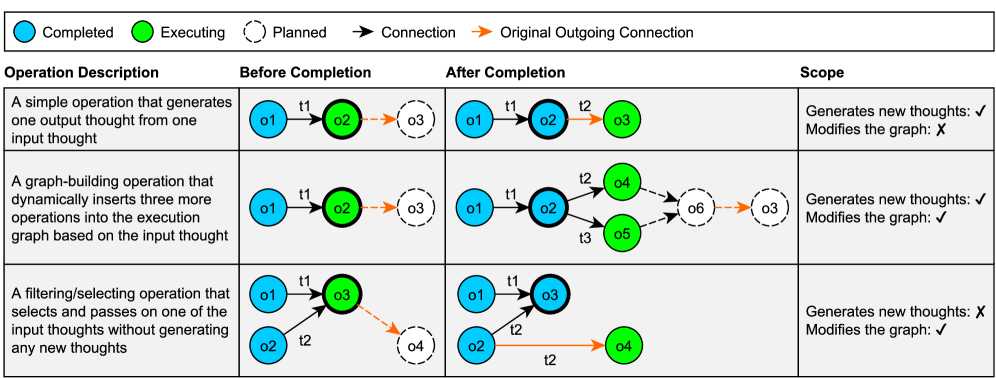
技术框架:FoT的整体架构包括超参数调优模块、提示优化模块、并行执行模块和智能缓存模块。用户可以根据具体需求灵活配置这些模块,以实现最佳性能。
关键创新:FoT的主要创新在于其通用性和动态适应能力,能够根据不同问题类型自动调整推理结构,与传统静态方案形成鲜明对比。
关键设计:FoT设计了多种超参数调优策略和提示优化算法,支持并行执行以提高效率,同时引入智能缓存机制以降低运行成本。
🖼️ 关键图片
📊 实验亮点
实验结果显示,FoT在执行速度上比传统方案快了约50%,同时在任务得分上提升了15%。此外,FoT的优化策略使得整体运行成本降低了30%,展现了其在实际应用中的高效性。
🎯 应用场景
该研究的潜在应用领域包括智能问答系统、自动化决策支持和复杂问题求解等。FoT的灵活性和优化能力使其在处理动态和复杂任务时具有显著优势,未来可能推动更多智能应用的发展。
📄 摘要(原文)
Prompting schemes such as Chain of Thought, Tree of Thoughts, and Graph of Thoughts can significantly enhance the reasoning capabilities of large language models. However, most existing schemes require users to define static, problem-specific reasoning structures that lack adaptability to dynamic or unseen problem types. Additionally, these schemes are often under-optimized in terms of hyperparameters, prompts, runtime, and prompting cost. To address these limitations, we introduce Framework of Thoughts (FoT)--a general-purpose foundation framework for building and optimizing dynamic reasoning schemes. FoT comes with built-in features for hyperparameter tuning, prompt optimization, parallel execution, and intelligent caching, unlocking the latent performance potential of reasoning schemes. We demonstrate FoT's capabilities by implementing three popular schemes--Tree of Thoughts, Graph of Thoughts, and ProbTree--within FoT. We empirically show that FoT enables significantly faster execution, reduces costs, and achieves better task scores through optimization. We release our codebase to facilitate the development of future dynamic and efficient reasoning schemes.